With the UEFA Women’s Euro 2025 having set a new record in tickets sold (far more than 650,000), women’s football is stepping into the spotlight like never before. The tournament was the next significant milestone in the development of women’s football.
With a spectacular victory the WEURO came to an an end. England beat Spain on penalties to retain the title. Not only was this year’s competition the most open one yet – with tournament favorites like England, Spain and Germany having sent star-studded teams to the tournament, but there is something profound happening in the world of women’s football: the game is on the rise, capturing the hearts of millions around the world.

Women’s football is gaining global momentum — and so are its marketing opportunities
As you might have noticed, women’s football has been on the rise for some time – and the world is watching. 87,192 visitors saw Germany lose against England in the 2022 Women’s European Championship final, and 18 million people tuned in via TV or streaming services. The Women’s World Cup in 2023 saw a record number of 2 billion people tuning in. Long gone are the days when teams competed in front of empty stands. Even non-diehard fans have come across the names Alisha Lehmann, Aitana Bonmati, Alexia Putellas, Chloe Kelly and Giulia Gwinn. The Women’s Euro 2025 adds another milestone to that winning streak. At the same time, women’s football is still fighting an uphill battle.
Aside from global tournaments, TV coverage across many leagues worldwide is fragmented, picture quality is inconsistent and attendance numbers vary drastically from international tournaments to regular leagues. In Germany’s Bundesliga, it has increased to 2,800 per game, per ARD podcast Sports Inside. In England, the average attendance for Women’s Super League (WSL) games is 6,600 per game (a small drop from the 2023/24 season), according to BBC research. And in the US, the National Women’s Soccer League’s (NWSL) league-wide average attendance surpassed 11,000 during the past season.
Traces of the potential viewership power are everywhere, though: a Hamburger SV vs. Werder Bremen derby drew as many as 57,000 people, while a match between FC Köln and FC Bayern München attracted more than 35,000, with fans describing the atmosphere as extremely positive, cheery and family-friendly. And in the UK, standouts like Arsenal regularly draw crowds of more than 35,000 to games at Emirates Stadium.
Long story short, people are watching, and the audience is growing. Women’s football is projected to see its global fanbase increase 38 percent by 2030, meaning the sport could reach more than 800 million people worldwide, according to a 2025 report from Nielsen Sports.
Why should brands care? The women’s football audience is young, engaged, and purpose-driven
Women’s football is going through “incredibly exciting times” right now, says Jessica Stommel, Head of Women’s Football Germany at Sportfive, an international sports marketing agency. According to Nielsen Sports, 60 percent of fans are female – a reversal of typical sports demographics – and 47 percent sit in the top income bracket. Sportfive’s white paper The Rise of Women’s Football adds that the fans are relatively young (64% are 16 to 44 years of age) by comparison with fans of men’s football and are both more likely to have children (46 percent have at least one child aged 14 or under) and more value-driven. These are new audiences navigating a world that is brand-new to them – one they’re excited about.
”This audience has been largely overlooked by traditional sports marketing,” says Stommel. “It’s a blank slate. Brands can build new, authentic relationships.”
Arsenal FC offers a prime example, she says. Noticing an influx of families and children, the club has widened store aisles for stroller access, a small operational change that led to increased merchandise sales. According to Stommel, this approach – with the distribution of print-outs of the club’s anthem to sing along with – has fostered a deeper connection with new fans, many of whom were attending football games for the first time.
Engaging the fans early on, she says, leads to authentic and long-lasting bonds – something brands always strive for. “When you actively involve fans, they immediately feel like part of something bigger, and that builds genuine loyalty. This goes beyond LED boards or surface-level hype. This is about creating real, lasting change.”

Intersport and Adidas with a final campaign
The Intersport x Adidas campaign, released during the WEURO 2025 final weekend, heads in this direction. The “Make Football Their Game” campaign features a series of films about six players from Germany, Spain, Sweden, Greece, Slovenia, and Switzerland (see the picture above). The films depict how each player developed their love of the game, the pivotal moments in their journeys, and their current motivations.
“As shown by the great excitement in Switzerland this summer, women’s football continues to grow and inspire,” said Eliane Ruch, Category Manager Athletics for Intersport Switzerland.
How female athletes drive ROI through authentic endorsements
While fans of women’s football tend to be younger, better-educated and more purpose-driven, they also rely on digital means to keep up with their favorite football players: Sportfive states that 57 percent of female football fans regularly (at least once a week) rely on social media as a key platform when following women’s football, so digital campaigns are a must-have.

While male footballers have higher followings (with 658m followers, Cristiano Ronaldo is, after all, the most-followed person on Instagram), female players like Alisha Lehmann (16.7m followers), Alex Morgan (10m) and Alexia Putellas (3.2m) have a more engaged fanbase, with their communities interacting via likes, shares and comments, consuming content wherever they go. That willingness to interact translates into campaigns, too. The Adidas and Snipes campaign “Share her Power” garnered six-figure interactions on Instagram and TikTok, and an engagement rate of more than 15 percent.
From KPI to purpose
While women’s football lags behind in raw numbers, it leads in authenticity and values. “Men’s football is about KPIs and market share. Women’s football is about inclusion, respect and purpose,” says Stommel. “And in a world where social responsibility and authenticity matter more than ever, that’s a real competitive edge.” A study by McKinsey found that as many as 77 percent are seeking brands that align with their values. And a 2024 report from Parity and SurveyMonkey found that endorsements by female athletes generate 2.8 times more fan sales than endorsements by other ”influencers.” The report goes on to say, ”32% of all women’s sports fans (36% of female women’s sports fans) say they are more likely to purchase products from a brand that supports women’s sports or partners with female athletes.”
Purpose-driven campaigns that work
Women’s football embodies values like authenticity, inclusion and respect, Stommel says. Just think of how women’s football approaches topics like sexual orientation, and the dedication to the LGBTQ+ community. “While in men’s football it remains a huge subject of silence, in women’s football it is talked about openly and naturally,” says Stommel. “That’s especially important for many young people. They’re growing up in a world where such topics are approached in a very different way. For brands, this is especially relevant, because this audience not only invests more in sustainable products than the general population, but also gravitates toward companies that take social responsibility seriously,” says Stommel.
It comes as no surprise, she says, that campaigns that have been deemed especially successful have taken into consideration that purpose-oriented edge and honed it. The period pant brand Snuggs has signed with Manchester City Women to become the club’s exclusive official underwear partner. And the company didn’t stop there. It invested also in the Girls’ Academy, a program designed for the next generation of Man City players.
While Snuggs isn’t technically a sportswear brand, the right underwear is critical for female athletes (not just the ones performing professionally). In a similar fashion, Puma has partnered with Modibodi to create period- and leak-proof underwear for the pitch, and Nike introduced its own period-protection shorts in early April 2023.
These products aren’t just smart PR moves. Research shows that 84 percent of teenage girls quit sports when their periods start – exacerbating the so-called gender activity gap. As simple as it sounds, the right equipment could help drive real social change. And while we’re at it, just this year, 40 years after two jockstraps were stitched together to create the first “Jogbra” (a self-made sports bra), researchers are finally beginning to understand how to build a better sports bra.
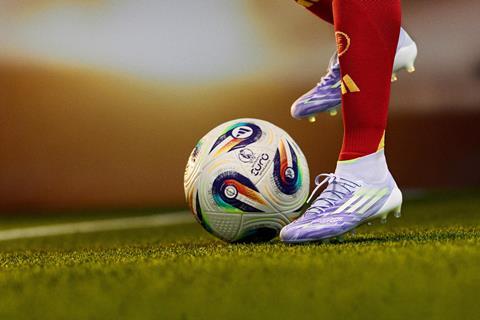
You might be thinking: “Wait… This doesn’t already exist?” Well, get this: In an interview with SGI Europe in 2024 Puma’s Chief Product Officer, Maria Valdes, said: “At the Women’s World Cup in Australia and New Zealand, one of the most watched sporting events last year, we were the only sports brand to offer our cleats in a fit designed specifically for female feet. We have also designed our Nitro technology running shoes specifically to women’s fit. In basketball, we launched the first signature shoe in the last decade with one of the world’s best athletes, Breanna Stewart.” This June, Adidas launched the F50 SparkFusion, its first football cleat designed specifically for women by women. Based on a decade of anatomical research, it marks a major step up for the company from the outdated “shrink it and pink it” approach.
The commercial edge
Purpose aside, the financial case is strong. Women’s football clubs derive 66 percent of their revenue from commercial income, far more than men’s clubs do. Fans recognize and reward supportive brands: 62 percent perceive women’s football sponsors as more likeable.
This is a win-win situation. Brands help grow the sport and in return gain access to new, highly engaged audiences. Entry costs are far lower than in the men’s realm, and the return even higher. Studies show that for every dollar spent by a corporate sponsor in women’s sports, more than seven dollars are generated in customer value.
The strategists at Amazon also noticed this. During the WEURO, the marketplace announced a renewed sponsorship of UEFA Women’s Football. This reaffirms Amazon’s status as the official online retail sponsor of all UEFA women’s football competitions, including the Women’s Champions League and the 2029 Women’s European Championship. The Amazon Women’s Football Shop sells thousands of products for fans and female players. Furthermore, Amazon and UEFA are collaborating on initiatives to promote the growth of the sport, such as a research program that addresses coaching gender disparities.
Beyond the WEUROS: Sponsorship to long-term brand loyalty
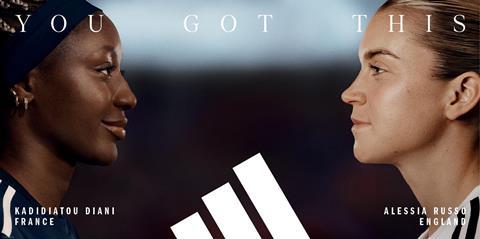
In the run-up to the Women’s Euros, major campaigns are already rolling out. Sports Direct has launched its “Legacy Starts Here” campaign, while Adidas has released a film showcasing the power of competition. But Jessica Stommel emphasizes the need to think long-term: “Big tournament success can be a game changer for women’s football. But we can’t wait until after the Euros to ask how we keep that energy alive. The stars who shine on that stage need to stay visible.”
Brands should use this unique opportunity: “Right now, the return on investment is huge,” she says. “Brands that act early can take a leading role, establish long-term credibility, and build lasting loyalty.”
Editor’s note: SGI Europe updated this text during the WEUROs