

Sustainability & CSR
News, reports, and analysis on environmental, social, and governance (ESG) practices across the sporting goods value chain – covering climate strategies, materials innovation, human rights, regulatory compliance, and commercial implications for brands, suppliers, retailers, and investors.
LATEST
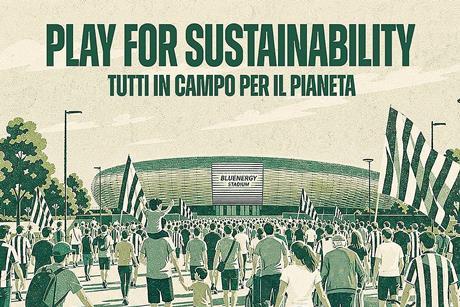
Udinese Calcio pilots UEFA sustainability framework
A Serie A club is using UEFA’s sustainability manual and emissions calculator to show concrete results, not just plans.
TrusTrace lets brands ask their supply chain questions
The Stockholm company’s new tool uses AI to answer natural-language questions and surface compliance gaps as they emerge.
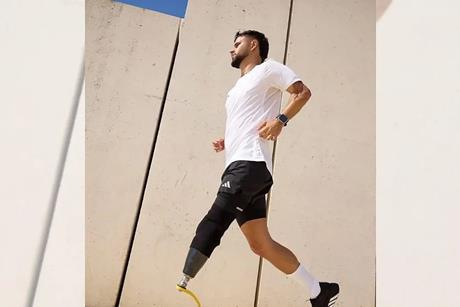
Adidas apology puts its own accountability on trial
The company distanced its global brand from a local team’s choices, and that line is now the story.
SGIE Daily Digest
Stay informed. Stay ahead.
Every weekday in your inbox.
The news, analysis and competitive signals that matter, curated for industry professionals.
Sign up for freeLatest news
Udinese Calcio pilots UEFA sustainability framework
A Serie A club is using UEFA’s sustainability manual and emissions calculator to show concrete results, not just plans.
TrusTrace lets brands ask their supply chain questions
The Stockholm company’s new tool uses AI to answer natural-language questions and surface compliance gaps as they emerge.
Adidas apology puts its own accountability on trial
The company distanced its global brand from a local team’s choices, and that line is now the story.
Think Beyond names Robertson as first CEO
Melissa Robertson becomes Think Beyond’s first CEO, taking an equity stake as the consultancy scales.
PGA Tour, LeBron foundation build a golf mentorship pipeline
The LeBron James Family Foundation Invitational debuts July 6-7, 2027, at Firestone Country Club, blending golf with mentorship.
Billie Jean King and Deloitte launch women's sports plan
Deloitte says women’s sports media coverage has climbed to 15 percent, but leadership investment still lags.
Oberalp Contribute Report 2025: circularity data
The mountain sports group’s own numbers cut against its circularity growth story.
New Balance UK factory gets a garden by a jeweller
London jewellery brand Bleue Burnham, founded by a self-taught gardener, designed the space for New Balance’s 300 UK shoemakers.

Oberalp Contribute Report 2025: circularity data
The mountain sports group’s own numbers cut against its circularity growth story.

Misto’s sustainability report: wins and open gaps
Small-scale circularity wins are outpacing structural fixes on Scope 3, supplier safety and board diversity.
Adidas’s ESG data: growth is outpacing its cuts
Intensity metrics keep improving at adidas, but 2025 is the year absolute emissions growth outran them.
Interviews

TrusTrace’s cofounder Rajan on the cost of compliance
Hrishikesh Rajan, co-founder and chief growth officer at TrusTrace, in conversation with SGI Europe.
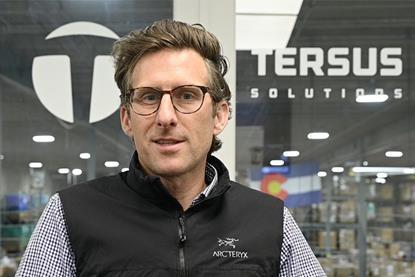
Tersus CEO Whitcomb: resale runs on economics, not mandates
Peter Whitcomb on why brands now come to Tersus with their CFO, not their sustainability tea
Worldly’s Chief Strategy Officer in conversation with SGIE
Worldly’s CSO changed careers to fix an industry. Several acquisitions later, he says the urgency is greater than ever.
CIRCULARITY

How SE Asian local brands find a competitive edge
A Bali brand built on surplus fabric from global labels. A Brunei brand built on repairs. How Southeast Asian local brands compete.
Right to repair is law, but what’s a fair price?
The EU Right to Repair Directive is now German law; refurbished marketplace Refurbed says spare-part pricing rules are still missing.
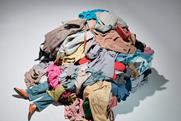
EU destruction ban: five moves to make
Large brands are in scope now. Mid-sized brands have until July 2030. The prize is what they do with those four years.

Lululemon backs nylon recycler Syntetica in $30m round
Syntetica has raised a $30 million Series A to build its first commercial nylon-recycling plant in France.

YKK extends circularity into premium zipper line
The EXCELLA concept follows YKK’s existing recycled-polyester zipper line into a new, higher-visibility application.

Reju opens first U.S. R&D center in Pennsylvania
Housing the lab inside Technip Energies’ own facility gives Reju direct access to scale-up expertise its Volcat depolymerization technology still needs.

A seat at the table is not the same as a voice at it
FESI represents 1,800 European manufacturers on EU rules, but most reach it only through national federations, not directly.
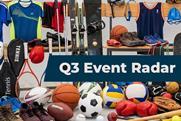
Q3 2026 Event Radar: trade shows and conferences
Outdoor Retailer reimagined, three sustainability events, boats and boards: The Q3 2026 calendar points in one direction.

Tersus CEO Whitcomb: resale runs on economics, not mandates
Peter Whitcomb on why brands now come to Tersus with their CFO, not their sustainability tea

Decathlon adds cash refund to festival tent return scheme
The cash-back addition tests whether financial incentives can shift festival disposal behavior at scale.
Shoes almost never get recycled. Here’s the data.
The first large-scale material analysis of European post-consumer footwear finds adhesives, black pigments, and missing pairs are the real obstacles to recycling.

EU textile recycling still below 1%: the industry response
The 2030 Circularity Blueprint sets a target of 2.7 million tonnes of textile-to-textile recycling capacity in Europe by 2035.
ESG
EU destruction ban: five moves to make
Large brands are in scope now. Mid-sized brands have until July 2030. The prize is what they do with those four years.
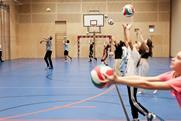
Impact of sports: Sporting Goods brands are missing their biggest opportunity
Stop treating social purpose as a campaign. Start anchoring it in the company’s own objectives, says the MD of the Laureus Sport for Good Foundation Germany, Austria in our interview.

Why sport could be one of the most important social policy tools
The Sporting Goods industry generates billions in annual revenue, but according to FESI its most important contribution may be one that never shows up in trade statistics.

Helping people feel better is becoming the sports industry’s greatest growth opportunity
Brand strategist Fredrik Ekström argues that the sports and outdoor industry’s greatest growth opportunity lies not in helping existing consumers perform better, but in helping millions of new consumers feel better through movement, connection and nature.
Equality and diversity
Nike hit with $7.5m-plus gender pay-bias verdict
A class action got thrown out. One female employee still won $7.5m-plus from a jury.

UK study maps girls’ fading sports fandom
Four in ten young UK people cannot name a sportswoman, as new research maps how girls lose fan identity through secondary school.
Women still wait for a seat at the top: the 2026 data
Women hold 30 percent of board seats and 24 percent of executive roles in sporting goods. The numbers are improving — but barely.

Women redefine performance beyond function in active lifestyle industry
Influenced by a strong female perspective in design and strategy, the industry is moving toward a balance of high-functionality, circularity, and sensory comfort.

WPA and IPPA seek to boost women’s padel in Asia
New alliance aims to boost memberships, train coaches and professionalize the sport across the continent.

Melissa Kaar: 'Regardless of race, gender identity, sexual orientation, ability – there is a place for everyone in sport'
Managing director Melissa Kaar discusses the adidas Foundation’s evolution from startup phase to independent entity, detailing challenges from bank accounts to building trust with grassroots partners using sport for social change.

Sporting Goods brands quietly retreat from DEI messaging
Major sporting goods companies are quietly revising or rephrasing their diversity, equity, and inclusion commitments.
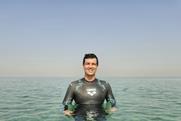
Arena new global campaign focuses on freedom and inclusivity
The swimwear brand celebrates swimming as a universal and inclusive activity.

European Parliament calls for comprehensive European Sport Model reforms
For a strengthened European Sport Model the EU parliament demands improved governance, financial integrity and athlete protection.

Women are massive sports fans, yet feel unseen
A new study reveals that many women sports fans feel misunderstood by brands and leagues.

Nike and Special Olympics deepen collaboration with new partnership
The new agreement aims at expanding access to youth sports and improving training for Special Olympics’ Unified Sports coaches.

FIS and Virtus sign agreement to promote inclusion in winter sports
This MoU marks a significant step toward integrating athletes with intellectual impairments into Alpine and Cross-Country skiing disciplines at the highest levels of competition.
Design for tomorrow: Circular Economy RE:THINKING Business Special
Best practices, success stories, circular models: re:sale, re:pair, re:cycle, re:design, re:invest, re:think.
>> Explore the specialThe Impact of Sports – Why the industry must act now
Physical inactivity is rising rapidly. Explore the data, initiatives and action plans as the sporting goods community transforms a societal challenge into an opportunity.
>> Explore the specialCSR: RE:THINKING Business Special
How the Sporting Goods Industry redefines corporate social responsibility amid political pressure, regulation and consumer fatigue. Stories, voices, facts and data.
>> Explore the special
Intelligence, analysis and advice for the global sporting goods industry.
TOPICS
Corporate and FinancialRetail and Supply
Marketing
Consumer
People and HR
Events and Trade Shows
Legal
CSR and Sustainability
Technology and AI
Asia-Pacific
Athlete economy
China and APAC
MARKET ANALYSIS
Analysis and dataIndustry Scorecards
Reports
Case Studies
SERIES and SPECIALS
FIFA World Cup 2026Winter Olympics 2026
Circular Economy
Impact of Sports
Redefining CSR 2025
SUBSCRIPTIONS
Membership plansFAQs
ASK SGIE AI
For premium subscribersABOUT US
About usNewsroom and Contacts
Media solutions
- COPYRIGHT © EDM PUBLICATIONS GMBH
- Contact Us
- FAQS
- Terms and Conditions
- Privacy & Cookies Policy
- Impressum
- Issues
- Topics A-Z