
Sustainability & CSR
The societal, economic and environmental impact of sport and of the sporting goods industry, and the practices that make a difference. SGI Europe covers circularity, sustainable business models and technology, and the compliance requirements and tools shaping how brands, suppliers and retailers operate.
In this page
Circular Economy & Sustainable Tech | ESG and reporting | Impact of Sports | Regulation and compliance
LATEST
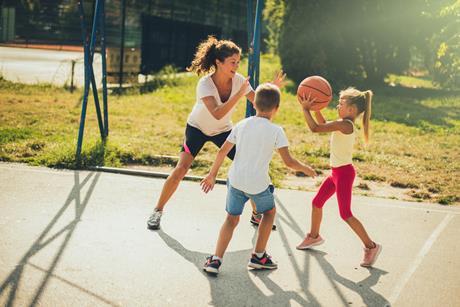
EuropeActive welcomes 4.1% Erasmus+ share for sport
Fitness group EuropeActive, like FESI, campaigned for a bigger sport share and welcomes the vote. The EU Council has the final say.
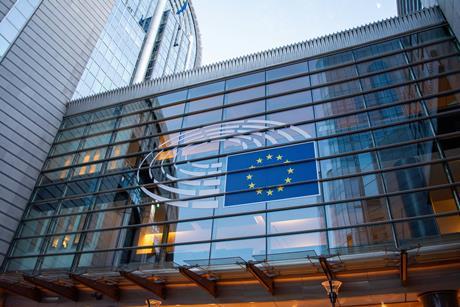
FESI welcomes Parliament vote on Erasmus+ sport budget
The sporting goods federation backs the plenary decision to raise sport’s Erasmus+ share from 1.9% to 4.1% for 2028 to 2034.

FESI sets out recommendations on EU sport tourism
Brands can act on products and business practices, FESI says, but sport tourism also needs broad investment in infrastructure.
More

South Korea’s Hyosung makes bio materials a group priority
Hyun-Joon Cho calls bio-based materials a pillar of the group’s next century. A Vietnamese plant now supplies the first link in that chain.

How sports teams can become sustainability buyers
Rights holders control the licensing contract. A new playbook by Green Sports Alliance wants them to use it to set terms for apparel suppliers.

YKK’s Cycle of Goodness meets the circular economy
YKK’s integrated report starts from founder Tadao Yoshida’s creed and ends with zippers built for recycling and repair.

FESI sets priorities for EU physical HEPA review
A decade after the 2013 framework, FESI says too few Europeans move enough and many national commitments never left paper.

Decathlon presents 10 Innovation Awards nominees
A shoe sensor measures cushioning wear, while a basketball concept allows its cover to be replaced without discarding the core.

London Marathon earns platinum sustainability rating
It is the first road race at the top ABW level and the fifth event overall, after Oslo, Zurich, Glasgow and Tokyo.

Fashion for Good launches Cotton Reloop Matrix
Fashion for Good’s new project tests recycled cotton yarns against real brand specifications, in labs and in mills.

Sporting goods brands join Microfiber Action Alliance
Nike, Patagonia, Under Armour, Lululemon, REI Co-op and Cotopaxi are founding members, convened by The Nature Conservancy.

Testing group Hohenstein joins EMAS
Its first statement tracks a full year of on-site solar, more electric cars and a 2030 goal that counts offsets.
Explore the Section
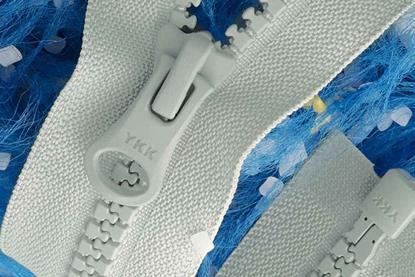
YKK’s Cycle of Goodness meets the circular economy
YKK’s integrated report starts from founder Tadao Yoshida’s creed and ends with zippers built for recycling and repair.
Testing group Hohenstein joins EMAS
Its first statement tracks a full year of on-site solar, more electric cars and a 2030 goal that counts offsets.
Impact report: VF Corp meets Scope 1 and 2 target early
Scope 1 and 2 are down 69%, but count for about 2% of VF’s footprint. Scope 3 is 39% of the way to target.

Interviews

TrusTrace’s cofounder Rajan on the cost of compliance
Hrishikesh Rajan, co-founder and chief growth officer at TrusTrace, in conversation with SGI Europe.
Tersus CEO Whitcomb: resale runs on economics, not mandates
Peter Whitcomb on why brands now come to Tersus with their CFO, not their sustainability tea
Worldly’s Chief Strategy Officer in conversation with SGIE
Worldly’s CSO changed careers to fix an industry. Several acquisitions later, he says the urgency is greater than ever.
CIRCULARITY

Decathlon brings recycled carbon fiber to padel
Decathlon says swapping in recycled carbon cuts the hitting face’s footprint by about 31 percent. Suggested price: €130.

ROICA V550 stretch fabrics on show in Munich
Italian sportswear knitters lead the booth, from cycling grip fabrics to Merino base layers.

Textile recycling: The next challenge is scaling up
In recent years, the textile recycling industry has focused primarily on technological development.

Circular sportswear: matching construction to recovery
Designing sportswear for a circular economy includes deciding who prepares garments for recycling. LaMunt asks owners to remove zips and trims; Arc’teryx assigns disassembly to ReBIRD.

“The industry is caught in a supply-demand deadlock”
Evan Wiener, senior advisor at ReHubs, explains what brands can do to advance the circular economy beyond pilot projects.
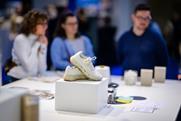
From fiber to function: Bio-based materials enter the next performance era
Performance textiles are entering a new material era. Don’t miss the latest developments at the PERFORMANCE DAYS in Munich.

How SE Asian local brands find a competitive edge
A Bali brand built on surplus fabric from global labels. A Brunei brand built on repairs. How Southeast Asian local brands compete.
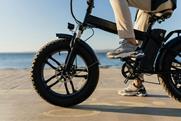
Right to repair is law, but what’s a fair price?
The EU Right to Repair Directive is now German law; refurbished marketplace Refurbed says spare-part pricing rules are still missing.
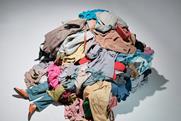
EU destruction ban: five moves to make
Large brands are in scope now. Mid-sized brands have until July 2030. The prize is what they do with those four years.

Lululemon backs nylon recycler Syntetica in $30m round
Syntetica has raised a $30 million Series A to build its first commercial nylon-recycling plant in France.
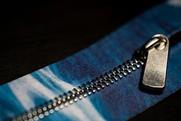
YKK extends circularity into premium zipper line
The EXCELLA concept follows YKK’s existing recycled-polyester zipper line into a new, higher-visibility application.

Reju opens first U.S. R&D center in Pennsylvania
Housing the lab inside Technip Energies’ own facility gives Reju direct access to scale-up expertise its Volcat depolymerization technology still needs.
ESG
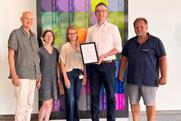
Testing group Hohenstein joins EMAS
Its first statement tracks a full year of on-site solar, more electric cars and a 2030 goal that counts offsets.
EU destruction ban: five moves to make
Large brands are in scope now. Mid-sized brands have until July 2030. The prize is what they do with those four years.
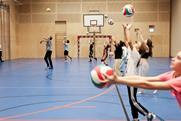
Impact of sports: Sporting Goods brands are missing their biggest opportunity
Stop treating social purpose as a campaign. Start anchoring it in the company’s own objectives, says the MD of the Laureus Sport for Good Foundation Germany, Austria in our interview.

Why sport could be one of the most important social policy tools
The Sporting Goods industry generates billions in annual revenue, but according to FESI its most important contribution may be one that never shows up in trade statistics.
Equality and diversity
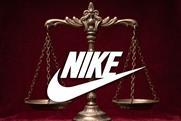
Nike hit with $7.5m-plus gender pay-bias verdict
A class action got thrown out. One female employee still won $7.5m-plus from a jury.

UK study maps girls’ fading sports fandom
Four in ten young UK people cannot name a sportswoman, as new research maps how girls lose fan identity through secondary school.
Women still wait for a seat at the top: the 2026 data
Women hold 30 percent of board seats and 24 percent of executive roles in sporting goods. The numbers are improving — but barely.

Women redefine performance beyond function in active lifestyle industry
Influenced by a strong female perspective in design and strategy, the industry is moving toward a balance of high-functionality, circularity, and sensory comfort.

WPA and IPPA seek to boost women’s padel in Asia
New alliance aims to boost memberships, train coaches and professionalize the sport across the continent.

Melissa Kaar: 'Regardless of race, gender identity, sexual orientation, ability – there is a place for everyone in sport'
Managing director Melissa Kaar discusses the adidas Foundation’s evolution from startup phase to independent entity, detailing challenges from bank accounts to building trust with grassroots partners using sport for social change.
Sporting Goods brands quietly retreat from DEI messaging
Major sporting goods companies are quietly revising or rephrasing their diversity, equity, and inclusion commitments.
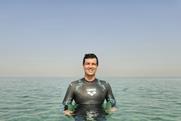
Arena new global campaign focuses on freedom and inclusivity
The swimwear brand celebrates swimming as a universal and inclusive activity.

European Parliament calls for comprehensive European Sport Model reforms
For a strengthened European Sport Model the EU parliament demands improved governance, financial integrity and athlete protection.

Women are massive sports fans, yet feel unseen
A new study reveals that many women sports fans feel misunderstood by brands and leagues.

Nike and Special Olympics deepen collaboration with new partnership
The new agreement aims at expanding access to youth sports and improving training for Special Olympics’ Unified Sports coaches.

FIS and Virtus sign agreement to promote inclusion in winter sports
This MoU marks a significant step toward integrating athletes with intellectual impairments into Alpine and Cross-Country skiing disciplines at the highest levels of competition.
Design for tomorrow: Circular Economy RE:THINKING Business Special
Best practices, success stories, circular models: re:sale, re:pair, re:cycle, re:design, re:invest, re:think.
>> Explore the specialThe Impact of Sports – Why the industry must act now
Physical inactivity is rising rapidly. Explore the data, initiatives and action plans as the sporting goods community transforms a societal challenge into an opportunity.
>> Explore the specialCSR: RE:THINKING Business Special
How the Sporting Goods Industry redefines corporate social responsibility amid political pressure, regulation and consumer fatigue. Stories, voices, facts and data.
>> Explore the special
Intelligence, analysis and advice for the global sporting goods industry.
TOPICS
Corporate and FinancialRetail and Supply
Marketing
Consumer
People and HR
Events and Trade Shows
Legal
CSR and Sustainability
Technology and AI
Asia-Pacific
Athlete economy
China and APAC
MARKET ANALYSIS
Analysis and dataIndustry Scorecards
Reports
Case Studies
SERIES and SPECIALS
FIFA World Cup 2026Winter Olympics 2026
Circular Economy
Impact of Sports
Redefining CSR 2025
SUBSCRIPTIONS
Membership plansFAQs
ASK SGIE AI
For premium subscribersABOUT US
About usNewsroom and Contacts
Media solutions
- COPYRIGHT © EDM PUBLICATIONS GMBH
- Contact Us
- FAQS
- Terms and Conditions
- Privacy & Cookies Policy
- Impressum
- Issues
- Topics A-Z