

Retail & Supply
From store openings and DTC strategies to distribution deals and supply chain shifts, retail is where sporting goods brands win or lose. SGI Europe tracks the decisions, technologies, and market dynamics reshaping how sporting goods reach consumers.
In this page
Stores | E-commerce & DTC | Distribution | Sourcing & Supply | Trade & Tariffs | AI in Retail
LATEST

AI agents can now shop JD Sports like a person would
Two years after adopting Algolia’s search platform, JD Sports has become one of retail’s earliest agentic commerce test cases.
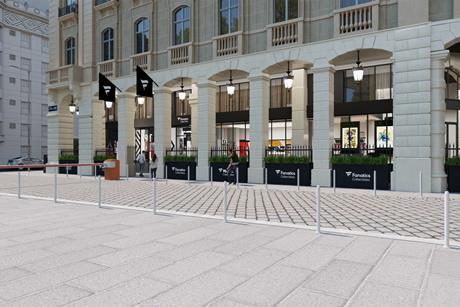
Fanatics Collectibles opens Paris store
Opening Oct. 23, the 5,500 square foot store is the company’s first in continental Europe. French sales grew 55 percent in 2025.

On opens first Austria store, adds Munich, Düsseldorf
On’s DACH retail build-out gets its first Austrian address, plus two more German stores.
More









Explore Retail and Supply

AI agents can now shop JD Sports like a person would
Two years after adopting Algolia’s search platform, JD Sports has become one of retail’s earliest agentic commerce test cases.
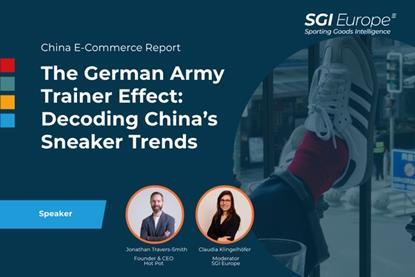
Webinar: The German army trainer effect
Join SGI Europe & Hot Pot to analyze the $9.4B China active footwear market.

Lululemon pursues twin-track Europe growth
New stores from Vienna to Bucharest and an exclusive Zalando launch show where Lululemon is pursuing growth in Europe.

NGE fitness expands beyond UK Decathlon marketplace
A year after joining Decathlon’s UK marketplace, Northern Gym Equipment has expanded to 300+ listings and entered selected stores.

Authentic Brands widens Luzern ecommerce partnership
Reebok’s marketplace partner now serves Authentic’s full European brand-operator network, from Amazon to TikTok Shop.
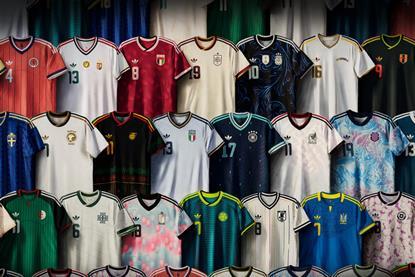
World Cup jersey boom is real, but will it last?
adidas confirmed record sales. Route and Syndigo say fulfillment, returns and product data decide if it holds
MARKET DATA AND ANALYSIS

European sports retail 2025: the top five in review
Vertical integration compounds. Specialist cooperatives hold. Fashion footwear exposure bites. Retail is sorting by structural logic.

SGI Analysis: The 20 biggest sports retailers in Europe
Europe’s 20 largest sports retailers grew sales by 4 percent in 2024, with market leaders like Decathlon and JD Sports driving growth.

SGI Analysis: The Top 50 Global Sports Retailers
The world’s 50 largest sporting goods retailers increased sales by 2 percent to $149 billion in 2024, with European players gaining market share whilst Asian growth stalled and US retailers faced consumer headwinds. Decathlon, Intersport and JD Sports led the rankings as regional markets showed diverging trajectories.
REPORTS
Exclusive data: How Chinese consumers shop for outdoor apparel online
Explore key insights from the 2024–25 China Outdoor Apparel: 2024–25 Ecomm Report, including platform shifts, premiumization trends, and brand strategies from Nike, Anta and Hoka One.
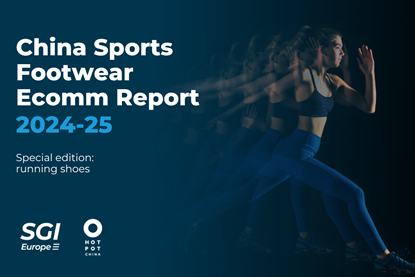
Exclusive data: How chinese consumers shop for sports footwear online
Explore key insights from the 2024–25 China Sports Footwear Ecomm Report, including platform shifts, premiumisation trends, and brand strategies from Nike, Anta and Hoka One.

The German Performance Running Market 2025
How German runners choose, buy, and value their shoes. Drawing on 1,001 active runners and pricing analysis, the report covers consumer profiles, buying behaviour, channel preferences, brand choices, pricing strategy, and sustainability’s influence on purchasing decisions.
Foot Locker to open new kind of neighborhood store in LA
Foot Locker opens a community-oriented store in LA’s Crenshaw on Aug. 22, co-developed with Nike, Jordan Brand and Converse, highlighting shifts at both Nike and Foot Locker under Dick’s Sporting Goods.

Intersport opens in Portugal
Intersport has entered its 41st country as Intersport France opens a flagship-format store in Felgueiras, Portugal, anchoring a new Iberian subsidiary that combines the Portuguese debut with roughly 30 inherited Spanish stores.

Running brands bet on Europe to win the DTC race
On, HOKA and New Balance lead a wider field, including Asics and Saucony, investing in Europe’s community-led retail boom.

Fabletics plans retail expansion, at home and abroad
Fabletics has crossed the billion-dollar revenue threshold and is now targeting aggressive store growth in the US and abroad, with new markets including India, the UAE and deeper penetration across Latin America.

Frasers opens combined retail and fitness format in Dublin
Sports Direct and Everlast Gyms+ have opened the first integrated Frasers Group flagship outside the UK.
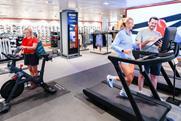
John Lewis bets on sports and wellness as category
John Lewis launches Sports and Wellness departments at four UK locations as part of an £800 million transformation.

On expands retail in California and Brazil
On’s simultaneous California and Brazil openings show density and market entry running in parallel.

Decathlon borrows a page from Aldi for its stores
Sports giant rolls out a discount-style middle aisle to lure price-conscious shoppers this summer.

Technogym launches its first Pilates reformer in the US
Technogym prices its US reformer at $13,670: four times what US retailers quote for professional reformers.

Onitsuka Tiger sets up in Spain ahead of Asics split
The Japanese lifestyle brand has quietly established a dedicated Iberian entity on Barcelona’s Passeig de Gràcia, signalling accelerating European ambitions as its separation from parent company Asics draws closer.

JD Sports enters Mexico with 140-store franchise
The UK retailer launches in 2027 via a license deal with Grupo Axo, marking its first entry into Mexico.

Fanatics renews UEFA card deal until 2033
The deal covers six UEFA club competitions, with cards produced under the Topps brand.

Fictional football club scores real Sports Direct deal
A satirical Sunday league team invented by a comedian is becoming Sports Direct’s newest exclusive kit partner.

SGIE talks to Fanatics on DP World Tour, Ryder Cup deal
Fanatics becomes exclusive retail partner of the DP World Tour and Ryder Cup Europe, with rights to make Team Europe kit replicas for the first time.

Inov8 ends four years of DTC in France
Inov8 has reversed its direct-to-consumer strategy in three of its six self-declared priority markets, reinstating distributors in France, Austria and Scandinavia just years after confidently bringing them under direct control.

Nike to rejigger online sales in China after all
Nike confirmed it will end online sales via partner stores in China from January 1, 2027, moving to its own digital channels.

Closing the distance: inside LTP’s clubhouse in Saigon
LTP Group has opened a dedicated development space in Ho Chi Minh City that compresses performance apparel sampling from months to fourteen days.

Worldly appoints Senior VP of Growth
On Aug. 11 Worldly appointed Léyoh Goodall Senior Vice President of Growth, tasking her with aligning the supply-chain platform’s commercial and customer teams around “verified data” – rather than “estimates or averages” – in an era of “tariff pressure, tightening regulation, and multi-tier complexity.”

China sport exports grow fastest beyond the West
Skateboard shipments rose 20.4 percent as China’s global export share topped 40 percent in the first half.

Nike’s refund check has arrived. The growth story hasn’t.
Nike has recovered nearly all of its $986 million tariff refund, but the cash windfall does little to answer lingering questions about growth, China and the progress of its turnaround.

Decathlon doubles down on warehouse robots
French robotics firm Exotec has deployed its Skyfleet program across seven Decathlon warehouse sites in five European countries, with some facilities doubling daily order output.

Why trade fairs are critical infrastructure in tariff-disrupted markets
Sporting goods manufacturers are rediscovering fairs as essential tools for material validation. LTP Group explains why tactile interaction has become a strategic necessity.

Texworld Apparel Sourcing Paris 2026: Event guide
With 1,100 exhibitors and expanded activewear focus, the 2-4 February show addresses supply chain shifts and near-sourcing demand.

EU may freeze US trade deal over Trump threat
European Parliament’s largest political group says approval of zero-tariff deal impossible after US president announces levies on eight countries.
Nike may pocket the tariff refund. Consumers want it back.
Footwear giant raised prices by up to $10 to offset $1bn in import costs. Now the tariffs are gone — and so is its commitment to refund shoppers.

Trump tariff refunds: are you in the queue?
$127 billion enters the queue — but not all at once

US Customs race to build IEEPA tariff refund system
Around 330,000 US importers await refunds on $166bn in IEEPA tariffs as CBP builds a new processing system under court supervision.

EU-Mercosur deal in force provisionally May 1
Provisional tariff cuts on footwear and apparel into South America start May 1 – but full ratification is still years away.

Sports brands and retailers in line for tariff refunds
A court order now extends refund rights to all importers — not just those who sued. But the government is already appealing.

Spain to tighten borders to low-value foreign e-commerce
New measures target platforms like Shein and Temu, aligning with EU policy whilst introducing additional scrutiny.

Sportswear stocks surge then slump in tariff whiplash
Nike closes lower on the day the Supreme Court won the tariff argument. The sector’s reaction tells a bigger story about what comes next.

US ready to cut India tariffs to 18% from 50%
Agreement reduces tariffs dramatically but lacks detail on implementation. Sporting goods manufacturers face new sourcing calculus.
RESALE & RENTAL

Tersus CEO Whitcomb: resale runs on economics, not mandates
Peter Whitcomb on why brands now come to Tersus with their CFO, not their sustainability tea

StockX launches possessionless trading
New Store at StockX removes the logistics loop that drives up costs for resellers, letting buyers own, store and relist products without handling them.
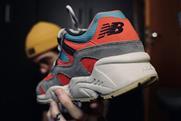
New Balance expands resale program to include apparel
The Boston brand brings apparel into its two-year-old resale program after recirculating more than 100,000 pairs of shoes.

UK startup raises £500,000 to modernize golf resale
Scottish golf tech startup Hosel targets a $3bn pre-owned market long dominated by generalist platforms with poor pricing transparency.
AI IN RETAIL
AI agents can now shop JD Sports like a person would
Two years after adopting Algolia’s search platform, JD Sports has become one of retail’s earliest agentic commerce test cases.

CASE STUDY: Inside Anta’s AI365 strategy
Anta built its own AI models and deployed them across design, retail and operations, at scale.

Inside ANNI: How ANWR Group built AI to serve its retailers
Michaela Brehm explains how ANNI turns ANWR Group’s founding mission, supporting its retailers, into a working AI platform.
World Cup jersey boom is real, but will it last?
adidas confirmed record sales. Route and Syndigo say fulfillment, returns and product data decide if it holds
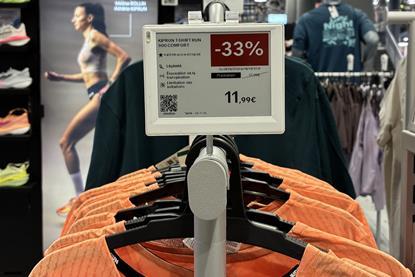
Decathlon fits 700 stores with digital price labels
The retailer, just named France’s most attractive brand, is now Vusion’s most global customer.

When knowledge is free, trust is the differentiator
AI has made product expertise available to all, instantly. What it cannot replicate – trust, experience, relationships – is the new competitive advantage.

Intelligence, analysis and advice for the global sporting goods industry.
TOPICS
Corporate and FinancialRetail and Supply
Marketing
Consumer
People and HR
Events and Trade Shows
Legal
CSR and Sustainability
Technology and AI
Asia-Pacific
Athlete economy
China and APAC
MARKET ANALYSIS
Analysis and dataIndustry Scorecards
Reports
Case Studies
SERIES and SPECIALS
FIFA World Cup 2026Winter Olympics 2026
Circular Economy
Impact of Sports
Redefining CSR 2025
SUBSCRIPTIONS
Membership plansFAQs
ASK SGIE AI
For premium subscribersABOUT US
About usNewsroom and Contacts
Media solutions
- COPYRIGHT © EDM PUBLICATIONS GMBH
- Contact Us
- FAQS
- Terms and Conditions
- Privacy & Cookies Policy
- Impressum
- Issues
- Topics A-Z