The Commercial Court of Paris has placed Le Coq Sportif into receivership for the next six months. According to a statement from the Swiss holding company Airesis, which has held a majority stake in the French sportswear brand since 2005, the period is “an opportunity for the company to be able to engage in and finalize discussions with new investors and strategic partners so as to sustain its activity and shore up its economic model.”
In another statement, released late last month, Airesis observed that the brand was facing “significant financial tensions, notably in terms of cash flow.” It was expecting October and November to be difficult, as they tend to be “every year,” because of the seasonal change in product offerings. The brand had accordingly engaged a merchant bank to help it seek financing. Airesis nevertheless believed the outlook for the brand’s sales to be “positive,” thanks to enthusiasm over the 2024 Olympics, in Paris, to “significant growth” in the footwear segment, and to distribution deals that the brand was negotiating in the US.
Le Coq’s deal to become the Premium Partner of the France’s Olympic team – with its 900 athletes, 300 off them Paralympians – was struck in 2022 and has perhaps not lived up to the brand’s hopes. Some of the trouble could be due to the brand’s “made in France” philosophy, which sets it apart from the competition but also keeps the cost of its manufacturing comparatively high. The brand renovated its old factory in Romilly-sur-Seine in 2010 and expanded it in 2023.
Le Coq’s total revenues for FY23 were down 14.1 percent year-on-year, from €141.4 to €121.4 million. (Some of the decline occurred in the brand’s home country of France, where sales went from CHF 98.1 to CHF 97.0 million.) Margins stayed flat year-on-year at 44 percent. Net income was a negative €28.2 million, down 309.4 percent year-on-year from a negative €6.9 million.
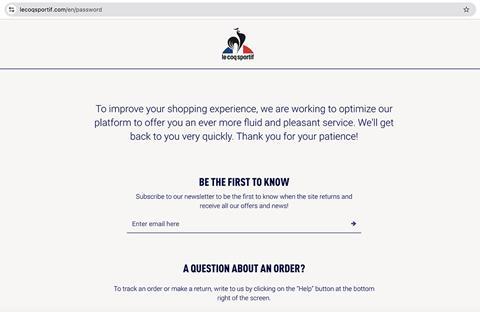
Airesis has since published its interim report for 2024, which shows a rise in revenues for Le Coq from €63.2 to €82.0 million, or 29.7 percent, in year-on-year comparison. Margins too rose, from 44 to 54 percent – “through strict control of production costs,” according to Airesis. Le Coq’s net income, however, continued to fall, from a negative €10.5 to a negative €18.2 million, or by 73.3 percent.
“Significant investments in marketing and sales costs,” the report reads, no doubt referring in part to the Olympic collection, “have greatly impacted the company’s operating profit, partly explaining the financial results as of the end of June.”
“Le Coq Sportif plans to sustain the momentum gained from the Olympic and Paralympic Games,” Airesis continues. “Collaborations with medal-winning athletes and the launch of limited-edition products are expected to further boost sales. The brand aims to continue its expansion into international markets while launching new initiatives to capture consumer interest in the post-Olympic context.”
Since our last report, in June, Airesis has reduced its stake in Le Coq from 78 to 75 percent.