Despite individual political efforts, including the German Prevention Act in 2015 and, in 2020, the World Health Organization’s “Global action plan on physical activity,” the trend toward global inactivity has not yet been significantly reduced or even reversed. Renowned scientific societies and organizations have therefore been calling for years on global policymakers to give greater priority to physical activity promotion and to create appropriate structures that enable stakeholders in sports, health and medicine to successfully implement physical activity-promoting measures. In addition, better networking of active organizations, associations, professional societies and political institutions is of utmost importance in order to exploit synergies and implement best practice examples as efficiently, comprehensively and sustainably as possible. A global alliance against physical inactivity is needed.
A global alliance to battle physical inactivity
As part of the 2021 Sport, Medicine and Health Summit, the “Hamburg Declaration” was not only a public signal against physical inactivity. On the one hand, the work contains the voluntary commitment of renowned organizations, professional societies and sports associations to implement concrete measures and efforts to combat the lack of physical activity and forms the basis of a joint alliance. On the other hand, the “Hamburg Declaration” calls on national and international politicians to join this global alliance and commit to concrete structural measures. This Global Alliance for Physical Activity Promotion has now been renewed at the Sport, Medicine and Health Summit in Hamburg from June 22-24, 2023.
During the Summit, four policy themes and actions were discussed by participating organizations to implement specific measures and efforts to address physical inactivity:
- Promoting physical activity as medicine.
- Lobbying decision makers.
- Adapting physical activity to individuals, communities and their environments.
- Utilizing the latest technologies.

IOC endorses Hamburg Declaration to combat physical inactivity
The International Olympic Committee (IOC) has reaffirmed its commitment to promoting healthy and active lifestyles through its endorsement of the Global Alliance for Physical Activity Promotion, enshrined in the Hamburg Declaration, to which the IOC is one of over 100 signatories.
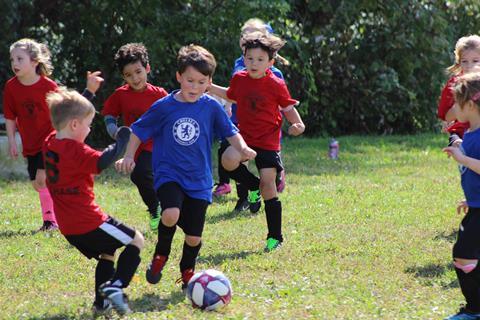
The WHO recommends that children and adolescents engage in at least 60 minutes of physical activity per day, while adults should exercise at least 150 minutes per week. However, a 2022 report shows that 81 percent of adolescents and 27.5 percent of adults do not meet these goals.
Driven by the Hamburg Declaration, the Global Alliance for Physical Activity Promotion represents a significant and concerted effort by sports medicine to reverse this trend and seeks to combat this inactivity by promoting physical activity as medicine, lobbying decision-makers, adapting physical activity to individuals and communities, and using the latest technologies to integrate physical activity into everyday life. Their joint efforts aim to improve public health, enhance well-being and address the societal impact of physical inactivity.
IOC and WHO join forces
The Global Alliance will also support the joint program launched by the IOC and WHO last November, which aims to strengthen the role of sport in achieving the Global Physical Activity Action Plan’s goal of reducing physical inactivity by 15 percent by 2030. Under the three-year program, the IOC and WHO join forces to provide guidance, training and tools to health and sports organizations to get more people moving. In addition, under Olympism365, which focuses on sport, health and active communities, the IOC will increase support for initiatives to promote sport and physical activity in the community.
The signing of the Hamburg Declaration was also supported by the IOC Medical Scientific Commission, chaired by Professor Uğur Erdener, which has established a 2022 Working Group on Physical Activity and Community Health. The recent event in Hamburg was also attended by Yannis Pitsiladis and Fabio Pigozzi, both members of the IOC Medical Scientific Commission; Fiona Bull, also a member of the IOC Medical Scientific Commission and head of the Physical Activity Department at WHO; and Joel Bouzou, president of the World Olympic Association (WOA).
Global efforts to reduce inactivity
Last year, the European Network of Outdoor Sports (ENOS), EuropeActive, the Federation of the European Sporting Goods Industry (FESI) and the It’s Great Out There Coalition (IGOT) launched the European Physical Activity Alliance (EPAA), an organization designed to promote the benefits of health-enhancing physical activity for physical, social and mental health and well-being. The EPAA was launched during an online event attended by more than 200 participants and featured outstanding presentations by high-level representatives from European institutions and the WHO.
Similarly, the World Federation of Sporting Goods Industry (WFSGI) recently signed a Memorandum of Understanding with WHO in Geneva that establishes a framework for collaboration to improve global health through increased physical activity and sports participation. The partnership with WHO aims to meet the United Nations Sustainable Development Goals (UN SDGs) and WHO’s Global Action Plan for Physical Activity (GAPPA) targets of reducing physical inactivity by 15 percent by 2030 through engagement across society.
Physical activity at the heart of Olympic Day 2023
The IOC has long championed the role that sport and the Olympic Games can play in promoting healthy and active lifestyles. Regular physical activity helps prevent non-communicable diseases such as heart disease, diabetes and various cancers, and the importance of sport to healthy lifestyles is undeniable.
The IOC’s support for the Global Alliance for Physical Activity Promotion comes as part of the new Let’s Move global initiative, launched in collaboration with WHO to inspire and empower the world to move more every day. Led by Olympians, Let’s Move was launched to mark Olympic Day on June 23 and calls for people to make time for exercise every day to improve their health.
Joining the Global Alliance to Promote Physical Activity is also in line with the IOC’s Olympism365 strategy, which aims to strengthen the role of sport as a driver for achieving the UN SDGs.
Topics
- CSR & Sustainability
- European Physical Activity Alliance
- Federation of the European Sporting Goods Industry
- FESI
- Hamburg Declaration
- International Olympic Committee
- IOC
- IOC Medical Scientific Commission
- It’s Great Out There Coalition
- Legal
- Let’s Move
- Olympic Day
- Olympism365
- UN SDG
- UN Sustainable Development Goals
- WFSGI
- WHO
- World Federation of Sporting Goods Industry
- World Health Organization