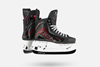
The Russian market for sportswear has become strained with the departure of industry leaders Nike, Adidas, Puma and Reebok, as well as smaller European players, over the past year, according to several Russian publications. This segment has suffered much more from Western sanctions than the sporting goods market in general. In particular, there is a shortage of sportswear for hockey in Russia due to the departure of CCM and Bauer from the country. Currently, some goods, including those from the U.S., are imported into Russia via parallel imports coming from China and Kazakhstan. Higher logistics costs have led to huge price hikes.
Several Russian factories produce sportswear for hockey, but the quality does not meet the requirements of professional athletes. The Yaroslav-based V76 plant, for example, makes ice skates, although this is not part of the core business of the company, which also produces equipment for boxing and MMA, among other sports.
Efsi, Russia’s oldest manufacturer of athletic apparel for hockey, cannot replace Western products because the quality of its goods is only suitable for beginners, Russian newspaper Delovoy Petersburg reported, explaining that of the nine models of sticks it manufactures, five are still made of wood.
There are also problems in figure skating. Because of sanctions, the average price of skates has almost doubled in Russia in the past year, and athletes are having great difficulty buying the clothes they are accustomed to. Similar problems exist in football, although in this case, a long list of Russian companies, including Zasport, Demix, Profit, Gaffgang and Senza Rivali, are ready to replace the products of Nike, Puma and other Western brands that used to supply Russian Premier League teams.
There are no substitutes for top ski brands, as companies such as Fischer, Rossignol, Salomon, Atomic and Madshus have severed their ties with the Russian market. All hopes in this area rest on the STC factory in Balabanovo in the Kaluga region, although – like other Russian manufacturers – it focuses mainly on quantity rather than quality, and its products are not suitable for high-performance sports.
Russian media reported that challenges in the sportswear market are likely to remain because even if investments in production are being made now, Russian companies will not see the first results for another three years. Until then, Russian companies will have to rely increasingly on parallel imports, which have picked up again in 2023.
Photo by Klim Musalimov on Unsplash