The isthmus country appears to be reorienting its foreign policy.
US President Donald Trump and his Secretary of State, Marco Rubio, have persuaded the President of Panama, José Raúl Mulino, not to renew its memorandum of understanding with China over the Asian giant’s New Silk Road, also known as the Belt and Road initiative (BRI). In fact, Miluno says that Panama will be studying the possibility of a withdrawal before the current memo expires.
Panama signed the memo in 2017, under President Juan Carlos Varela (2014–19), becoming the first of 14 Latin American countries to make the deal. Mulino was sworn in last year.
The reversal presumably comes as a blow to the canal’s second-biggest customer. According to the Panama Canal Authority, Chinese cargo passing through the canal amounted to 45.0 million long tons (23.8m from China, 21.2m to China) for full-year 2024. This is behind the US (160.1m in all) and ahead of Japan (30.7m in all). But we’re talking also about more than shipping tonnage.
Through BRI, China is funding several projects inside Panama, among them a high-speed rail corridor from Panama City to Costa Rica, a new subway line in the capital, a new container port and a new, fourth bridge over the canal.
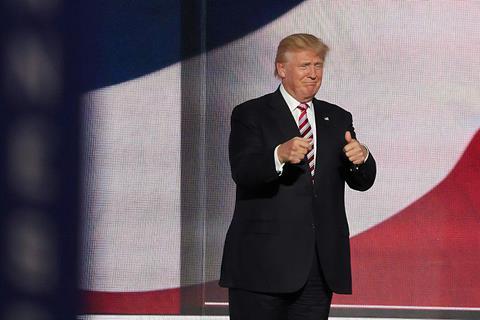
During their meeting in Panama, on Feb. 2, Mulino showed Rubio and the American delegation the many infrastructure projects in the works and invited the US to invest. In his subsequent press conference, he described the meeting as “highly respectful and cordial.” However, he affirmed that the sovereignty of Panama is not at issue and that Panama and the canal form, as he had explained to the Americans, a single entity. He went on to say that the current dispute with the US has less to do with the canal “per se” than with ports, although this is a semantic distinction.
The ports in question are those of Cristóbal and of Balboa. They lie at either end of the canal, on the Caribbean and Pacific respectively, and are under effective Chinese control. Chinese control of these ports, the US argues, amounts to Chinese control of the canal itself.
Commerce and geopolitics
The Panama Canal is, of course, one of a handful of chokepoints in worldwide maritime trade, along with the Strait of Malacca, the Cape of Good Hope and the narrows into and out of the Mediterranean: Gibraltar and Suez / Baba el-Mandeb. It is also, for the moment, the sole chokepoint in the Western Hemisphere – the Drake Passage being less used and the Northwest Passage being historically impracticable and now somewhat up for grabs.
Trump is once again talking about acquiring Greenland, and last month, speaking in North Carolina, he announced plans to acquire about 40 big icebreakers for the Coast Guard, as The Maritime Executive reports.
Russia has by far the most icebreakers of any country, and apparently has the only ones powered by nuclear reactors. China’s fleet appears to be small but expanding. (The Wall Street Journal has just published a piece on Russia and the Arctic.)
The right to defend
Built by the US, the canal has been under Panamanian control since Dec. 31, 1999, thanks to the Torrijos-Carter Treaties, which US President Jimmy Carter signed in 1977 and the US Senate ratified the following year. These superseded the (original) Hay-Bunau-Varilla Treaty of 1903.
Within Torrijos-Carter is the Treaty Concerning the Permanent Neutrality and Operation of the Panama Canal, which enables the US to defend the canal against any threat to its neutrality.
Trump has been arguing that the canal’s neutrality is in fact under threat – from China.
“China is operating the Panama Canal,” he said in his Second Inaugural Address. “And we didn’t give it to China. We gave it to Panama, and we’re taking it back.”
A personal touch in the negotiations
At least one member of the American delegation, Michael Kozak, was known to Mulino, the two having met through international legal negotiations conducted in the 1980s. Indeed, Kozak has in the past served as principal deputy assistant secretary for Inter-American Affairs (1988–91), principal deputy legal adviser (1985–88) and attorney adviser to the Panama Canal Zone Government (1972–73). He is now Senior Official at the State Department’s Bureau of Western Hemisphere Affairs.
The other subject
According to Mulino, 94 percent fewer migrants trekked through the now-famous Darien Gap on their way to the US this January than last. The number was down from as much as 26,000 to as little as 2,244 on Jan. 31.
Stability in Venezuela should keep the number low, he said, adding that Panama might now see a reverse flow, either of retreating migrants or of migrants conveyed to Darien by the US for dispatch from there to their countries of origin. Panama will be providing the US with an airstrip there for the purpose.