Every industry on earth is talking about artificial intelligence (AI). Introducing its massive AI Index Report for 2025, the Institute for Human-Centered Artificial Intelligence (HAI) at Stanford University says that AI is “poised to be the most transformative technology of the 21st century.”

Sporting goods is no exception. How often did we hear the term just at last year’s ISPO Munich? According to WifiTalents, 55 percent of sportswear companies use AI chatbots for customer service, 65 percent of sportswear brands use AI in product design, and 70 percent of sportswear brands use AI to forecast demand, while AI-driven product recommendations are increasing conversion rates by 35 percent. Then there are the uses for athletic training, for refereeing, for sports broadcasting. The Paris Olympics had AI-generated coverage, complete with a “cloned” sportscaster.

AI market will reach €1.9 trillion in 2030

France, incidentally, is to receive €109 billion in AI investment over the next few years, as French President Emmanuel Macron announced in February, on the eve of his AI Action Summit, calling the deal France’s equivalent to America’s Stargate initiative. But France is, in fact, dealing in small potatoes.

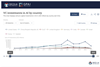
As the EU Parliament reports, drawing from Statista, the worldwide market for AI exceeded €130 billion two years earlier, in 2023, and should reach €1.9 trillion by 2030. Already in 2023, when France was investing €1.6 billion, the top dogs were China, at €7.3 billion, and the US, which was on another level, at €62.5 billion. The OECD provides a more recent picture of venture capital investment in AI, with the US once again on top.

OECD.AI Visualization

And what is the US up to now? The Trump administration has published three new Executive Orders (EOs) with accompanying “fact sheets”:

US AI development goals

The administration hopes to encourage the development of:

  • data centers for “AI inference, training, simulation, or synthetic data generation”
  • energy infrastructure (natural gas, coal, nuclear, geothermal and “any other dispatchable baseload energy sources” – cf. the EO of May 23 on “reinvigorating” the country’s nuclear industrial base)
  • semiconductors and related materials
  • equipment for networking and data storage

The data centers for “AI inference, training, simulation, or synthetic data generation.” A “Qualifying Project” will meet one of four criteria. It will have:

  • at least $500 million in capital expenditures,
  • at least 100 megawatts of power
  • the potential to serve for national security
  • received a “qualifying” designation from a cabinet secretary

Any new center with a hundred-megawatt minimum would at present rank among the most powerful in the world.

World’s largest data centers
Rank Name Location Capacity (MW) Area (million sq. ft)
1 China Telecom – Inner Mongolia Info Park (Alibaba, Tencent, Baidu) China (Hohhot, Inner Mongolia) 150 10.7
2 The Citadel – Switch US (Tahoe Reno, Nevada) 650 7.75
3 Harbin Data Center China (Harbin, Heilongjiang) 200 7.13
4 Range International Info Hub China (Langfang, Hebei) 150 6.3
5 Switch SuperNAP US (Las Vegas, Nevada) 315 3.5
6 CWL1 Data Centre UK (Newport, Wales) 148 2
7 Google Data Center US (Council Bluffs, Iowa) 100 2.9
8 Lakeside Technology Center US (Chicago, Illinois) 100 1.1
9 QTS Metro Data Center US (Atlanta, Georgia) 70-130 0.97
10 Apple Mesa Data Center US (Mesa, Arizona) 50 1.3
11 Yotta NM1 India (Panvel, Maharashtra) 50 0.82
Source: Brightlio, Visual Capitalist, Gbc Engineers, Perplexity

Massive US investments in semiconductors

The administration will favor plans that situate these centers on brownfield and superfund sites – that is, abandoned or contaminated tracts of land once used for industry. The US Environmental Protection Agency (EPA) estimates that the US contains more than 450,000 brownfields and offers grants for their clean-up and redevelopment.

Trump administration seeks to “streamline environmental reviews and permitting” and has therefore revoked a Biden administration EO titled “Advancing United States Leadership in Artificial Intelligence Infrastructure,” claiming that it “would have saddled AI data center development on Federal lands with pages of DEI and climate requirements.”

The energy infrastructure the administration has in view could involve natural gas, coal, nuclear, geothermal or “any other dispatchable baseload energy sources.” Of possible note here is the Executive Order of May 23, on “reinvigorating” the country’s nuclear industrial base, which requires various departments (Energy, Defense, Transportation, Management & Budget) to submit a report on the subject by mid-January 2026.

Semiconductors have been in White House news since March, when the Taiwan Semiconductor Manufacturing Company (TSMC) agreed to invest another $100 billion in chip manufacturing in Arizona. The original investment, in 2020, was for $12 billion and has been raised twice.

The second Trump administration has secured at least five other AI- or semiconductor-related investments, from Nvidia ($500bn), Apple ($500bn), Micron ($200bn), IBM ($150bn) and a consortium consisting of SoftBank, OpenAI and Oracle ($500bn). This last investment, announced to some fanfare, is the one that goes by the name Project Stargate. SoftBank, incidentally, has pledged a separate $200 billion.

Semiconductors imported to the US remain as of this writing free of tariffs. The industry that produces them, according to McKinsey, was the world’s fourth largest in 2024, behind high-tech, pharmaceuticals & biotech and media & entertainment, ahead of consumer packaged goods, insurance and banks.

AI Technology as export packages

The EO on exporting the “American AI Technology Stack” calls for the establishment within 90 days of the American AI Exports Program. Full-stack AI technology packages will consist of:

  • computer hardware
  • data pipelines and labeling systems
  • AI models and systems
  • AI security and cybersecurity
  • AI applications for use cases

This along with listed target countries or regional blocs, business and operational models, Federal incentives and support mechanisms, and so forth.

Finally, there is the EO on “Woke AI,” which stipulates that the government is to procure only such large language models (LLMs) as are:

  • “truth-seeking” (“prioritize historical accuracy, scientific inquiry, and objectivity” and “acknowledge uncertainty where reliable information is incomplete or contradictory”)
  • ideologically neutral (“do not manipulate responses in favor of ideological dogmas such as DEI”)

China has closed the quality gap on AI

And what, in turn, is China doing? According to FinTech News (Hong Kong), drawing from a report by Bank of America, Chinese capital expenditures on AI for the current year should amount to 700 billion yuan renminbi (€83.1bn), which by the South China Morning Post’s reckoning amounts to a year-on-year increase of 48 percent.

The Bank of China, for its part, has an “Action Plan to Support the Development of the Artificial Intelligence Industry Chain” and will accordingly be providing 1 trillion yuan renminbi (€118bn) over the next five years to various entities in that chain.

Perhaps more to the point than sheer money, though, is one of the takeaways in HAI’s aforementioned report. China might be getting more bang for its buck.

“While the U.S. maintains its lead in quantity,” writes HAI, “Chinese models have rapidly closed the quality gap: performance differences on major benchmarks such as MMLU and HumanEval shrank from double digits in 2023 to near parity in 2024. China continues to lead in AI publications and patents.”