When it comes to sports marketing, flashy stunts dominate – skydiving from space, self-lacing shoes or pop-up treadmills in Times Square. But what if meaningful brand activation didn’t require a viral moment or a massive budget? Enter the humble running club. Grab some ideas from trailblazer brands.
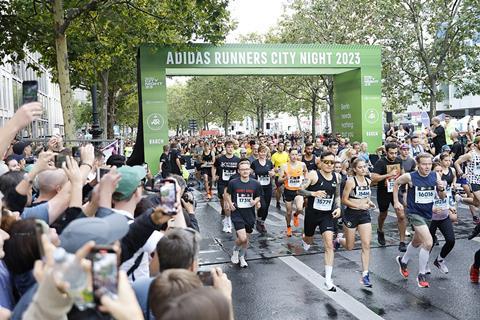
Running clubs are part fitness, part community, part lifestyle statement – and filled with emotions: The dopamine rush when you finish your first half-marathon alongside your bestie? Unmatched, believe me. I just saw my friend burst into tears last weekend when crossing the finish line at the Berlin 25 run and was about to join in. What’s more, these grassroots groups offer a range of opportunities meaningful brand activation – even for brands that don’t happen to have an industry giant’s marketing budget.
Why (and how) running clubs work
Running clubs (i.e., running groups not associated with sports associations) have been exploding in popularity, mainly because they give strangers an opportunity to socialize during casual runs for all levels. And it makes sense: Running might be one of the sports with the lowest barriers to entry, and many clubs don’t charge their members (or ask for a small fee only).
And it’s very social. Unless you’re the type that enjoys running in complete silence, you can chit-chat easily while running, sometimes even dive into a deep talk. It’s no surprise that the ideal running pace is the one that still allows you to hold a conversation (unless you’re aiming to improve your performance, in which case it makes sense to include interval training or occasional speed runs – the kind of thing that will keep you out of breath).
For its “Year in Sport: Trend Report,” Strava examined data from more than 135 million users across the world and surveyed 5,000 people on their sporting habits. It found a whooping 59 percent increase in running club participation, with 58 percent of the survey participants saying they made new friends via fitness groups. There’s a running gag (sorry, couldn’t resist) that running clubs are outpacing Tinder and the like, with people swapping swipes for sprints.
High Snobiety has compiled a list of running club gear that performs both functionally and optically, and Tinder has, in fact, teamed up with UK-based running club Runna to create a series of runs called Solemates, because it didn’t want to miss out on all the fun.
But it’s not all just mixing and mingling: After all, people also want to be active, work out, improve their running performance or train collectively for their first marathon. “I joined out of curiosity and company on group runs. I stayed for the camaraderie and friendships,“ writes one Reddit user. Another writes, “I joined because I didn’t want to run alone after dark […]. I stayed because I made friends and my running improved immensely. I don’t do interval training on my own, but with a group it’s not as bad!” Another enthusiast calls joining a run club “the best decision I’ve made in my life, other than starting to run in the first place.”
Lessons from the big players
All of these positive emotions associated with running is why brands like Nike, Adidas and Saucony have eagerly tapped in (plus the need for fresh running gear, obviously). In an interview with Marketing Brew, Saucony’s Brand Marketing Director, Jordan Yob, elaborated on the why: Activating with run clubs would help Saucony connect with consumers outside of social media and “help drive brand love and brand loyalty,” she said.
Also, it would get runners to try out Saucony’s products in real life, outside the store. “A lot of times, run communities have their favorite shoes that they may already be running in,” Yob explained. “It is an opportunity, when we do these events with run crews, to have them maybe try on a product that they’re not used to wearing.”
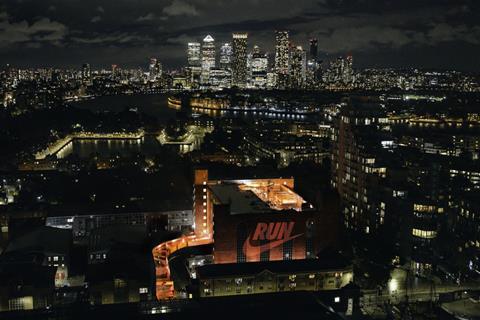
While running clubs were initially driven mainly by running enthusiasts and private individuals, Nike too was an early adapter, recognizing the potential impact of a community-focused strategy when it organized community runs starting (and ending) at their stores, and launching the Nike Run Club app (formerly Nike+).
While it continues to sponsor its own training events, Nike has also partnered with – and arguably contributed to the success of – run clubs around the world, like the Berlin-based Joy Run Collective. The club trains all year long, its coaches (and participants) donning new Nike apparel on social media. Moreover, before this year’s Berlin Marathon, Joy Run offered strength training, mobility sessions and shakeout runs powered by Nike.
“With the support from Nike, we can come together and expand our shared values of empowering people to start their journey into sports,” says Joy Run Collective founder Thị Minh Huyền Nguyễn in an interview with Schön! Magazine. She had wanted to create a space specifically for women, BIPOC and queer people, groups she felt lacked representation in the international running scene. The Joy Run Collective is just one of the many running clubs Nike has partnered with, but it goes to show just how well the collaboration works. The club members love the support – and display it, of course, all over their social channels.
Small brand, big impact
Of course, not every brand has the budget to launch an app, sponsor an entire running crew with professional coaches or finance the accompanying social buzz (after all, most branded running clubs come with a very well-tended of Instagram or TikTok account). “Not everyone has the means to build a running community. It’s a question of budget, of course. But there are so many small and independent brands that are cool too, with lots of cool creative ideas,” says Kathi Hoffman, an experienced marathon runner who has initiated run clubs in the city of Berlin, worked as a pacer for Nike and developed and run Adidas Runners, the brand’s global running community, for three years. Today, she leads The Good Run, a sustainability and equity-focused creative consultancy that specializes in projects at the intersection of sports and social impact.
“It’s about how you make the brand come to life,” she says. “And sometimes that requires a lot of creativity.” To create an activation for an extremely durable trail-running shoe, Hoffmann had to get creative. “Trail running doesn’t really exist in Berlin.” Her solution was to look elsewhere, to a not so distant place, and make traveling there a meaningful part of the experience: “We all met at the train station in the morning, took the regional train to the Harz mountains, met an expert there and tested the shoes. On the return journey, we had a small talk on the train about the full-trail shoes and discussed what sustainability really means. It was a very natural process that felt right for everyone.”
Another way brands can collaborate with run clubs, according to Hoffmann: “Accept that other brands may be involved.” In other words: enter into partnerships – which may require more coordination but are less costly. One of her clients, Ciele Athletics, has proven that partnering up with other brands – like Norda, or the Parisian Sportswear Boutique Shinzo – is by no means harmful. Ciele Athletics shows that running events can be given meaning, too. The Canadian running apparel brand has created the Earth Day Cleanup Event, in which they organized a clean-up run in the city of Montreal, for instance.
Beyond that, Hoffmann says, it’s worth it for small or young brands to look for niche run clubs – “not the ones full of trendy, fast runners but maybe those that cater to specific groups.” In those cases subtlety is key, along with attention to – and respect for – the group’s needs. “Not everyone wants to feel like they’re running at a branded event.”
Generally, though, she advises every brand to at least think the topic through, no matter the budget: “Finishing a 10K or half-marathon is an incredible feeling. And if you do that in a certain shoe, or with a certain accessory, it’s very likely that you associate that with the brand.”
So it does make sense to get involved in a running club, but you should perhaps turn aside from the beaten path and take the road less traveled.
Five takeaways on run-club brand activation
- Start small – co-host a one-off run or community talk
- Partner up – collaborate with like-minded brands or boutiques
- Be present, not pushy – prioritize authenticity over exposure
- Support the journey – subsidize entry fees or travel, not just gear
- Think niche – target identity-based or purpose-driven clubs