A new sponsorship of a Malaysian regional team extends FILA’s push into grassroots tennis in Southeast Asia. It comes as the Italy-born brand places greater emphasis on rising players and regional partnerships as its portfolio of premium tennis relationships evolves.
FILA just added a domestic tennis team in Malaysia to its sponsorship roster. On its own, that’s a minor regional deal. Read alongside the brand’s recent moves elsewhere in the sport, it looks like part of a broader reallocation: fewer marquee sponsorship properties, greater emphasis on rising players and emerging markets.
The Southeast Asian deal
Misto Group’s Malaysian subsidiary, Misto Malaysia, has signed an official sponsorship with the Wilayah Persekutuan tennis team, which represents Malaysia’s federal territories, including Kuala Lumpur. The team won six of the seven gold medals in tennis at the 2026 SUKMA National Games, the country’s largest multi-sport event, held Aug. 15–24.
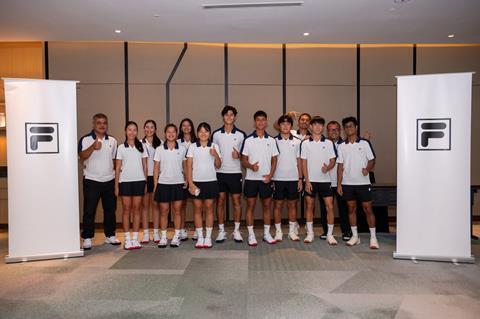
Misto supplied more than 650 pieces of FILA apparel and footwear to 12 athletes and 5 coaches, worn at SUKMA and at the Kuala Lumpur Open Tennis Championship, held July 28–Aug. 2. A Misto Group spokesperson said the company wants to “grow FILA’s presence in Malaysia and across Southeast Asia,” part of a stated plan to expand into further regional events and federations.
The deal is modest by global tennis standards, but it gives FILA direct exposure to one of Southeast Asia’s most successful domestic tennis programs at a time when the brand is looking to strengthen its presence in the region.
Borg-era heritage, present-day roster
Tennis has been part of FILA’s identity for five decades. The company was founded in Biella, Italy, in 1911 as a knitwear and underwear maker, and it didn’t enter tennis apparel until the 1970s. Signing Björn Borg in 1975 turned FILA into one of the sport’s defining brands during his run of five consecutive Wimbledon titles.
More than five decades later, tennis remains one of the few sports where FILA retains both authentic heritage and product credibility, giving it a category in which it can compete without matching the scale of investment typically associated with the industry’s largest sportswear brands.
Visualizza questo post su Instagram
A shorter list of marquee properties
The Malaysia deal comes at a moment of change in FILA’s top-tier tennis relationships. In November 2025, the BNP Paribas Open, the largest combined ATP and WTA 1000 tournament, ended its long-running outfitter partnership with FILA and named Lululemon as official apparel and footwear partner in a multiyear deal.
The brand’s ambassador list has also turned over. Emma Navarro left in January for FP Movement and a separate footwear deal with Asics, after wearing FILA since 2023. Reilly Opelka switched to Sease at the 2026 Australian Open, and Barbora Krejcikova moved on gradually, wearing Head through 2025 before signing with Vuori this year. None of the three remained with FILA, illustrating the turnover that has reshaped the brand’s athlete roster over the past two seasons.
Backing players on the rise
Where FILA has been active is signing players earlier in their careers. Lulu Sun, the WTA’s 2024 Newcomer of the Year, joined the brand in January 2025 after a breakthrough season that took her to a career-high ranking of world No. 39. Romanian player Jaqueline Cristian, who has since reached a career-high ranking of No. 28, signed in January 2026 following a strong 2025 campaign, joining China’s Bu Yunchaokete and American juniorAnna Frey on the roster.
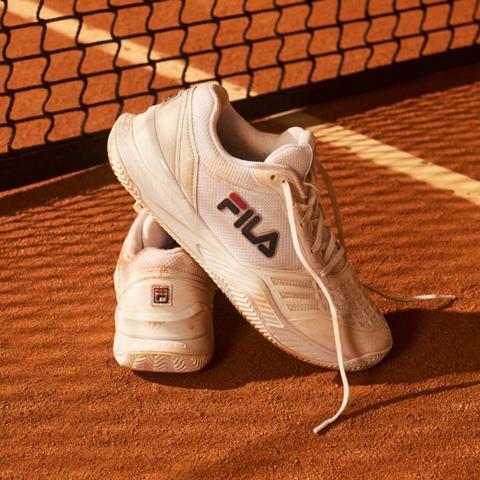
Product sits behind the athlete strategy. Sun and Cristian both debuted in FILA’s Axilus 3 Energized tennis shoe, making the model a recurring element of the brand’s athlete marketing. For FILA, the emphasis on emerging players paired with a consistent performance product may prove more distinctive than the changes in its portfolio of tournament partnerships.
Two FILAs to keep on the map
Reading FILA’s tennis strategy also means accounting for its split ownership. Global rights, including the Malaysia deal, sit with Misto Holdings Corp, the Seoul-based company that rebranded from FILA Holdings in April 2025 and also owns golf brands Titleist and FootJoy. Mainland China is a separate case: FILA China is licensed to Anta Sports, so tennis activity there sits outside Misto’s control and shouldn’t be read as part of the same strategy.
The SGIE take
Whether the strategy can restore FILA’s visibility in a tennis market increasingly dominated by larger sponsorship budgets remains an open question. What is becoming clearer, however, is that the brand’s future in the sport may depend less on headline-grabbing partnerships and more on its ability to build relevance through emerging athletes, grassroots programs and performance product innovation, of which the Malaysia deal is one small but consistent piece.
The approach also aligns with Misto’s stated goal of strengthening FILA’s role as a performance sports brand through closer ties with athletes and regional tennis communities.