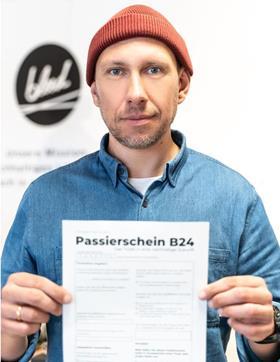
Bleed, a sustainable outdoor label from southern Germany, should be celebrating its 15th anniversary this year. However, in an open letter and video on the brand’s website and Social Media (German-language video below), founder and CEO Michael Spitzbarth has addressed his customer, asking, “Is real sustainable fashion threatened with extinction?” The reason is the current economic situation of his company.
In the fall of 2022, Spitzbarth says, Bleed was able to make up for an initial financial bottleneck “with a lot of creativity and drive and the insane support of our community,” but the way things are looking right now, he fears, “we won’t be able to close this year because our situation has deteriorated extremely in a very short time. Only capital providers can help now to turn the situation around.” A victim of the general crisis? It seems so. All in all, he says, it is the sum of many serious influential factors, such as price hikes, changes in payment terms on the suppliers’ part, high interest rates, inventories that tie up capital, and extremely changed consumer behavior that have contributed to the label getting into this precarious situation.
The concept that was still viable just a year ago – a 100-percent focus on the planet’s future – now appears to be no longer feasible in Germany. According to Spitzbarth, one can see that real sustainability hardly plays a role in purchasing decisions anymore and that people are currently only buying in a price-conscious manner, if at all. The current inflation rate has changed purchasing behavior dramatically in a very short period, he said. In addition, the market is being further diluted by the greenwashing of large companies. Spitzbart’s conclusion: The entire sustainable industry is at risk. And he could well be right, as greenwashing accusations against sports and fashion suppliers are indeed currently on the rise again. And other sustainable labels, such as Pyua, have also disappeared from the scene.
Nevertheless, Spitzbart is currently considering ambitious projects, including a travel and outdoor collection to tackle the microplastic problem, a “Made in Germany” line to focus on regional artisanal businesses, a textile recycling project to show how circular fashion can be implemented and a festival to celebrate the company’s anniversary. The company hopes to use a “transparency campaign” to draw the attention of potential customers and the community to the issue and call for more sustainable consumption.
The community can also help in another way: The Bleed webshop currently offers the chance to buy a ”ticket” to a sustainable future – worth between €10 and €250,000. Direct crowdfunding with absolute transparency. “We need your support,” pleads the entire Bleed team, hoping to continue to be part of the change.