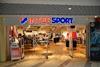
We have already reported about the recent bankruptcy and rescue of Gresvig, the former parent company of Intersport in Norway, and the more recent legal proceedings to save the parent company of Karstadt Sports in Germany. It’s now the turn of Intersport Sweden to seek protection from its creditors through a “corporate reconstruction” procedure that has just been accepted by the District of Gothenburg
The Intersport Sverige group - alias Intersport Sweden - filed an application for the proceedings on April 13, making them applicable also to its Löplabet chain of running shops. The company claimed in its request for protection from creditors that it basically has a sound core business but, like many other companies in the industry, has been hit hard by a recent sales decline in the wake of the coronavirus crisis, which has led to temporary payment difficulties and the prospect of unsustainable costs ahead. It added that some big suppliers and its bank have expressed their support for the proceedings. It’s not clear at this stage whether they might be asked to write off some of their receivables and credits, but all the creditors would have to receive equal treatment.
According to some local experts, however, the Covid-19 crisis has only accelerated an inevitable bankruptcy procedure which they had predicted several months ago, as the company’s current cash problems have been largely structural for some time.
The group has reportedly accumulated debts of nearly 800 million Swedish kronor (€73.0m-$79.8m) in the last four years through continued losses after a cash injection of SEK 371 million (€33.9m-$37.0m) made by an investment fund, Adelis Equity Partners, after it become its controlling shareholder in August 2015. The holding company of Intersport Sweden reported operating losses of SEK 49.5 million in 2016, SEK 128.5 million in 2017 and SEK 90.9 million (€8.3m-$9.1m) in 2018. In the interval, the net turnover declined to SEK 2.8 billion (€255.7m-$279.3m) from €3.0 billion.
The company claims to have managed to reverse a downward trend in recent years, performing well in 2019 and early 2020 as a profitable business with good potential, especially online. Marcus Wibergh, who became chief executive of Intersport Sweden three years ago, says that the group’s turnover declined by 4 percent last year in its physical stores but went up in the online channel, which came to represent about 10 percent of sales. He had been previously the Swedish country manager of XXL, the big Norwegian-based sports retailer, which has had its own financial problems lately.
In connection with its takeover by Adelis, the former Swedish Intersport cooperative was turned into an integrated retail chain that bought out most of its former major franchisees, centralizing operations. This may have reduced their entrepreneurial spirit, a local expert argues.
On top of that, as in Norway, the market situation has been very competitive due to the strong development in the country of XXL, which has buying market share in Sweden through aggressive discounting and a big communication budget, according to one of the local experts, Magnus Ohlsson.
Ohlsson notes that, between 2013 and the beginning of 2020, Intersport’s ”top of mind” brand awareness in Sweden declined by 29 percent based on the Xtreme Insight Brand Tracking index. Ohlsson adds that Intersport and another major player, Team Sportia, have also been challenged by online specialists as well as the omni-channel strategy of Stadium, which has successfully deployed its low-priced Stadium Outlet concept on the side.
In early April, Intersport Sweden already put more than 20 percent of the total staff on temporary layoff, including 17 employees at its headquarters and the others in warehousing and in certain stores, due to falling sales in the physical stores because of the coronavirus pandemic. The reorganization program would adapt the company’s business model to support a greater share of e-commerce. In the meantime, some franchisees in smaller cities have filed for insolvency. Stadium, which is Intersport’s major competitor in Sweden, is also proceeding with major layoffs.
The Intersport operation consists of just over 100 stores and 2,000 employees. Löplabbet (The Running Lab), which specializes in running shoes and related products, is part of the Swedish Intersport group since 2015. It consists of a network of eight stores and an online shop, and it is not related to a company by the same name in Norway. This part of the group’s business had a successful year in 2019 with sales up by 14 percent to of SEK 92.3 million (€8.4m-$9.2m), generating an Ebitda margin of 6.9 percent.
In contrast with most of the other European countries, the Swedish government has allowed all kinds of retailers to keep their stores open in spite of Covid-19, while recommending that people should keep a certain distance from each other. It is considering tightening the rules in the next days, but the epidemic has already lowered the demand for non-essential goods.
Only some categories of sports products have performed well offline and online, including fitness, bicycles, golf and outdoor sports. Intersport indicates that reduced visits to its stores have led to serious consequences for the company’s cash flow, leading to a need for reducing future costs.
Nils Åberg and Linda Schenholm from the Carler law firm have been suggested as receivers for the group. In Sweden, the corporate restructuring process is a legal instrument used for companies that have payment difficulties but have good opportunities to survive in the longer term. The company gets a certain amount of time to restructure its operations and its finances. The reorganization process is carried out step by step according to a specific plan approved by the court. The board of directors and the management continue to run the business. The brick-and-mortar stores and the company’s e-commerce will continue to operate as usual and customers should not be affected.
Picture: Sebastian Wikström