The German Football Association (DFB) has entered a transformative partnership with Nike, concluding a 70-year legacy with Adidas. Explore the impact of this strategic move and the reactions it has sparked. We also discuss the question of whether this multi-million-euro deal will pay off for Nike.
The German Football Association (DFB) has announced a landmark kit partnership deal with Nike, taking a bold step into the future by choosing Nike over its long-standing partner, Adidas. This partnership, which spans from 2027 to 2034, marks a significant transition in the landscape of German football, bringing to a close a historic relationship with Adidas that lasted over 70 years.
Overview of the Nike-DFB Partnership: Key Details and Financials
DFB President Bernd Neuendorf expressed enthusiasm for the collaboration, stating, “We’re eager to collaborate with Nike and appreciate the confidence placed in us. This partnership sets the stage for the DFB to advance key functions crucial for the comprehensive development of football in Germany over the next decade.” The deal, reportedly worth around €100 million annually according to Handelsblatt, is twice as much as the value of the Adidas deal and it underscores the DFB’s commitment to fostering the growth of football at every level in Germany.
Dr. Holger Blask, Managing Director of DFB, emphasized the fair and transparent selection process that led to Nike’s selection, citing their commitment to supporting grassroots sports and the sustainable growth of women’s football in Germany as key factors in their decision. The shift has prompted a prompt and wide range of reactions in the week after it was announced. Adidas, caught off guard by the DFB’s decision, acknowledged the end of a partnership that saw German teams clad in Adidas gear through countless victories on the world stage.
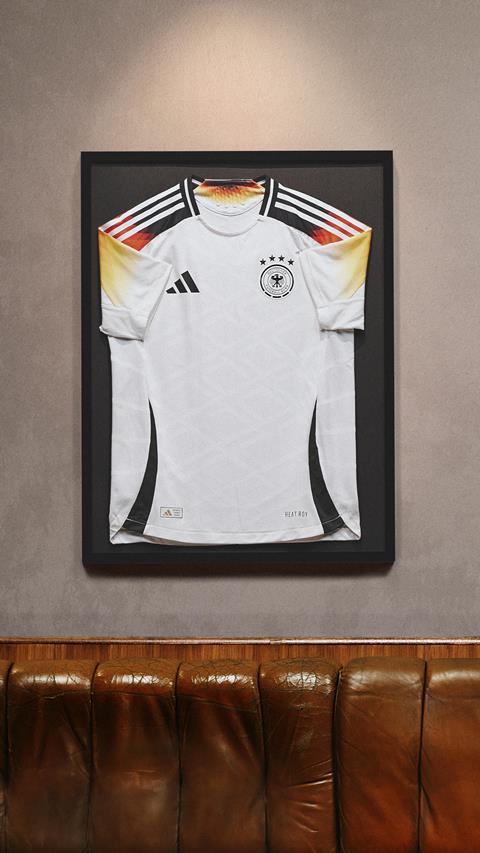
The move has also stirred public and governmental discourse, with figures like the German Economy Minister Robert Habeck lamenting the loss of a piece of German identity and calling for greater patriotism from the DFB.
Despite this, the DFB maintains that the decision was made with the future of German football in mind, prioritizing economic stability and the sport’s development over historical ties. Stephan Grunwald, DFB Treasurer, highlighted the financial stability the Nike partnership promises for the DFB, ensuring the association can continue to serve as a cornerstone of German society. “The DFB serves as a vital social institution, representing 7.3 million individuals and offering financial support to its members. Nike’s commitment ensures a financially stable future for the association, allowing us to maintain football as a national sport accessible to all.”
Read more: Adidas has revealed seven kits for Euro 2024, inspired by Tintin, tartan and carnation
The End of an Era: Adidas’s Historic Relationship with German Football
While the partnership with Nike heralds a new era for the DFB, it also signifies the end of an iconic relationship with Adidas. Adidas has been synonymous with German soccer since the 1950’s, outfitting the national teams in gear that became symbols of national pride and victory. Just remember Lothar Matthäus, captain of the 1990 World Champions or Bastian Schweinsteiger one of the heroes from the 2014 winners wearing the three stripes kit. Albeit the German squad won the World Championship 1954 in Leuzela jerseys, ’74 in Erima jerseys and was equipped from Umbro at the end of the ‘60s until ’71.The recent unveiling of Adidas’s jerseys for the upcoming European Championship, which Germany will host, serves as a poignant reminder of this storied partnership that still has to be continued until the end of 2026.
Economic Analysis: Will Nike’s Investment Pay Off?
As the DFB looks to the future with Nike, it acknowledges the mixed emotions surrounding this significant change. Yet, the association stands firm in its belief that this partnership will propel German football into a new era of innovation, growth, and success on the global stage. Whether the deal will pay off for Nike, or whether Adidas made a wise decision by not investing too heavily, only time will tell.
Christoph Bühren, a professor of sports management, commented on the German television channel ZDF, describing it as “a significant blow for Adidas to have lost the national team of their own country to Nike, of all companies. This represents a major strategic victory for Nike, which could also prove to be economically beneficial.” Bühren refers to the 2014 World Cup figures to support his analysis. At that time, Adidas anticipated selling eight million German jerseys. With a retail price of 100 euros per jersey and a 20 percent profit margin, Adidas generated 160 million euros in revenue.
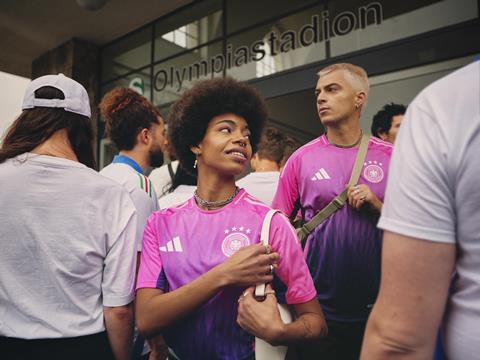
Ultimately, Bühren believes that Nike has secured the better deal, leaving Adidas disadvantaged. However, in the coming months, Adidas will still see benefits from the partnership. The pink away jersey, introduced recently, has become a bestseller only days after its release. An Adidas spokesperson reported to the public broadcaster in Germany that this jersey has set a sales record for a German away kit.
Did you know? There were also discussions about the English jersey. Find out more