From a category perspective, footwear and licensed delivered strong growth and fitness tech stood out in the apparel/health/well being segment.
The Australian group reported a 9.5 percent decline in net profit attributable to owners to A$129.8 million (€79.0m) for the first six months of FY25. H1 Ebit dipped by 6.5 percent to A$218.1 million (€132.8) for Super Retail Group, which owns Rebel Sport, BCF, and Macpac. Six-month revenues increased by 4.0 percent to A$2,106.7 million (€1.28bn). The consolidated results also include those from the Supercheap Auto chain.
Rebel Sport sales rose
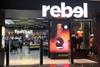
At Rebel Sport, which ended the period with 163 doors, Ebit declined by 6.6 percent to A$69.3 million (€42.2m). Profit before tax (PBT) declined by 8.0 percent to A$59.9 million (€36.5m) from A$65.1 million. Gross margin slipped by 150 basis points due to several factors, including a mix shift to lower margin items and elevated stock loss activity. Total sales rose by 4.4 percent to A$706.5 million (€430.1m) and like-for-like sales improved by 2.6 percent with growth in both transaction count and average transaction value. Online sales accounted for 20 percent of revenues. From a category perspective, footwear and licensed delivered strong growth and fitness tech was a standout in the apparel/health/well being segment.
At outdoor chain BCF, record H1 sales were driven by higher transactions and growth in the camping segment that was partly due to new categories of fishing, caravan and 4WD. The 162-door chain reported an 8.7 percent increase in PBT to A$44.8 million (€27.3m) and a 10.2 percent improvement in Ebit to A$51.7 million (€31.5m). Gross margin declined by 40 basis points due to additional investments in logistics and inventory. BCF completed two superstore conversions in H1 to bring the total to five.
Macpac saw a decline in H1
Macpac, which opened 7 stores in H1 to bring its total door count to 101, had a 79 percent decline in H1 PBT to A$1.7 million (€1.0m) as Ebit fell by 58 percent to A$3.9 million (€2.4m). Total H1 sales rose by 1.7 percent to A$107.4 million (€65.4m) from A$106.6 million with like-for-like sales growth of 2 percent in Australia offset by a 4 percent drop in the New Zealand market. Footwear and base layers performed well as consumers gravitated to lower price points in the insulation range of products. The chain has gained market share in Australia over the past six and 12 months despite subdued overall category growth. Active club membership grew 8 percent in H1 and represented 75 percent of the period’s sales.
Meanwhile, through the first seven weeks of H2, group like-for-like sales were up 5 percent, led by an 11 percent increase at BCF and 7 percent improvement at Rebel. Macpac has realized an improved start to H2 with 5 percent like-for-like sales growth as it prepared for its peak winter trade season in Q4.