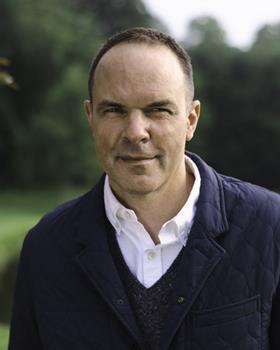
Chris Hufnagel, who was yesterday named the President and CEO of Wolverine Worldwide, Inc (WWW) with immediate effect following the sudden departure of Brendan L. Hoffman, faces numerous headwinds from day one, with the group’s Q2 figures now released. They range from getting inventory and debt to proper levels and driving results toward an eventual 12 percent operating margin, to re-invigorating the remaining brands in WWW’s portfolio and overseeing a further streamlining of operations.
“We need to take bold action”
At a glance, the Merrell and Saucony parent intends to make $30 million in incremental investments in its business, $25 million for brand building efforts and $5 million to enhance data and systems.
Wolverine is shuttering its corporate office near Boston by year-end, although it will retain a “creative hub” in Beantown, to put all staff under a single roof in Rockford, Michigan.
“We need to take bolder, faster actions to reach our full potential,” Hufnagel told analysts following his formal introduction as CEO, later adding, “But we are not starting over.”
Some of Wolverine’s current malaise can be attributed to longstanding issues within its corporate culture that have focused more on operations and less on brand building. Hufnagel – who was previously the President of the Wolverine brand and has seen the company divest Keds and its Wolverine Leathers business over recent months – wants to change that approach. And the company’s Sperry business, where Q2 revenues fell by 24 percent to $57 million, may be next on the block.
Wolverine Worldwide feeling effects of US retail woes
More recently, the company’s woes have been heightened by overhang effects from the global pandemic and numerous challenges in its home market that generates more than 55 percent of total revenues. In the last 10–12 weeks, Wolverine has experienced accelerating order cancellations in its US business, at least some prompted by high overall retail inventory levels, and a slowdown in new orders. Anticipated full-price sales to US wholesalers were replaced with lower-gross margin shipments to international distributors.
Total revenues fell by 17.4 percent in Q2 to $589.1 million, from $713.6 million, but were down 13.9 percent on an adjusted basis when excluding results from the sold businesses.
Operating income tumbled nearly 73 percent to $46.1 million from $167.9 million, and gross margin fell by 430 basis points to 38.7 percent, hurt by the sale of end-of-life inventory. Net income sank by 80 percent to $24.4 million from $124.5 million and adjusted operating margin was down by 560 basis points to 5.8 percent.
Inventories were up by 1.3 percent, or $8.4 million year-over-year, to $647.9 million. WWW is targeting year-end inventory of $520 million and year-end debt of approximately $850 million.
Double digit sales decline across all groups
Meanwhile, all three reporting segments suffered double-digit sales declines in Q2. Lifestyle Group sales slipped by 38 percent to $74.9 million; declined by 15.6 percent for the Work Group to $117.8 million; and fell by 10.5 percent in the Active Group to $383.3 million. Merrell sales were down 16 percent year-over-year to $177 million and are projected to fall by high-single digits in FY23. Saucony sales rose by 2 percent to $142 million in Q2 but are expected to decline by a low single-digit for the FY.
Sweaty Betty sales suffered a 7 percent revenue drop to $44 million and are forecast to fall by a low single-digit for the 12 months. Wolverine brand sales stepped backward by 28 percent to $41 million in Q2 are forecast to slide by a high single digit this year.
FY23 outlook adjusted
With the Q2 results and citing current softness in the U.S. and Europe, coupled with lower demand from third-party distributors, Wolverine Worldwide adjusted its FY23 outlook. Total sales are now forecast to range between $2.26 and $2.28 billion with EPS in the $0.45 to $0.55 range. Full year adjusted gross margin is pegged at 40.0 to 42.0 percent.
Meanwhile, Wolverine Worldwide expects to net at least $50 million from the sale of non-core assets this year. It is also forecasting annual free cash flow at $80 to $100 million.