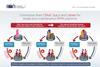
The EU Commision’s revision of the framework, now three years old, has sought to meet the legal challenges of new online distribution models by imposing new vertical restrictions. Reactions in the private sector have been various.
A bit more than three years have passed since the revised 2022 Vertical Block Exemption Regulation (“VBER 2022”) came into force, with vertical guidelines provided by the EU Commission. This is a good time to examine how the framework has influenced the structure of European distribution schemes for branded sports products.
I speak from practical experience, having provided legal advice in this area to a number of reputed manufacturers, retailers and wholesalers in the sporting goods and cycling industries. But I am therefore bound by professional secrecy and will limit my remarks to general aspects and developments, revealing no individual details.
Vertical distribution in the EU / European Economic Area (EEA)
Some of the basics of VBER 2022’s history and regulatory framework are as follows:
European and national legislators limit the freedom of operations at different vertical supply levels (manufacturing, importing distribution, retail), in accordance with various EU and national competition laws.
VBER 2022 creates a presumption of legality for vertical restraints unless the market power of the involved commercial operators exceeds 30 percent, at which point companies lose the benefit of the block exemption regulation (provided that the restraints violate no competition law). Further, VBER 2022 permits a restraint on a given vertical level (namely, a concerted practice or agreement) if, on assessment, it constitutes an appreciable restriction of competition within the meaning of Article 101(1) of the Treaty on the Functioning of the European Union (TFEU). Parallel provisions of law exist nationally – e.g., Section 1 of the German Competition Act (GWB).
If a restraint is in fact permitted, the next legal step is to examine whether the agreement or concerted practice can benefit from the provisions of VBER 2022, or whether an individual exemption is required from the EU Commission (Article 101(3) TFEU) or from a national competition authority, such as from the German Federal Cartel Office (FCO) (Sect. 2 GWB).
As with other existing EU block exemption regulations, VBER 2022 is limited to ten years. By 2018 the EU Commission had already started a comprehensive review of its predecessor, VBER 2010, and its accompanying vertical guidelines.
Influenced by private market participants, and not least by the tireless lobbying of the Federation of the European Sporting Goods Industry (FESI), the Commission concluded that substantial changes brought about by strong or dominant online players warranted a revision of VBER 2010. According to its evaluation report of September 2020, new online distribution models were creating new legal challenges and required new vertical restrictions on, for instance, internet advertising and the sale of branded products through online marketplaces.
When VBER 2022 came into force, on June 1, 2022, brand owners noted with relief that the substantially revised legal framework allowed them to maneuver in a more tailored way, with fewer restrictions.
Tools of VBER 2022
Three years later, it makes sense to recall some of the elements of VBER 2022 that give brands, importers and distributors greater leeway in designing their European distribution systems.
For a different overview, see my previous article on VBER 2022.
Online platform bans and restrictions
This was among the most controversial issues in VBER 2010. Already in 2011, the European Court of Justice (ECJ) had ruled in his landmark “Pierre Fabre” decision that manufacturers may not prohibit the online sales of their distributors. Six years later, with VBER 2010 still in place, the same court held in the “Coty” case that it was lawful to contractually prevent distributors from selling the luxury cosmetic goods handled by Coty on Amazon’s marketplace. Yet it remained unclear whether the judgment applied to branded products outside the luxury category.
The German Federal Cartel Office was vehement in its opinion that the “Coty” verdict applied strictly to luxury products. Fortunately, VBER 2022 resolved the uncertainty through non- differentiation between product categories. The manufacturers of “conventional” products are now in principle permitted to impose such bans, or at least some quality restrictions, on their marketing partners, provided that the contractual arrangements or practices fall within the scope of VBER 2022.
Dual pricing systems
Under VBER 2010, a manufacturer/brand/importer that granted higher discounts to offline brick-and-mortar retailers than to its online retail customers would have been violating competition law.
VBER 2020, by contrast, recognizes the common consumer practice of visiting physical stores to try and touch and feel products and then buying them afterwards, at a cheaper price, online (the so-called free-rider syndrome). It makes it legitimate to differentiate between these two types of distribution and offers more favorable conditions to physical retailers. Yet the price differences must not become so substantial as to discourage customers from shopping online.
Co-exclusivity
Manufacturers may now appoint up to five exclusive co-distributors in a certain territory and require them to refrain from active sales of products under contract in the other co-exclusive territories. Such co-distributors at wholesale may also be contractually obliged to impose corresponding sales restrictions on their affiliated retailers.
Extended duration of non-compete clauses
Unlike in the past, manufacturers/brands/importers may now define a non-compete term of more than five years, tacitly renewable, provided that the vertical marketing partner can terminate the respective contractual arrangement with reasonable notice.
Limitations on information exchange under VBER 2022
A brand/importer that sells the same products through its online shop and through various retailers – both channels competing at downstream market level – is engaged in a so-called dual distribution system. An exchange between the channels of such sensitive information as sales quantities or pricing may constitute an appreciable intentional infringement of competition law.
Regrettably, the line between permitted exchange of information and unlawful conduct remain blurred. The Commission’s vague guidance in this area states only that an exchange of information is permitted:
- when it relates to the implementation of the vertical agreement
- when it is necessary to improve the production or distribution of the goods concerned
Post-VBER 2022 follow-up with my clients
When VBER 2022’s benefits became known in the industry, the commercial operators among my existing and new clients reacted in a multifold way. Some had already launched selective or exclusive distribution systems at wholesale and retail as early as 2010 now contacted me to learn about the novelties of VBER 2022. Together we revised old agreements, informed vertical marketing partners of the new distribution policy and asked them to accept it.
Just a handful of the foremost retailers rejected the modified contracts, leaving their associated brand no choice but to terminate the supply relationship.
Other clients preferred to amend existing distribution contracts to match the changed market circumstances and regulatory framework.
A very few retailers tried to challenge my clients’ revised market policy by initiating legal action. None of these actions were successful, but they demonstrated that an absence of contractual written (selective) distribution terms made it much more difficult to terminate a supply relationship with a retailer.
Still other clients remained passive, shying away from the additional work of contract revisions. These clients often had other pressing priorities, such as a supply chain disruption or a decline in sales through changed consumer purchase behavior. Most recently, tariff discussions, disputes and issues have created new headaches at all levels of the supply chain.
Focus of EU and national competition authorities on vertical agreements
Clearly, competition authorities are more and more focused on vertical practices and contractual arrangements. I myself find it fascinating to see national or regional competition authorities reprove well-known or even famous brands of violating competition laws.
In 2024, for instance, the EU Commission fined one of the world’s largest snack manufacturers over €330 million for restricting the cross-border trade of chocolate, cookies and coffee. Another prominent example is the case of the Swiss watch manufacturer Rolex, which had imposed a comprehensive ban on internet sales of its local distribution partners for over ten years. In 2023, France’s Competition Authority levied a fine of €91.6 million.
In 2024, the same authority imposed fines of €611 million on ten manufacturers and two distributors of household appliances and of €470 million on two major low-voltage electrical equipment manufacturers and two distributors. These cases involved forbidden resale price maintenance (RPM), the manufacturers having fixed resale prices and punished retailers that deviated therefrom.
They also reflect a broader trend: unlawful RPM practices remain the top enforcement priority in the consumer goods sector.
About the author
Dr. Jochen M. Schaefer (www.sjlegalonline.de ) is a German attorney practicing around Munich. For several years, he has been legal counsel to the World Federation of the Sporting Goods Industry (WFSGI) and the European Federation of the Sporting Goods Industry (FESI). He also chairs the WFSGI’s Legal Committee and co-chairs FESI’s Digital Committee.
Among his other clients are many well-known brands within and beyond the bicycle / sporting goods sector. He specializes in advising on operational and strategic activities, such as national and international distribution, intellectual property (IP) and risk management, and in the drafting and negotiation of comprehensive contracts, taking a kind of cradle-to-grave approach.
Address any questions about this article (or in general) to sj@sjlegal.de or call +49 151 1640 7932.