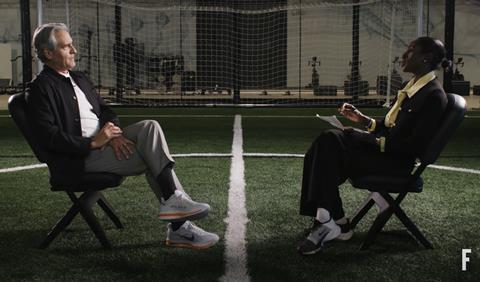
In a recent interview with Fortune magazine, Nike CEO Elliot Hill had plenty of opportunity to talk about Nike’s fall and how he believes it is returning to the top. It all became a long talk of the need for innovation and new Nike icons.
In a recent interview with Fortune magazine, Nike CEO Elliot Hill had plenty of opportunity to talk about Nike’s future. The interview covered his long-standing career at Nike (he began in 1990 as a traveling salesman for the Swoosh) but, of course, focused on Nike’s many challenges at the moment.
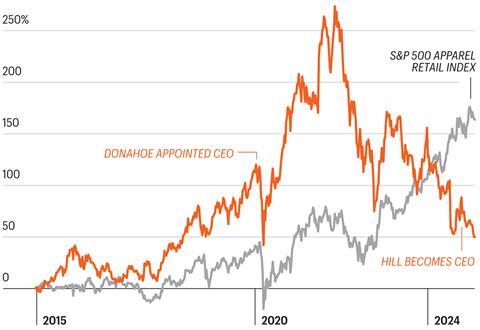
Because the 60-year-old sporting colossus has never faced such a tough time as now. As Fortune reporter Devin Gordon says in the interview, and as all of us in the industry knew last year before Hill made his comeback on Oct 14: “The year of 2024 was Nike’s worst year in history. Sales have declined year over year for the last three quarters, across all geographies. In June, share prices plunged 20 percent in a single day, vaporizing $28 billion in shareholder value, and by the end of the year, Nike stock was down nearly 60 percent from its November 2021 high. In July, Nike laid off some 750 employees, which may not sound like much at a company of 84,000, but it was the kind of purge that spells high-level trouble, including 32 vice presidents, 112 senior directors, and 174 directors.”
How it all went down
Gordon asks how this fall could happen to Nike, which, as recently as the pandemic, was one of retail’s big winners. As Hill himself says in the interview: “And oh, by the way, revenue takes off, and you’re now selling retail, so you’re getting 2x revenue, not just the wholesale revenue.” Nike’s DTC and digital businesses took off, driving the stock price to a historic peak in November 2021. It wasn’t so long ago, in fact, that Nike was one of the corporate world’s big winners of the pandemic.
Hill continues: “The mistake we made is that when things started to normalize, we didn’t shift back to running the offense that we know so well.” The strategy worked, in other words, until it didn’t.
The company’s fatal error was believing that the pandemic had changed consumer behavior forever – that brick-and-mortar was dead. Instead, it turned out that people still liked going to stores, checking out the new styles, trying on their sneakers before buying them. And when they walked into Foot Locker or Dick’s Sporting Goods or DSW, all those shelves that used to be filled with Nikes now held new brands, like Hoka and On Running. And all the new Nike stuff was old stuff.
Which brings us up to date. Nike’s current predicament, Gordon says, is due to an unprecedented supply glut, a mountain of wheezy old classics piling up in its warehouses that will require a couple more quarters of steep discounts to burn through.
Restoring a company’s culture, the way back
A major issue about Nike that’s been discussed in the last years is its lack of innovation, a lack of products consumers have never seen before. Gordon asks Hill, who does not deny it.
“There’s evolutionary innovation – you’re making tweaks to materials, foam construction, how you laced the shoe, the outsole pattern, et cetera,” Hill says. “And then there’s revolutionary innovation: groundbreaking, jaw-dropping, what-the-hell-did-Nike-just-do? Innovation. You’ve got to do both.”
Or to address the elephant in the room:
“I don’t know if we’ll ever see where we are today again – three shoes being as big of a piece of a pie as they are. I don’t think it’s healthy. We need to be looking forward.”
Yes, innovation and new products that don’t just sell but also fill a niche in the market and meet the needs of athletes and common people alike – these are what Nike needs. And Hill agrees. Gordon says the last time Nike released a jaw-dropper was arguably in 2017, with the Vaporfly. Since then, upstarts in the sneaker landscape are blowing people’s minds: On Running, with its buzzy, spray-on concept shoe that made its debut at the Paris Olympics, and Hoka, with its multi-hued, bulbous sneaks.
The Air Jordan turns 40 years old today, Gordon says, and wonders what Nike’s next bestseller will be.
“Do we have a Jordan in our portfolio?” Hill said. “Don’t know yet, but it’s our job to plant those seeds.”
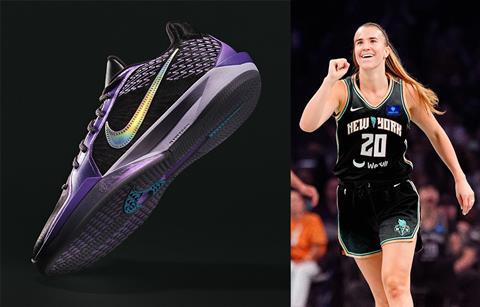
There’s at least one seedling on the company’s new-product roster: the Sabrina line, named for sharpshooter Sabrina Ionescu of the WNBA champion New York Liberty, is a commercial hit that has also unexpectedly become a popular shoe among male NBA players.
But innovation takes time. The birth cycle of a Nike product line, from concept to store shelf, is about 18 months, so Hill’s fingerprints on the shoe lineup won’t begin to show until 2026. Nike innovation team leader John Hoke has told the press that the team is “cooking up products that they hope will blow athletes’ minds and shock the world of sports.”
And Gordon couldn’t say it much clearer than she does at the end of her article: The future can’t get here fast enough for Hill and the entire Nike brand.
See the whole interview with Nike CEO Elliot Hill below: