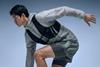
Seoul’s independent sportswear brands are reshaping retail by prioritizing community and experience over transactions. With pop-ups surging 79 percent and quality that challenges legacy sportswear giants, Korea is exporting a new retail model that blends performance, style and social connection.

Seoul rejects anything basic. Across the city’s districts of Seongsu dong, Itaewon, Hongdae, and Dosan Park, a new retail beast is breeding in the South Korean capital, where independent stores, rotating pop-ups, and community driven spaces all claw for attention. Young Seoul moves through these neighborhoods with intent, and local brands are paying attention. Sportswear, especially, has carved out a place here. And it’s highlighting the trend: Retail is no longer about what people want to wear, but rather, it’s something bigger they want to belong to. 

Putting the “experience” into retail experience

While sunglasses brand Gentle Monster lures in customers with art installations, running and eyewear brand RIDAR targets the outdoor crowd by turning its café into a base camp with useful amenities; transforming gear from an ad prop into a peer-to-peer community builder.

@stylebykvn

Elevating Your Workout Style: Korea Edition RIDAR, 88Seoul, Undercontrol 📍🇰🇷 Korean gym outfit, Korean workout clothes, Korean athletic brands, Korean gym outfit, Korean gym brands, Korean athleisure, Korean activewear, Korean athletic wear Gym Drip, Gym Outfits, Gym Fashion, Workout Sets, Workout Clothing Women, Workout Clothing Men, Workout Outfits, Running Outfit, Running Fit Check, Runner Drip

♬ original sound - amari

A different game is played by PI Running Lab. Whereas RIDAR uses space to build community, PI relies on design. Its futuristic vests tap a South Korean running subculture with its own rituals and crowds that show up unforced. PI has teamed up with GREEN PULSE Eco-Run and Norules Running – a Seoul crew that treats a Saturday run as a social event – so the “product” is now showing up in the right gear next to the right user. 

All these brand strategies share a common origin: The online economy has redefined consumer expectations. With digital convenience dominating, physical stores must evolve beyond traditional selling and offer unique experiences that motivate in-person visits.

RIDAR’s spokesperson said they simply want to create a space where people can actually reconnect. “It is just a natural reflection of how our community lives.” Located near the Han River, the café invites customers to relax, focusing less on immediate sales and more on fostering experience and building community. 

“We really think a space should be about more than just selling stuff. That idea carries beyond our walls, too. Our World Tour content lets us hang out with runners and running cultures everywhere, so the RIDAR experience keeps growing far beyond any one store.”

Physical stores allow brands to refine products through direct customer feedback and hands-on use, the spokesperson added. Even as Ernst and Young projects offline retail spend will slip from 77 percent in 2025 to 73 percent in 2028, e-commerce remains far from taking over, with Euromonitor placing offline sales at 14.4 trillion of the 18.9 trillion total in 2025. 

“Our real goal isn’t about direct sales [for revenue generation] but in building relationships, learning from how customers actually use our gear, and constantly improving, because that is how we earn trust and grow the running community around RIDAR.” 

Seoul’s immersive retail push targets Gen Z by keeping the senses engaged with constant pop ups that turn a visit into an experience, according toKorean Culture. A strategy validated by over 3,077 pop ups in Seoul’s major districts in 2025, a 79 percent jump from 2024. 

Brands have realized that the experience itself is the most powerful marketing tool, according to J’Nae Phillips of the Fashion Tingz newsletter. Customers no longer simply visit a store but instead walk in already imagining how every corner will translate into a social media post, playing the visitor and the broadcaster at once. 

“Digital buzz and physical space are not separate things anymore. The real question is whether that space still moves you emotionally after you have already posted the photo,” says Phillips. 

“Pop ups feel intense because they could vanish any second. Permanent stores lose their pull once people know what to expect. The real challenge is keeping the emotion alive,” she explains. 

Content creator Kevin (@stylebykvn) believes Korea is perfectly positioned for this moment, as running and fitness culture have exploded there, fueling real consumer demand. The country has already turned K‑pop and K‑beauty into global exports. Applying that same trendsetting instinct to sportswear makes Korea a global force. 

“Legacy sportswear brands have slipped [in popularity] just as run clubs exploded. The winners must deliver performance and style together.” Citing one brand that is doing “it” right, Kevin chooses the Swiss running brand On. “On proves the model works with Roger Federer on performance and Zendaya with Law Roach on style,” Kevin says.  

Other brands have followed the immersive retail trend, from LA and NYC to Tokyo, Bangkok, Mexico City, Berlin, and beyond. 

Local quality is trumping big names in Asia

Although immersive retail experiences help, South Korean brands rise because their quality and price pull consumers away from the legacy-sportwear giants. A shift that shoppers and reviewers across the internet talk about constantly. 

“I switched to Xexymix from Lululemon, Athleta, and Alo. The quality beats them at half the price. Their ICE t-shirts, sweatpants, and 360N leggings feel more comfortable with better material and more colors, though sizes run small because it is a Korean brand,” one user wrote online.

@_w.bella Verish the store you need to visit if you are in Seoul and looking for sportwear @Verish 베리시 @Verish US #verish #sportwear #seoul #seongsu #pilates ♬ son original - Wiwi 💜

Kevin adds that brands which are embracing technical minimalism have won customers over, aligning with the recent shift in fashion toward discreet branding and subtle design rather than large, visible logos. 

“Call it elegant technical minimalism. Unlike Harajuku maximalism, Korean style stays low key with neutrals and earth tones, letting shape and accessories do the work,” he adds. 

“Korea has a smart play, taking global names and reimagining them as performance or techwear.” South Korea has reimagined foreign brands, including Major League Baseball and other global names, by turning their merchandise into lifestyle experiences. As Kevin observes, “I have covered examples like Honda, the US Postal Service, and National Geographic.”  

The shift away from Western sportswear giants is accelerating across Asia, where Gen Z favors homegrown brands that now lead in innovation according to the Bluebell Group’s 2025 report on the Asian consumer. Phillips notes that Korea’s local pride movement is both authentic and a polished branding machine, lifting tactics from Western streetwear playbooks built by Supreme and Stüssy around locality, scarcity, and community. 

“Korea took those ideas and made them its own, but the social and cultural context could not be more different. As the world starts to look the same everywhere, people crave what actually feels local,” Phillips added. 

As online scrolling causes digital fatigue, physical stores offer a real escape. Brands now see customers as community members worth keeping for years, not just one transaction. 

“Shoppers are done with boring stores. They want social, polished spaces. Korean sportswear spots now sell a lifestyle aesthetic, not just gear,” Phillips concludes.

Contribuor profiles:

Kevin (@stylebykvn) is a content creator and curator covering design-forward sportswear and global style culture. His work also draws on prior experience in tech and venture capital, and has been featured on Highsnobiety and NPR

J’Nae Phillips is a writer and creator of the Fashion Tingz newsletter. 

Eastern views

Asia-Pacific insights for the sporting goods industry

Analysis, insights, and expert perspectives on the sporting goods industry across Asia-Pacific — covering market trends, manufacturing, retail, and brand strategy from China to Southeast Asia to Oceania. With Jakarta-based contributing editor Yohana Belinda.

Explore Eastern views →