Jakarta-based Ortuseight launched in 2018 on futsal and football shoes. It now claims local market leadership in Indonesia, exports across 11 ASEAN markets, and has expanded into running – where its shoes sometimes outsell the lines it was built on, competing against Nike, adidas and Anta.
Indonesia ranks among the countries where local footwear is currently thriving, riding the wave of health awareness. Given the country’s manufacturing clout, that boom is no surprise, with Indonesia sitting at the heart of some of the world’s largest footwear manufacturing hubs, where major international brands such as Nike, adidas, Puma and New Balance produce a sizable share of their sneakers and athletic shoes.
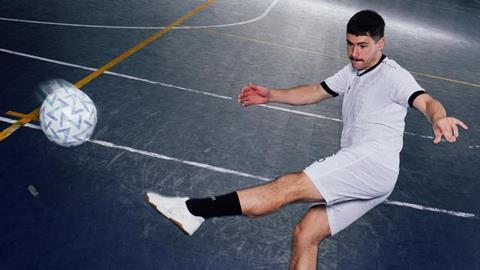
Against this backdrop, Yuda Amardika co-founded Ortuseight, a Jakarta-based sports shoe brand launched in 2018 specializing in futsal (a five-a-side indoor version of the game) and football shoes. A natural starting point for a footwear challenger brand, given that Indonesians play these sports more than any other.
“We started with futsal and football, and most of our customers come from middle to lower income groups, so demand stays concentrated in those two sports and they drive most of our revenue,” Amardika said during a Zoom meet-up on the growth of local shoes in Indonesia.
Amardika further mentioned that school extracurriculars have helped fuel the two sports’ popularity, which in turn has lifted Ortuseight’s shoe line.
The brand now claims market leadership among local footwear players, exporting its futsal and football shoes across the eleven member states of ASEAN, including Singapore, Malaysia, Brunei and Thailand.
“It’s surprising [that] the ASEAN market has taken side to us, because for them, we’re an international brand, and the challenge is to compete with bigger players, [who] already know the market, such as adidas and Nike,” he said.
Running joins football as a growth category
The company, however, sees the market extending beyond futsal and football. The Covid-19 pandemic drove health awareness sharply upwards in the country, with a 2022 survey finding 68 percent of Indonesians have grown more conscious of their health. Other sports are gaining ground, among them tennis, padel and running. Spotting the opportunity, Ortuseight began developing its own running shoes and other active footwear.
“We have to stay relevant to the market, and in doing so, we need to keep an eye on market trends, because the running scene is just crazy right now.”
In Indonesia, running events and running communities have also multiplied, with 642 races reported throughout 2025 and a strong Gen-Z turnout, making up 38 percent of 5K participants and 33 percent in the full marathon, according to Indonesian-based urban planning solutions group CitiesLab. “Coffee shops are packed with runners in the morning these days,” Amardika adds.
While choosing not to share exact revenue figures, Amardika revealed that with running and padel gaining their ground, sales of those shoes now surpass futsal and football.
“Football and futsal remain our most popular line, the foundation we built our name on, though sometimes our running shoes even outsell them,” he said
Such figures show that the opportunity for local shoes runs high; yet growing a local brand is rarely smooth sailing, especially on pricing, with Ortuseight currently positioning itself in the middle range.
Local brands hold ground on price and national pride
Local players are, however, holding their ground against better-known brands. Research by Indonesian market research company Jakpat revealed that Indonesians overwhelmingly prefer to buy local brands, with 65 percent choosing to “buy local” when it comes to fashion and accessories.
With the Indonesian economy in downturn, consumers may be choosing not to make purchases. But hobbies such as football, padel and tennis keep drawing more participants. As a result, individuals with lower disposable income increasingly opt for affordable shoes offering good quality.
In a 2024 Jakpat survey of 2,955 locals on their preferred local sporting brand, Specs topped the survey as the most preferred with 15 percent of the vote. This was followed by Mils at 7 percent, with Eiger and Ortuseight at 5 percent each, and Eagle slightly lower at 4 percent.
Material challenges and the carbon plate problem
Currently, one challenge for local brands lies in materials development. Ortuseight produces most of its futsal and football shoes locally, but for other performance shoes such as running, the brand still imports the carbon plate from China. As a local brand, positioning itself in this segment brings its own difficulties, since brands such as Nike and On can hit the same price range when they go on sale.
“Chinese brands [particularly Anta] have also entered Indonesia, and when they go on sale, their shoes can even undercut our own price.”
One of Amardika’s hopes rests on malls nationwide hosting a store dedicated to local brands, as national pride in wearing these shoes keeps rising, even as many consumers still weigh up price when spending.
At the same time, building the technology for its running shoes poses another challenge, though the brand has worked with various athletes to develop its performance shoes.
“We hire an athlete for each category, be it futsal, football or running, and especially for running, we brought in the two professional triathletes; part of our efforts to develop the technology,” Amardika explains.
Looking outward: the case for local brands on the global stage
Even with the challenges still ahead, Amardika remains optimistic about the current trend for local shoes, on the strength of both sales and technology.
“That’s the challenge, really. Our task is to strengthen our brand abroad without leaning on the fact that we’re Indonesian, or a local brand, and so on,” he said.
“I mean, when we walk into a mall, we see that sometimes an entire floor is [filled with] international brands. So, how about giving local brands one dedicated floor of their own, and they could finally set up their proper displays,” he closed.

Eastern views
Asia-Pacific insights for the sporting goods industry
Analysis, insights, and expert perspectives on the sporting goods industry across Asia-Pacific — covering market trends, manufacturing, retail, and brand strategy from China to Southeast Asia to Oceania. With Jakarta-based contributing editor Yohana Belinda.
Explore Eastern views →