New Balance has turned authenticity into a global business strategy. The Boston-based company reported record revenue of $7.8 billion in 2024, driven by its rare combination of local manufacturing, purposeful partnerships, and carefully managed lifestyle collaborations. From Made in USA factories to cultural partnerships and European premium positioning, the brand demonstrates how heritage and growth can coexist in today’s performance and lifestyle markets.
Key points
- Local production and craftsmanship continue to define New Balance’s differentiation in an industry dominated by outsourced manufacturing.
- Purposeful athlete and team partnerships such as those with Shohei Ohtani and Liverpool FC extend global reach without diluting brand identity.
- Selective lifestyle collaborations and a clear premium positioning in Europe have turned New Balance into a cross-category brand connecting performance and culture.
Authenticity as a scalable model
New Balance has demonstrated that authenticity can scale. The Boston-based company has achieved sustained global growth by adhering to consistent principles: manufacturing transparency, selective partnerships, and a focus on human-centered craftsmanship.
In 2024, New Balance reported record revenue of $7.8 billion, a 20 percent increase year-on-year. This built on $6.5 billion in 2023, up 23 percent from the previous year.¹ At the core of this performance lies a comparatively rare approach in the global sporting-goods industry: a continuing commitment to local production.
Craftsmanship as core identity
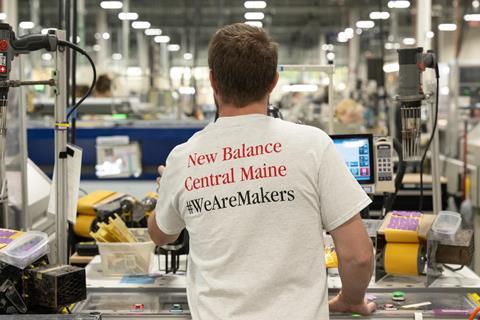
While most competitors have shifted production almost entirely offshore, New Balance owns and operates its production facilities and invests in their expansion. The company owns several manufacturing facilities in the US, including plants in Maine and Massachusetts. The company’s Made in USA and Made in UK collections follow defined domestic-content requirements, with the majority of materials and labour according to the company sourced locally.
Chief Executive Joe Preston describes local manufacturing as central to the brand’s strategic positioning:
“We believe where and how we make our products is part of our identity.”²
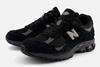
In practice, this approach provides differentiation in a market increasingly concerned with origin and traceability. Models such as the 990v6 and 576 combine performance technologies with heritage appeal, addressing consumers who value provenance and quality craftsmanship.
This model has evolved from a heritage practice into a commercially relevant differentiator. Whereas global competitors pursue volume and speed, New Balance competes on control and credibility – an approach that has proven resilient in premium and heritage-driven segments.
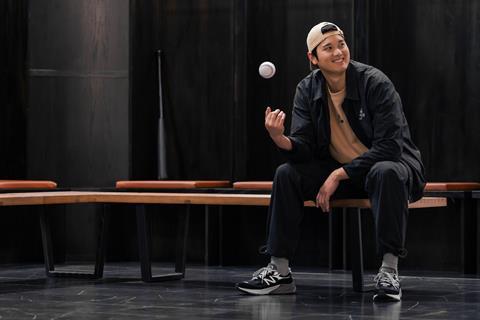
Purpose-driven partnership with Shohei Ohtani: expanding reach through relevance
New Balance’s 2023 partnership with Shohei Ohtani extended beyond traditional athlete endorsement. The Japanese baseball star’s global recognition and personal humility align with New Balance’s understated brand profile. The collaboration introduced signature footwear and apparel lines and significantly raised the company’s visibility in Japan and North America.³ Market feedback and media analysis indicated a stronger perception of New Balance within baseball footwear, demonstrating that athlete partnerships built on shared values can also deliver measurable category impact.
“Ohtani represents balance – between power and grace, between performance and integrity,” noted Chris Davis, Chief Marketing Officer at New Balance.
Ohtani’s continued success in Major League Baseball keeps the partnership relevant. At the same time, other New Balance athletes, including Cal Raleigh of the Seattle Mariners, maintain visibility within the same sport, thus reinforcing presence without oversaturation.
Liverpool FC: lessons from a global stage
Between 2015 and 2020, New Balance supplied the official kits of Liverpool FC, a period that included the club’s UEFA Champions League victory in 2019 and Premier League title in 2020.⁴ The partnership proved that a privately held brand could compete for global exposure alongside larger listed peers.
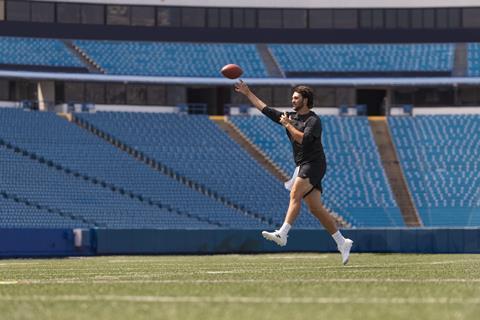
Following the contract’s conclusion, New Balance streamlined its sponsorship strategy, focusing on athletes and teams whose image and behaviour fit the company’s brand values. Current high-profile partners include Coco Gauff, Cooper Flagg, and Josh Allen, as well as Bayer Leverkusen, the 2024 German champion.
The company’s approach reflects a deliberate effort to balance visibility with credibility. Rather than expanding its portfolio for maximum exposure, New Balance prioritises long-term alignment and brand coherence; a stance that distinguishes it from competitors reliant on transactional endorsement models.
Lifestyle: From heritage to culture
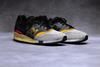
Over the past five years, New Balance has broadened its positioning from performance running into lifestyle and fashion. The transition has been achieved through collaborations with design-driven partners including Aimé Leon Dore, Stone Island, JJJJound, and Salehe Bembury. These partnerships reinterpret classic silhouettes — notably the 550, 990, and 327 — for new audiences. Limited runs, strong design narratives, and careful creative control have turned these collections into high-visibility cultural moments. Unlike trend-led campaigns, the collaborations are managed to protect scarcity and design integrity, allowing the brand to expand cultural relevance without overexposure.
Industry observers, including Highsnobiety and the Business of Fashion, describe New Balance as “a design-conscious brand bridging performance and lifestyle.”⁵
The effect extends beyond product demand: craftsmanship has become a form of cultural capital, strengthening the brand’s premium perception in both fashion and sportswear markets.
Europe: A premium platform for the brand story
Europe has become the most visible stage for New Balance’s premium narrative. The Oxford Street flagship in London, opened in 2023, includes a Craftsmanship Corner that highlights production methods and material sourcing, positioning retail as both showroom and storytelling platform.⁶
According to Euromonitor International, New Balance’s share of the European athletic footwear market rose from roughly 3.5 percent in 2018 to about 6 percent in 2023, with particular strength in the UK, France, and Germany.⁷ This success reflects the compatibility of the company’s heritage message with European consumer priorities such as quality, durability, and provenance. The Made in UK line, in particular, resonates with consumers seeking authenticity and regional production credibility.
The European trajectory illustrates that authentic craftsmanship, when linked to tangible product experience, can support premium growth even in highly competitive markets. While others rely on rapid innovation cycles or mass-marketing budgets, New Balance competes through consistency of story and execution.
Innovation grounded in tradition
Heritage defines New Balance’s tone, but product innovation underpins its continued competitiveness. The company’s Fresh Foam and FuelCell technologies place it within the top performance tier, competing with leaders such as Nike and On in both cushioning efficiency and design refinement. The FuelCell SuperComp Elite v4, developed for elite distance running, positions the brand squarely within the high-performance running segment.⁸
Simultaneously, New Balance is advancing its sustainability commitments. Its 2023 Sustainability & Impact Report outlines targets including a 30 percent reduction in greenhouse-gas emissions by 2030 (from a 2019 baseline) and 100 percent renewable electricity in company-owned facilities by 2025.⁹ The company is also expanding the use of bio-based and recycled materials across major footwear lines.
By combining technical credibility with environmental accountability, New Balance strengthens its position with both performance-driven athletes and lifestyle consumers seeking responsible production.
A strategy built on consistency
New Balance’s progression from a regional running-shoe manufacturer to a globally relevant brand demonstrates that authenticity and growth need not be mutually exclusive.
In an industry characterised by short product cycles and heavy marketing rotation, the company has maintained a disciplined focus on a few strategic pillars:
- controlled local production
- selective partnerships based on shared values
- brand communication anchored in tangible craftsmanship rather than seasonal trends
This approach has delivered measurable results: consistent revenue growth, increasing market share in key regions, and strong perception among both athletes and style-conscious consumers.
Where many competitors chase relevance through constant reinvention, New Balance has built equity through continuity, selectivity, and trust. Its example suggests that, in an increasingly volatile and image-driven market, stability and coherence can be a long-term competitive advantage.
Sources & references
¹ New Balance Sustainability & Impact Report 2023 — global revenue data.
² Joe Preston, CEO statement on local manufacturing — New Balance corporate communications.
³ New Balance press release on Shohei Ohtani partnership (2023).
⁴ Official UEFA and Premier League records (2019 – 2020 Liverpool FC titles).
⁵ Highsnobiety, Business of Fashion, Hypebeast, Sneaker Freaker coverage (2022 – 2024).
⁶ New Balance press release — Oxford Street flagship launch (2023).
⁷ Euromonitor International, Athletic Footwear – Europe 2024 edition.
⁸ New Balance product specifications — FuelCell SuperComp Elite v4.
⁹ New Balance Sustainability & Impact Report 2023 — environmental targets