The LA Lakers champion’s announcement signals a structural shift in athlete monetisation, with platforms increasingly vertically integrated to own the fan relationship end-to-end: shop, engagement, community, and co-creation.
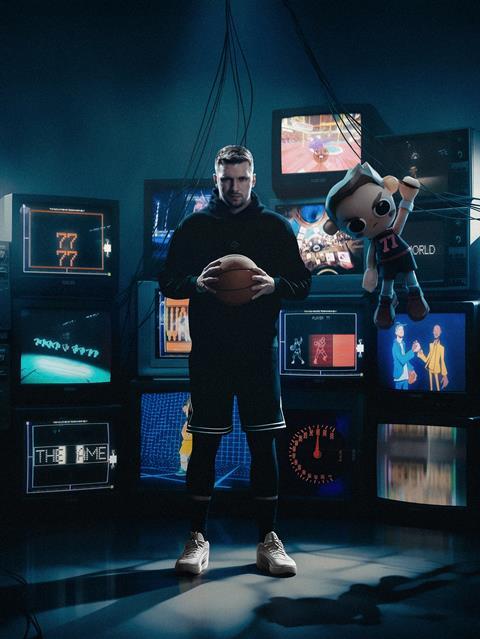
Los Angeles Lakers star Luka Dončić launched 77X, an athlete-owned commerce and entertainment company that consolidates content, merchandise, collectibles, and live experiences into a single direct-to-fan platform, the company announced Jan. 27.
The launch includes Fan Pass, a free membership program available at 77x.world that gives fans early access to limited product drops, exclusive content, and input into product development.
The platform is powered by Shopify and positions Dončić as the first athlete to control intellectual property, creative direction, and fan relationships through a vertically integrated model – or as described in the official communiqué, a “single direct-to-fan universe”.
Under the 77X model, Dončić owns the audience relationship end-to-end and determines which brands or products earn distribution through his platform.
Ownership and control replace endorsement deals
According to the announcement, 77X was structured to give Dončić full ownership of intellectual property and creative direction—elements typically controlled by brands in traditional endorsement relationships. The platform consolidates functions that are normally fragmented across multiple licensing partners, media platforms, and retail channels.
Lara Beth Seager, Chief Business and Brand Officer for Luka Dončić and CEO of 77X, said the company represents a new blueprint for “how the next generation of athlete brands will be built”, emphasizing direct connection over intermediated relationships.
The platform launches as Dončić leads NBA All-Star fan voting, ranks as the league’s most-viewed player across social platforms, and holds the No. 2 position on the NBPA’s top-selling jersey list for the first half of the 2025-26 season, according to NBA and NBA Players Association data.
Platform structure and commercial model
77X integrates six commercial and creative functions:
- Worlds: Original universes and characters for fans to explore over time.
- Entertainment: Animation, games, short-form storytelling, and behind-the-scenes content.
- Drops: Limited run merch and collectibles released directly to fans.
- Access: Fan Pass benefits including early access, exclusive content, and surprise unlocks.
- Live Events: Real-world fan experiences to bring the universe to life.
- Collaborations: Creator and brand partnerships integrated authentically into Luka’s world.
The company plans its first merchandise launch on 77x.world around Valentine’s Day, with additional releases throughout the year. Fan Pass members receive early access to all product launches. 77X will also produce live fan experiences, starting with an immersive activation in Los Angeles from 12–14 February during NBA All-Star weekend, widely considered the league’s largest annual fan event.
Shopify partnership and technology infrastructure
77X partnered with Shopify to power its global commerce infrastructure, enabling the platform to handle direct-to-consumer transactions, membership management and personalized fan interactions at scale.
Harley Finkelstein, President of Shopify, described 77X as “a new blueprint for fandom and the athlete-to-entrepreneur journey,” noting that “it could only be powered by Shopify. From storefronts inside fan universes to checkouts embedded in live experiences, Shopify is built for this scale of ambition.”
The Fan Pass membership system was developed in-house as a proprietary technology platform designed to scale to other athletes, according to the announcement. This suggests 77X may serve both as a commerce platform for Dončić and as a template for other athletes seeking to control their fan relationships directly.
The bottom line
Dončić’s launch of 77X follows similar efforts by athletes in other sports to control their own distribution, but represents the most comprehensive attempt yet to consolidate media, commerce, and community under athlete ownership.
The model’s success or failure will shape how other top-tier athletes structure their operations. Success could trigger a wave of NBA, NFL, and European football stars launching comparable platforms. Failure would suggest the model works only for a narrow subset of global superstars with sufficient scale to justify platform infrastructure costs—reinforcing traditional endorsement deals for the majority of professional athletes.
Athlete Economy on SGIE
Visit our athlete economy page, where we track entrepreneurs building brands, investors backing ventures, and community leaders driving change—plus the organisations, partnerships, and monetisation strategies shaping the sporting goods industry.