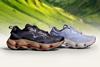
Two brands are increasingly at the heart of the group’s growth strategy. After a strong start to the year, both maintained their momentum in the second quarter. Now, the US company aims to capitalize on that strength to reach a much broader lifestyle audience beyond their traditional outdoor and running markets.

Merrell increased revenue in the second quarter by 11.1 percent to $175.5 million, while Saucony grew by 9.9 percent to $158.6 million. This confirms a long-standing growth trend, particularly for Saucony: The running brand had already grown by 20 percent in the first quarter. For the full year, Wolverine Worldwide expects Merrell to post revenue growth in the high-single-digit percentage range and Saucony to post growth in the mid-double-digit percentage range.

“Our team delivered another good quarter, ahead of our expectations – led again by Merrell and Saucony,” said President and CEO Chris Hufnagel. The company continued to implement its strategies, strengthened its brands and achieved “consistent, profitable growth.”

Wolvering Worldwide - Income
  2026 2025 Change
Quanter ended July 4 2026; June 28 2025 ($ million)
Revenue 506.4 474.2 6.8%
Cost of goods sold 271.1 250.2 8.4%
Gross profit 235.3 224.0 5.0%
Gross margin (%) 46.5% 47.2% -0.7pp
Selling general and administrative expenses 187.4 182.4 2.7%
Environmental and other related costs (income) net of recoveries 0.6 0.9 -33.3%
Operating expenses 188.0 183.3 2.6%
Operating expenses as % of revenue 37.1% 38.7% -1.6pp
Operating profit 47.3 40.7 16.2%
Operating margin (%) 9.3% 8.6% +0.7pp
Interest expense net 7.1 8.5 -16.5%
Other income net -0.6 -1.4 -57.1%
Total other expenses 6.5 7.1 -8.5%
Earnings before income taxes 40.8 33.6 21.4%
Income tax expense 7.9 4.6 71.7%
Net earnings 32.9 29.0 13.4%
Diluted earnings per share ($) 0.37 0.32 15.6%
Half ended July 4, 2026; June 28, 2025 ($ million)
Revenue 964.0 886.5 8.7%
Cost of goods sold 510.9 466.4 9.5%
Gross profit 453.1 420.1 7.9%
Gross margin (%) 47.0% 47.4% -0.4pp
Selling general and administrative expenses 370.1 354.4 4.4%
Environmental and other related costs (income) net of recoveries 1.8 4.0 -55.0%
Operating expenses 371.9 358.4 3.8%
Operating expenses as % of revenue 38.6% 40.4% -1.8pp
Operating profit 81.2 61.7 31.6%
Operating margin (%) 8.4% 7.0% +1.4pp
Interest expense net 13.6 16.5 -17.6%
Other income net -0.8 -2.9 -72.4%
Total other expenses 12.8 13.6 -5.9%
Earnings before income taxes 68.4 48.1 42.2%
Income tax expense 13.1 5.9 122.0%
Net earnings 55.3 42.2 31.0%
Diluted earnings per share ($) 0.61 0.47 29.8%
Source: Wolverine Worldwide

From performance to lifestyle

The two brands are now looking beyond their core businesses. Management sees Saucony’s potential extending beyond the global running market, which is worth approximately $40 billion. In the adjacent athletic lifestyle segment, the company estimates the addressable market opportunity at more than $150 billion. Saucony is thus expected to increasingly reach consumers who wear the brand outside of running.

Merrell is taking a similar approach. The outdoor brand has traditionally been strong in hiking and is expanding its position in trail running. At the same time, Wolverine Worldwide sees potential to position Merrell more strongly in the lifestyle business. In its annual report, the company already describes Merrell as a global leader in hiking shoes with a growing following in trail running and lifestyle.

This shifts the growth equation for the US company: it is no longer solely about gaining market share within the running and outdoor segments. The question is whether Saucony and Merrell can develop sufficient brand relevance to transfer their performance credibility into much larger lifestyle markets.

MerrellUrbanHikeGuideLondon

Wolverine Worldwide sees potential to position Merrell more strongly in the lifestyle market.

Sweaty Betty’s rebranding takes time

Sweaty Betty demonstrates that this approach doesn’t work automatically. The activewear brand continued its weaker performance in the second quarter. Revenue fell by 2.4 percent to $40.3 million and, on a currency-adjusted basis, by 2.7 percent. Revenue had already declined by 4 percent on a currency-adjusted basis in the first quarter.

Wolverine Worldwide is repositioning Sweaty Betty more toward a premium DTC model, particularly in the US. While Hufnagel speaks of further progress with the brand, the turnaround is not yet visible in revenue performance. For the full year, the company expects a decline in the low-single-digit percentage range.

The picture is mixed outside the Active Group as well. The Work Group saw a 1.6 percent decline in the second quarter to $105.8 million. The eponymous Wolverine brand, on the other hand, performed better, increasing its revenue by 6.6 percent to $39.6 million.

International markets gain ground

Business outside the US is becoming increasingly important for the brands’ continued expansion. International revenue rose by 10.9 percent to $277.2 million in the second quarter, growing significantly faster than that of the group as a whole, which is now generating just under 55 percent of its revenue in international markets.

In the US, business performance was significantly more subdued. In numerical terms, revenue there rose by only about 2.2 percent. DTC was also not a major growth driver: Direct sales remained virtually flat at $111.7 million, nearly matching the prior-year level.

Vietnam makes tariffs a risk factor

While Merrell and Saucony are providing tailwinds on the demand side, cost pressure is coming from the supply chain. Wolverine Worldwide does not manufacture a large portion of its shoes itself but has them produced to its own specifications by external manufacturers. The company describes its production and procurement base as diversified.

Nevertheless, the heavy reliance on Asian manufacturing makes US trade policy a key factor. In 2025, more than half of the direct supplier factories were in Vietnam. Higher US import tariffs were already having an impact in the second quarter: The gross margin fell by 70 basis points to 46.5 percent. Price increases and other countermeasures were able to offset the additional burdens only partially.

Nevertheless, the company improved profitability at the corporate level. Revenue rose 6.8 percent to $506.4 million, and operating income increased 16.2 percent to $47.3 million. The operating margin rose by 70 basis points to 9.3 percent.

Wolverine Worldwide is becoming more optimistic

Following the earnings forecast revision upward in the first quarter, management is therefore raising its guidance once again. For 2026, Wolverine Worldwide now expects revenue of $1.98–$2.00 billion, up from the previous range of $1.960–$1.985 billion. The forecast for the adjusted operating margin was raised from 9.5 to 9.9 percent, and the range for adjusted earnings per share was raised from $1.43–$1.58 to $1.55–$1.65.

However, whether Wolverine generates a few million dollars more or less in revenue in 2026 is likely to be less critical for its long-term development. The bigger bet lies with its two strongest brands: Can the company leverage the performance momentum of Saucony and Merrell to develop global lifestyle brands without diluting the credibility of its core running and outdoor segments?