Everyone in this industry is talking about Curry Brand today. This isn’t a story only for the fans. This isn’t a story about North America, or about another Chinese brand arriving at the American border with a famous face.

It’s about a global redistribution of brand weight, the kind that happens once or twice in a generation, and about the role a single athlete can play in accelerating it. That’s a global industry story. And an athlete economy story. That’s why it matters here.

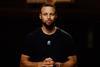
When Stephen Curry confirmed his partnership with Li-Ning this week, the announcement landed as celebrity sports news. What it actually represents is something more structural: one of the most ambitious attempts by a Chinese brand to build a sustainable footprint in the Western sportswear market. And in the sport’s history.


Visualizza questo post su Instagram

Un post condiviso da Wardell Curry (@stephencurry30

Li-Ning reported $4.3 billion in revenue last year. Still, 98% of this revenue came from the domestic Chinese market. That single figure explains everything about this deal. The Curry partnership is not a brand partnership like the ones we report regularly here on SGIE. It’s an attempt to rewrite the company’s geographic income statement.

For those who followed the news through feeds and newsletters, we add our strategic point of view here: number by number, move by move.

The strategy behind the news

Li-Ning’s ambition to reduce its dependence on China has been explicit in investor communications for several years. To increase the share of revenue generated overseas, the company formed a joint venture in October 2024 with HongShan (formerly Sequoia China), retaining a 55 percent stake, specifically to accelerate overseas market entry. 

The logic is straightforward. The brand is profitable and cash-generative, but domestic growth is softening, and the Chinese consumer market is under pressure. International expansion has become a necessity.

Li-Ning — Strategic Logic Behind the Curry Deal
International expansion framework, as of June 2026
Business Domain Core Focus Implementation Mechanism 2025 Financial & Operational Context
Geographic diversification Reduce China revenue concentration US and China Curry Brand stores; JV with HongShan Domestic baseline: 2025 total revenue RMB 29,598 million (+3.2% YoY). Core Li-Ning store count sits at 6,238 (excluding LN Young). The HongShan JV is structured to absorb overseas operational risk, allowing the primary corporate team to defend the mainland amid intense promotional headwinds.
Category extension Professional sports & functional tech Focus on core sports categories: running, badminton, basketball Footwear and functional gear now account for 56% of total revenue. Management pivoted toward high-performance functional tech in 2025. Professional running models crossed 14 million pairs sold across core tech lines. Badminton surged to 7% of total revenue, driven by Olympic gear cycles. Lifestyle apparel dipped 3%.
Athlete equity Premiumizing the roster Curry + Butler + Wade; sub-brand architecture Gross profit margin held at 49.0% despite heavy market discounting. The 2025 presentation leveraged the 2024–2025 Olympic cycle to validate product technology. Athlete equity is explicitly linked to premium functional sub-brands — Butler’s signature lines and Wade’s Way of Wade series — to justify premium pricing and defend margin.

Sources: Li-Ning 2025 annual results presentation; Li-Ning Annual Report 2024. Financial figures in RMB millions unless stated.

The build: how we got here

Li-Ning the brand began where Li-Ning the athlete left off. The company was founded in 1990 by Li Ning, the Chinese gymnast who won six medals, including three golds, at the 1984 Los Angeles Olympics. It outfitted China’s Olympic delegations before moving into footwear licensing.

After going public in 2004, it signed footwear deals with NBA players including Shaquille O’Neal and Baron Davis. The pivot toward sustained NBA athlete equity began in earnest in 2012, with the signing of Dwyane Wade and the launch of the Way of Wade signature line. Jimmy Butler followed. Now Curry.

Wade was a legacy signing: a Hall of Famer past his commercial peak in the US market. Butler is a current star with cultural visibility in China. Curry is a different category: a $400 million, 10-year commitment that also bundles a full sub-brand (basketball, golf, athleisure), athlete-signing rights under his brand, and brick-and-mortar retail infrastructure on US soil.

There are plans to build Curry Brand stores in both the US and China. That last element, physical US retail, is where Li-Ning is entering entirely new operational territory.

Li-Ning — International Expansion Timeline
Key platforms and initiatives, 1990–2026
Year Region Platform / Initiative Strategic Role Status
1990 China Li-Ning brand founded Domestic platform Validated
2004 China (HK) IPO (HKEX: 2331) Capital base for growth Validated
2012 US / Global Dwyane Wade / Way of Wade First sustained NBA sub-brand Validated
2023 China (HK) International HQ established Architecture for non-Mainland ops Validated
2024 Global JV with HongShan Overseas market entry vehicle Validated
Brand / founder retains 55% control block
2025 China Focus on core Olympic federations Visibility and tech credibility anchor Adjusted
Sponsoring gold-medal sports: badminton, table tennis
2026 US / Global Stephen Curry 10-year deal Core US / Global market entry bid Fully verified

Sources: Li-Ning company filings; ESPN, citing industry sources, June 2026; CNN; CNBC; The New York Times, June 2026. ⚠️ JV ownership structure — verify against HKEX filings before publication.

The model relies on three pillars

The athlete-brand equity flywheel. Li-Ning’s international playbook borrows from Nike’s early Jordan-era logic: attach to an athlete with global recognition, build a dedicated sub-brand around them, and use that sub-brand as a wedge into a market where the house brand has no standing. Curry Brand enters the US not as a Chinese import: it enters as Curry Brand, which happens to be backed by Li-Ning. That framing matters enormously for shelf placement, consumer perception, and retail negotiations.

The China amplification effect. Curry has traveled to China seven times, with his most recent tour in Chongqing last August, each visit drawing massive crowds. In a market where Li-Ning already dominates and basketball fandom is deep, Curry’s signing is a domestic commercial event as much as an international one. The brand gains incremental Chinese revenue from the Curry association while simultaneously using Chinese cash flows to fund the US push. That cross-subsidy structure is something neither Nike nor Adidas can easily replicate in reverse.

The category spread. The deal covers basketball, athleisure and a full golf line, even though Li-Ning does not yet have a golf product in the Western market. The golf component is worth watching because of the economics: Curry, 38, is an avid golfer and sees the sport as central to his post-basketball career. A golf line would extend the partnership’s commercial runway well beyond his playing days, potentially to 2036 and beyond, and position Li-Ning in a high-margin, demographic-rich category (see also our Sport Participation: State of Play about Golf).

Data gap: Li-Ning has not disclosed the deal’s financial structure, milestone conditions, or projected capex for US store buildout. Curry Brand’s revenue under Under Armour was estimated at $100–120 million annually in the fiscal year ended March 2026. This likely sets Li-Ning’s baseline.

By the numbers

Li-Ning’s Q1 2026 retail update, released in April, offered a measured picture of the brand’s trajectory heading into the Curry era. Adult sell-through returned to mid-single-digit growth after a low-single-digit decline in Q4 2025.

Li-Ning — Q1 2026 Operational Performance
Retail sell-through by segment, Q1 2026
Metric Q1 2026 Performance YoY Change Reporting & Structural Note
Adult Platform sell-through Mid-single-digit growth +4% to +6% range Core platform metric per HKEX operational disclosure. Rebound from low-single-digit decline in Q4 2025, driven by high-performance footwear. Landed at the low end of analyst expectations.
Li-Ning YOUNG sell-through Low-20s% growth +20%+ Filed separately from the adult network in HKEX disclosures. Fastest-growing segment; growth driven by rapid retail expansion rather than like-for-like improvement.
Blended total sell-through (Adult + YOUNG) High-single-digit growth +7% to +9% range Not the headline corporate filing figure. Adult and YOUNG are kept isolated in official disclosures to avoid obscuring adult platform performance. Blended view is a derived read across both segments.

Source: Li-Ning Q1 2026 retail sell-through update, April 23, 2026, as reported by SGI Europe. Figures are directional sell-through bands, not company-reported revenue figures. Blended total is a derived figure, not an official Li-Ning disclosure.


The competition with Anta on American soil

Chinese sportswear brands have been accumulating NBA equity for years, but the Curry deal changes the scale of ambition. Other Chinese brands have also signed top NBA talent: Klay Thompson and Kyrie Irving with Anta, and Aaron Gordon with 361 Degrees. Anta, for its part, has already opened a flagship store in Beverly Hills as the first North American retail outpost of its namesake brand, following its acquisitions of Arc’teryx and Salomon under the Amer Sports umbrella.

The broader context is a Chinese sportswear market under structural pressure. Analysts adjusted earnings forecasts for Li-Ning downwards by approximately 23 to 24 percent for 2025 and 2026, citing increased investment requirements. That domestic squeeze accelerates the international imperative.

Li-Ning — Market Tailwinds and Category Dynamics
Key segments relevant to the Curry deal, as of June 2026
Segment Dynamic Implication for Li-Ning
US basketball footwear Dominated by Nike / Jordan and Adidas Curry Brand enters as challenger with name-brand cover
Chinese domestic sportswear Slowing adult demand; peer pressure from Anta and Fila Revenue diversification is structural necessity
Golf apparel / footwear (global) High-margin category; growing participation base Post-basketball revenue extension via Curry
Strategic inference — no confirmed Western market entry plan as of publication
Athleisure (global) Secular growth category across all major markets Lifestyle bridge between performance and casualwear

Source: SGI Europe analysis, June 2026. Golf entry noted as strategic inference; no primary source confirms a Li-Ning Western golf commercial plan at time of publication.

What’s next? And why it matters?

The deal puts Under Armour in an awkward position. The Baltimore-based brand voluntarily exited the Curry relationship in November 2025 as part of CEO Kevin Plank’s refocus on the “core UA brand.”

For Nike and Adidas, the Curry deal is less an immediate competitive threat than a signal of trajectory. Neither brand has faced a credibly resourced Chinese challenger with US retail ambitions and a $400 million athlete contract before. It won’t cannibalize Nike’s Jordan business next quarter. But it establishes a competing reference point for the next generation of NBA athletes negotiating their signature deals.

European sporting goods executives should watch the retail buildout in particular. If Li-Ning successfully opens Curry Brand doors in major US markets, it will have built an operational template for a European expansion sequence that is still speculative but increasingly plausible over the mid-term.

In their own words

Yesterday, Li-Ning issued a global press release. We normally skip the statements in those releases to focus less on hype and more on facts. This case is different and deserves different treatment.

Because behind the PR language are two signals worth reading carefully. The first is structural: Li-Ning is framing this explicitly as brand co-creation, not an endorsement deal. The second is categorical: the release confirms the sequence: basketball first, golf second, lifestyle third. That is a product roadmap, not a press office flourish.

Li Ning, founder and chairman of Li-Ning Company: “Sport has the power to ignite passion and inspire each generation to push beyond its limits. LI-NING and Curry share a deep understanding of sport and a common commitment to performance, innovation and the next generation of athletes. We look forward to building on this partnership to keep pushing boundaries and create new possibilities for global sport.”

Stephen Curry: “When I think about the future of Curry Brand, I think about building something that lasts, something that continues to push the game forward and creates real impact for athletes around the world. That’s what makes this partnership with LI-NING so exciting. Mr. Li Ning built this company from the perspective of an athlete, with the same belief that sport can change lives and inspire the next generation. I felt that in the conversations we’ve had and in the product I’ve tested. The quality, performance and innovation are real, and it instills confidence in what we can create together across basketball, golf and lifestyle. For Curry Brand, this is about growing the right way, with a partner that understands the standard we’re trying to set and the good we want to do.”

LI-NING Announces Long-Term Partnership with Stephen Curry and Curry Brand

Source: LI-NING PR

LI-NING Announces Long-Term Partnership with Stephen Curry and Curry Brand, June 1, 2026