Nike’s bid to supply UEFA’s club competition match balls marks a major commercial realignment — and ends adidas’s 25-year grip on European football’s most-watched stage. The four-year deal runs from 2027 to 2031.
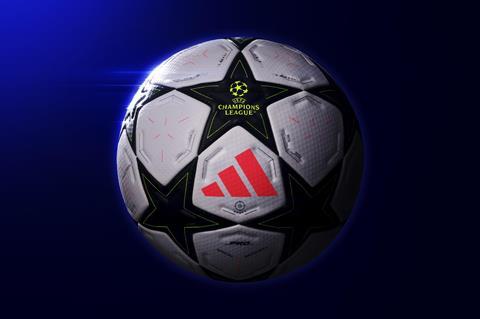
After 25 years as the face of the Champions League match ball, adidas is stepping aside. Nike has entered an exclusive negotiation period with UC3 — the joint venture between UEFA (Union of European Football Associations) and the European Football Clubs (EFC) — to become the official match ball supplier for all UEFA men’s club competitions from the 2027/28 season. If the talks conclude successfully, Nike will supply balls across the Champions League, Europa League and Conference League through 2031.
A deal shaped by a competitive process
UC3 launched an international tender in March 2026 to attract bids across the match ball category. The process was managed by the sports marketing agency Relevent Football Partners. Following the bidding round, Nike emerged as the preferred candidate and entered what UC3 described as “an exclusive negotiation period.” In its official statement, UC3 confirmed the structure: a four-year agreement covering the 2027–31 commercial cycle, the latest category to advance within that framework. No further details will be released while talks are ongoing.
Why this deal matters for Nike
For Nike, this would mark a significant return to elite European match-ball supply at the highest level. The American brand previously held the Premier League ball contract from the 2000/01 season before losing it to Puma, which has since extended its European footprint to Serie A (from 2022) and La Liga (from 2019). Nike’s match-ball presence at the top of European club football has been limited since.
The Champions League’s estimated global audience of around 1.2 billion — according to figures cited in reporting on the negotiations — makes it one of the most valuable visibility platforms in sport. The deal would place Nike’s branding on the ball at the centre of the world’s most-watched club competition at a moment when the brand’s leadership under CEO Elliott Hill has made reinforcing its football credentials a strategic priority.
UEFA rethinks its commercial strategy
UEFA is approaching long-standing supplier relationships differently. Rather than renewing arrangements as a matter of course, the governing body has opened categories to competitive bidding with the explicit aim of increasing commercial value. The match ball category is reported to be worth more than €40 million annually under the new arrangement — roughly double its current value — though this figure should be confirmed at publication. A comparable reassessment of the official beer partnership category preceded this one.
The new agreement also consolidates what is currently a split arrangement. The Europa League and Conference League use balls manufactured by Kipsta, the equipment brand owned by French retailer Decathlon, under contracts due to expire at the end of the 2026/27 season. Nike’s potential deal would bring all three competitions under a single supplier for the first time.
A 25-year chapter is going to close for Adidas
Adidas has supplied the official Champions League match ball since 2001. The German brand also holds the official ball contracts for the FIFA World Cup and the UEFA European Championship.
Adidas confirmed to Reuters that it will not seek to renew its UEFA club competition contract. In a statement, the company said it was “proud to have created the most iconic ball range of all time.” Its exit from this category comes with context: Puma’s sustained push across Europe’s top domestic leagues has eroded what was once a near-monopoly position for adidas in official match-ball supply, and the tender process appears to have yielded commercial terms the German brand was unwilling to match.