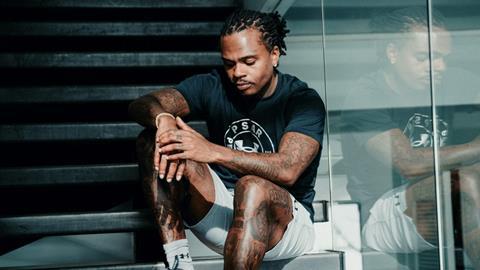
For years, sporting goods brands paid athletes to wear products. Increasingly, they are paying creators to help design them.
Within eleven days in August, Under Armour closed the chapter on its Project Rock partnership with Dwayne “The Rock” Johnson and handed rapper Gunna creative control over a new product platform. Weeks earlier, the company had recruited K-pop group BoyNextDoor to front a major Asia-Pacific campaign. This is more than a roster refresh. It is a wager that cultural influence can move as much sportswear as sporting achievement.
Each figure represents a distinct era of celebrity marketing.
Johnson embodied the 2010s fitness era: gym culture, motivational messaging, traditional endorsement. BoyNextDoor represents the algorithm era: fandom, social engagement, global youth reach built through streaming and community rather than competition. Gunna represents something newer still, not an ambassador who lends a face to a campaign, but a collaborator with authority over what gets made.
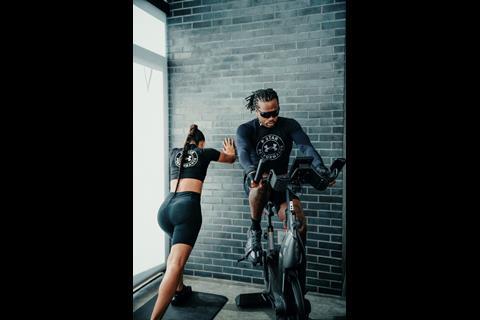
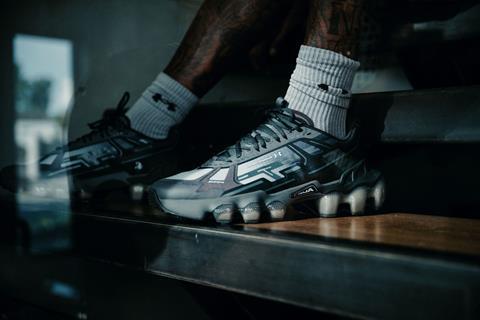
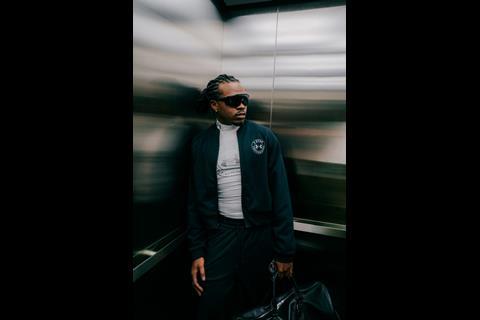
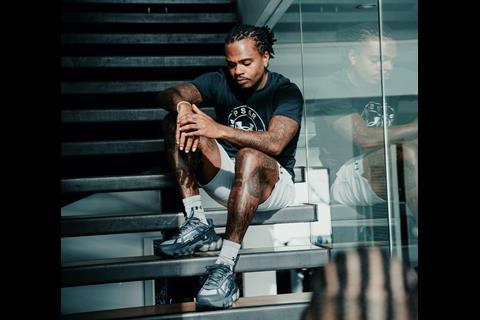
Gunna becomes both global brand ambassador and Creative Director of P-Star, a platform spanning apparel, footwear and community programming that debuts August 27. The launch is anchored by the UA Scorpio, Gunna’s first footwear collaboration with the brand, built on UA HOVR cushioning and released in a hyper-limited colorway before a wider rollout in early 2027. Two further phases are already scheduled: a Wunna Run capsule, named for the run club Gunna built during his tour, and P-Star Lux, a premium extension, ahead of summer 2027. The structure is closer to a co-created label than a sponsorship. Gunna has creative authority over what the platform becomes, not just his face on it.
On Under Armour’s most recent earnings call, Kevin Plank, founder and chief executive, told analysts the company’s marketing “isn’t broken” but needs to align more tightly with product, and that building “modern marketing excellence” is now the firm’s highest priority.
Under Armour is not the first to try this, and the track record is mixed.
Puma made Rihanna creative director of women’s training in 2014, a role that produced the Fenty x Puma line and, later, the Creeper sneaker, and that partnership was revived in 2023 and 2025. adidas ran a comparable experiment with Pharrell Williams’ Human Race line and, at far larger scale and for far longer, with Kanye West’s Yeezy label, a partnership that generated billions in sales before adidas terminated it in 2022 over West’s conduct.
Nike’s long-running Cactus Jack collaboration with Travis Scott sits closer to a recurring capsule partnership than a platform-level creative-director role, but it established the same underlying premise Under Armour is now applying more formally to Gunna: that a musician’s product instincts, not just his image, can be worth building around.
Against that backdrop, Under Armour’s move looks less like an invention than an attempt to catch up on a model rivals have run for a decade, with the added risk that its version arrives during a turnaround rather than from a position of strength.
That deal, Project Rock, founded with Under Armour in 2017, ends this month. Under Armour will keep distributing existing stock through October before Johnson and former wife Dany Garcia take the brand to a new manufacturing partner. Both sides described the split as amicable, but it is the second major athlete exit in under a year, following Steph Curry’s departure last November, after which Curry signed with China’s Li Ning.
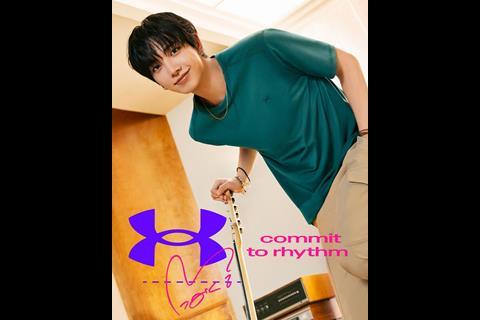
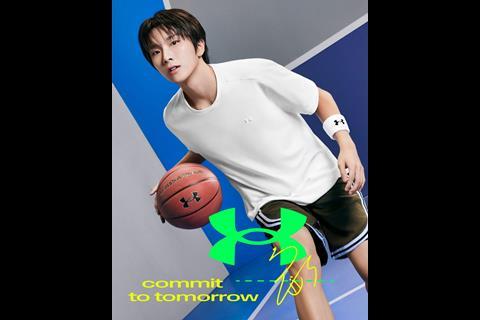
BoyNextDoor, a six-member K-pop group, was named global ambassador in July, with Asia-Pacific in focus: the region accounted for roughly a third of Under Armour’s international revenue last year, making the signing a proportionally significant move on a boy band rather than a basketball or football name.
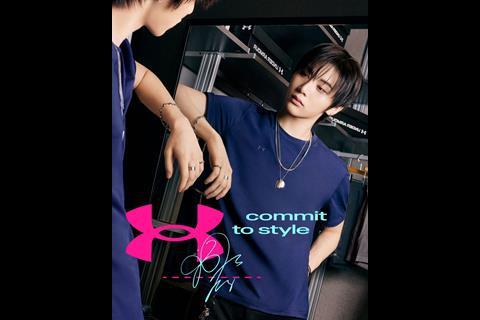
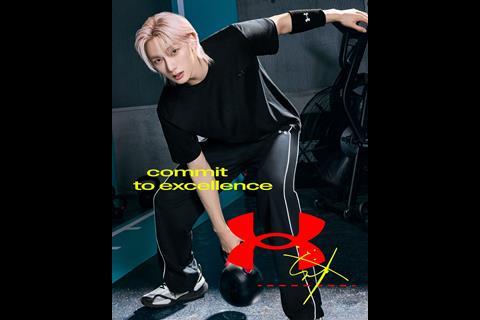
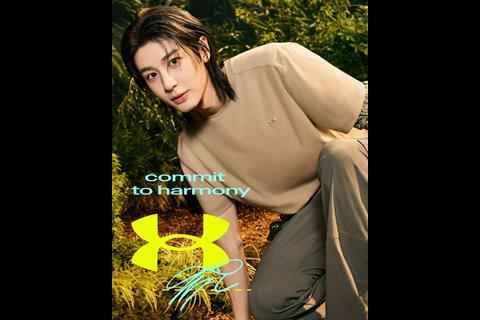
Three assumptions Under Armour is testing
The roster shift is worth attention beyond one company’s turnaround because it tests three premises that are changing marketing across the wider industry:
Athletes are no longer the only route to credibility for sporting goods. K-pop, music and creator communities can deliver larger and younger audiences than many sports properties, particularly outside a brand’s home market.
Brands are looking for collaborators, not endorsers. Gunna’s role extends into product creation and platform-building.
Community may be as powerful as celebrity. Under Armour’s own materials return repeatedly to Gunna’s Wunna Run club and wellness following rather than his music catalog, treating an existing community as the asset being acquired.
The pivot sits inside a harder financial backdrop.
Under Armour’s first-quarter revenue fell 3 percent year over year to $1.1 billion, with North America down 9 percent, and the company is cutting its product assortment by a further 25 percent while pushing toward full-price selling. Marketing spend is being held to the lower end of a 10 to 11 percent of revenue range even as the company commits an incremental $30 million this year, meaning the new roster has to work harder on a flatter budget.
The bigger question is whether Under Armour is too late to capture the new rules of marketing. K-pop groups, musicians and artists turned creative directors are already familiar moves, common enough that within a couple of years the tactic could wear out and be replaced by some new scheme.
The cultural relevance Under Armour is banking on may be short-lived.