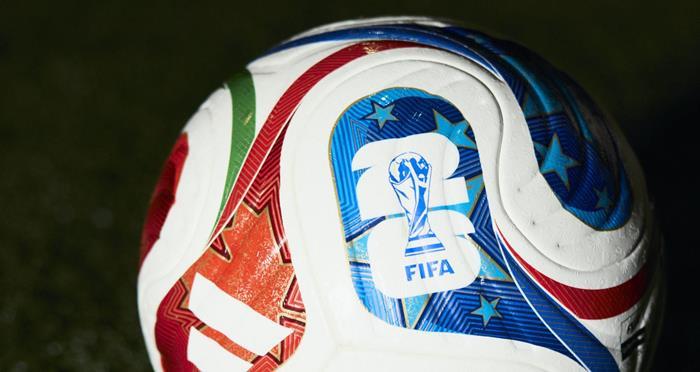
adidas says it sold four times as many World Cup jerseys as in 2022, pushing event-related sales guidance to about €1.5 billion. Route and Syndigo argue the real test starts after checkout.
adidas has confirmed what the 2026 FIFA World Cup already suggested at street level: this was the tournament’s best commercial outcome for any single brand. Björn Gulden, adidas’s chief executive, told Bloomberg News that the World Cup pushed the company’s event-related sales guidance to the top of its previously targeted range.
| adidas — 2026 FIFA World Cup Commercial Impact | |
| vs. 2022 tournament | |
| Metric | Figure |
| Jersey sales | 4x volume of 2022 tournament |
| Match ball sales | 2x volume of 2022 tournament |
| Event-related revenue | ~€1.5bn (~$1.7bn), up from prior guidance of >€1bn |
Source: adidas CEO Björn Gulden, as reported to Bloomberg News, via SGI Europe coverage. USD equivalent as stated by the company; not independently converted by SGIE.
Having both finalists, Argentina and Spain, plus the match officials in adidas kit gave the number a credibility that sales figures alone would not carry. But the same reporting surfaced a complication that cuts against a clean growth story: several adidas World Cup jerseys were discounted by as much as 50 percent online in the tournament’s later stages, even as Spain’s authentic home shirt sold out completely on the brand’s own site, leaving only replica versions in stock. Demand for Lamine Yamal’s named jersey reportedly outran supply as Spain advanced.
That gap, with parts of the range marked down while the best-selling items are unavailable, illustrates the kind of availability and operational friction that can determine whether an event-driven buyer returns. SGI Europe asked two companies working opposite ends of that chain, one in post-purchase and one in product data, what actually decides the outcome. Their answers point the same way.
The post-purchase experience decides who comes back
Andrew Schmid, Chief Product Officer at Route, a post-purchase management platform used by retailers for order tracking, protection and returns, argues that a fan’s lasting impression of a brand has little to do with the World Cup itself. It comes from whether the order arrived on time, whether they got proactive updates, and how the retailer handled it if something went wrong.

Schmid points to Route’s own research: 82 percent of shoppers say easy return options influence whether they buy from a brand they haven’t shopped with before. For a fan tracking down a specific jersey from an unfamiliar retailer, that post-purchase policy can decide where the sale actually lands.
“Every delivery update, exchange, return and customer interaction either reinforces trust or erodes it,” Schmid says.
In his view, post-purchase is “one of the strongest levers retailers have for turning an event-driven transaction into a repeat customer”, not a back-office function, but the mechanism that extends a spike into a relationship.
AI shopping tools now filter out brands with messy data
Tarun Chandrasekhar, President and Chief Product Officer at Syndigo, a product data and content management platform serving brands and retailers, locates the risk earlier in the chain. Licensed World Cup merchandise carries details that change fast as teams advance or exit - player names, squad numbers, size and customization variants - and when brand-side data and retailer-side stock availability fall out of sync, “shoppers don’t wait. They move.”
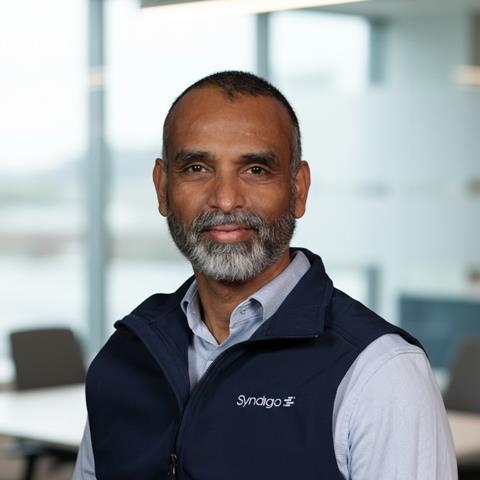
Chandrasekhar argues that AI shopping assistants such as Amazon’s Alexa for Shopping, Walmart’s Sparky and ChatGPT are becoming an important discovery channel for merchandise purchases, layered on top of the brand-retailer synchronization problem. Chandrasekhar says these tools extract structured attributes from product data and are more likely to suppress products whose information they cannot confidently verify: a filter he describes as having “less tolerance for ambiguity than a human shopper.”
A brand with incomplete product data risks being filtered out of consideration before a shopper ever sees it.
The upside runs the other way, too: brands that kept clean, well-structured data through the tournament carry stronger behavioral signals - review velocity, indexed content - into the next purchase cycle. As Chandrasekhar puts it, the discovery engine for future purchases is effectively being built during the tournament itself.
The common thread: readiness has to precede the spike
Schmid and Chandrasekhar are describing different parts of the same system, and they converge on the same timing point: neither post-purchase capability nor clean product data can be built once a demand spike is already underway.
The brands and retailers that benefit past the final whistle are the ones that treated fulfillment, returns and data infrastructure as groundwork laid before the opening match, not a response to it.
For adidas, that dynamic is now playing out inside its own numbers: a headline sales record sitting alongside markdowns on some lines and stockouts on others. Whether the World Cup becomes a multi-week sales event or a multi-year customer relationship, both sources agree, will be decided by decisions retailers made long before kickoff.
About
Route is a post-purchase experience platform used by e-commerce retailers for shipment tracking, package protection and returns management. Andrew Schmid is its Chief Product Officer. Syndigo is a product experience and data management platform (PIM/MDM) serving over 15,000 brands, manufacturers and retailers globally. Tarun Chandrasekhar is its President and Chief Product Officer. adidas, the German sportswear group, held official sponsor rights to the 2026 FIFA World Cup and outfitted 14 competing teams, including both finalists.
FIFA World Cup 2026: The Business of the Beautiful Game
How brands, retailers, and the sports economy have competed on football’s biggest stage.
Explore Our Coverage →