Onalabs’ wearable already reads lactate and hydration for FC Barcelona players through a device co-developed with the club’s innovation hub. The new capital adds Garmin interoperability and funds a diabetes-focused device now piloting in over ten hospitals.
In a new round of funding Onalabs (Barcelona) has raised more than €9.3 million, half of it from the Spanish government. The Sociedad Española para la Transformación Tecnológica (SETT) is investing €4.6 million in the company through its Next Tech facility, drawing on Spain’s Recovery, Transformation and Resilience Plan and the European Union’s NextGenerationEU funds. The rest comes from private capital: 1921 Ventures, an Austrian fund for diabetes led by mySugr founder Fredrik Debong; nPrime, an investment fund of Singapore founded by Roger Parellada; and existing shareholders Reig Patrimonia and WA4STEAM.
The capital will industrialize the company’s wearable sweat-analysis sensor, Onasport, already on the market; carry its non-invasive patient-monitoring device, Onavital, through clinical and regulatory validation; and fund a new diabetes line, recruitment and local manufacturing. The industrialization will deepen a sports relationship that is already three years old.
FC Barcelona’s Barça Innovation Hub bought into Onalabs in October 2023, feeding into a capital increase of €1.8 million (BioTech Spain). This was the Hub’s third start-up investment, after Visualfy and Oliver. The two sides had crossed paths at industry congresses years earlier; Barça tracked Onalabs’ progress before proposing the tie-up (Diffusion Sport).
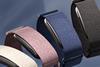
The alliance centers on Onasport itself: a chest-strap sensor, developed jointly with the Hub, that reads lactate, electrolyte loss, dehydration and heart rate from sweat and streams them to an app. Validation work also ran through INEFC-UB, the CAR Sant Cugat high-performance center, the Instituto de Biomecánica de Valencia, the Velódromo de Horta, and Andorra’s Ministry of Culture, Youth and Sports (Via Empresa). The new round adds a further partner, Garmin, with which Onalabs is now pursuing interoperability (El Referente).
Xavier Muñoz, a researcher at CSIC, founded Onalabs in 2016 after watching his newborn daughter be catheterized for the drawing of blood and the administering of drugs; he and Elisabet del Valle, then at Vall d’Hebron Hospital, built the company as a way to reduce suffering through the removal of one of those invasive lines (Barça Innovation Hub). Funding a neonatal application proved difficult, so they switched to sport, with plans to circle back with mature tech. A seed round for a reported €1.5 million or so followed in 2022 (El Español).
The company now holds six patents on its tech and is running pilot programs with more than ten hospitals to validate Onavital in clinical settings. But patents do not leave Onalabs alone in the field.
Epicore Biosystems, producer of the Gatorade-linked Gx Sweat Patch, measures lactate alongside hydration through its Echo Smart Patch, mostly for professional sport and industrial safety. Nix Biosensors sells a hydration sensor and consumable patches. Flow Bio offers a reusable sweat-rate sensor with Garmin and Wahoo integration, though neither tracks lactate (The 5k Runner). A new entrant, PointFit, claims to be first to offer continuous, non-invasive lactate monitoring through a nanomembrane patch, though the system remains in beta with a waitlist.
Beyond sweat, adjacent fields exist without competing on method: clinical vital-sign wearables such as VitalConnect and Biobeat, and glucose monitors such as Dexcom Stelo and Abbott Lingo, cover overlapping parameters through optical or bioimpedance sensing rather than sweat.