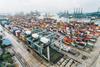
Many of the new tariffs from the US are affecting Southeast Asia, where the sporting goods industry does a lot of its manufacturing. From “tough news” to “speechless” and  “unjustified” – these are some of the reactions to Trump’s tariff announcement.

Trump and the sporting goods industry

Nike and Adidas have remained mum so far, but On Running tells Reuters that it is “constantly monitoring the evolving situation,” while Puma says it is evaluating things and “will react swiftly.” Just a few weeks ago, Adidas was confident that its strategy of having separate manufacturing for China (in China) and the US (mainly in Vietnam and Indonesia) was the best preparation for the US market.

Martin Kössler, CEO of the Scandinavian consultancy Huginbiz (and part owner of EDM Publications, publisher of SGI Europe), has seen “big concerns” among his clients:

Koessler_Martin

Martin Kössler

“Much sourcing moved out of China to Vietnam during the Trump 1.0 administration. Yesterday’s tariff announcement, especially on Vietnam-sourced products, is tough news. The new tariff-level might trigger order cancellations, even for products in pipeline at manufacturers or on vessels. We short-term recommend our clients to review their general terms and agreements on this topic as well as review 2025 budgets and forecasts for B2B channels. We also urgently advise them to reconsider D2C operations for products delivered from outside the US. It’s much too early for long-term conclusions, but my guess is that we will see much less interest in the US market and an increased interest for Europe and APAC.”

Jochen M. Schäfer, who serves as legal counsel for the World Federation of the Sporting Goods Industry (WFSGI) and published a related op-ed in SGI Europe this past January, tells us the following:

“The global economic landscape and trade parameters are currently changing at a speed that is leaving business leaders and decision-makers speechless, if not frustrated or even desperate. Business models that for many years have proven successful across the entire supply chain are currently being turned upside-down and require completely new entrepreneurial and strategic thinking.”

Jochen Schäfer

Jochen Schäfer

“These developments are also of high relevance for legal risk-management policies at the company level. A kind of due diligence is required to identify loopholes, deficiencies and other negative factors.

“It does not help in this crisis to remain passive and to lament and complain about how damaging and destructive protectionist political measures and a possible trade war are. Instead, it is time now to be proactive and realistically assess the options to reduce existing risks also at legal level. As Gorbachev famously said, ‘Life punishes those who are late.’”

Reuters quotes four opinions on the new tariffs. Aneesha Sherman, at Bernstein Research, suggests that upscale brands like On can probably raise their prices without much effect on sales, but for others the short term “mitigation strategy” will be to “renegotiate supplier and vendor contracts” and “share the pain up and down the value chain.”

According to Simeon Siegel, of BMO Capital, “companies that worked hard over the years to reduce reliance on China by leaning into countries like Vietnam just learned there really isn’t a place to hide.” Analysts at UBS agree, saying that “with additional tariffs proposed across other key Asian sourcing hubs, the scenario of shifting production now looks far less viable, narrowing the set of effective mitigation levers available to brands.”

“Some companies might be able to change where they produce for the U.S. market, but that usually takes years, not days,” says Brian Jacobsen, of Annex Wealth Management. “Prices may rise, consumers might balk, costs will increase. It’s not a pretty picture for profit margins.”

US President Trump sets reciprocal tariffs

The geopolitics

China, according to Xinhua, has addressed the tariffs through the spokesman for its Foreign Ministry, Guo Jaikun, who urges the US to correct its wrongful imposition of reciprocal tariffs – which “seriously violates World Trade Organization regulations and severely undermines the rules-based multilateral trading system” – and address economic and trade differences with China and other countries through equal, respectful and mutually-beneficial negotiations. “The Chinese side firmly opposes this and will take necessary measures to resolutely safeguard its legitimate rights and interests.”

China’s President, Xi Jinping, is scheduled to visit Vietnam, Myanmar and Cambodia next month. The first of these countries, according to The Diplomat, had sought to preempt Trump’s move by reducing tariffs ahead of time on such US goods as liquified natural gas (LNG), ethane, wooden products and fruits. Now Vietnam’s Minister of Trade, Nguyen Hong Dien, has sent a diplomatic note to the US to request negotiations with the U.S. Trade Representative, according to Reuters, while its Prime Minister, Phạm Minh Chính, is setting up a task force.

Thailand’s Minster of Commerce, Pichai Naripthaphan, is himself eager for talks, as Reuters also reports, as is Malaysia, which says it will not be imposing retaliatory tariffs. Cambodia’s government spokesman, Pen Bona, tells the Economic Times of India that the tariff is under review and that he could not yet comment. 

According to the same paper, Bangladesh is reviewing its tariffs on products imported from the US and its National Board of Revenue is “identifying options to rationalize tariffs expeditiously.” Indonesia appears at press time not to have issued a statement.

“All businesses – big and small – will suffer from day one. From greater uncertainty to the disruption of supply chains to burdensome bureaucracy.” (Ursula von der Leyen)

Reactions in the EU

Meanwhile, on the Continent, Ursula von der Leyen, President of the European Commission, is predicting that “the global economy will massively suffer,” that “uncertainty will spiral and trigger the rise of further protectionism,” and that “inflation will go up.” She said: ”All businesses – big and small – will suffer from day one. From greater uncertainty to the disruption of supply chains to burdensome bureaucracy.”

But von der Leyen concedes a point to Trump – that “others are taking advantage of the current rules” – and seeks to “address concerns through negotiations.”

Bernd Lange, Chairman of the European Parliament’s Committee on International Trade, held a press conference on April 3, having already renamed Trump’s event “Inflation Day” and called the tariffs “unjustified, illegal and disproportionate.” They will “only make processes and manufacturing more inefficient” and “have prompted damaging uncertainty in the investment climate. Stock markets could hardly be clearer in their reactions.”

Representatives from various member states will be meeting in the coming days to work out a joint EU response.
Trump’s tariffs: Find the details here