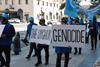
The Chinese sporting goods manufacturer Li-Ning is suspected of contributing to serious human rights violations in Xinjiang province. The Norwegian Ethics Council made this clear in an assessment at the end of September 2021. The reason is Li-Ning’s cooperation with cotton and textile suppliers who are said to employ a large number of Uyghur forced laborers in the western Chinese region.
According to the council, Li-Ning did not answer any questions regarding this topic. It was also not possible to establish that the company was investigating the issue. The Norwegian central bank now followed the recommendation of the Ethics Council and stopped all investments by the Norwegian pension fund GPFG, which is under its responsibility, in Li-Ning on March 7. The reasons for this are the ethical guidelines of the GPFG. At the end of 2020, the Norwegian Pension Fund owned 1.2 percent of Li-Ning’s shares, valued at NOK 1.76 billion ($196 million). The sportswear company is listed on the Hong Kong Stock Exchange.
Information published on Chinese websites has long indicated that Li-Ning signed a cooperation agreement in 2017 with a supplier that produces in detention centers. The supplier is also said to have hired workers through a state-sponsored employment program aimed exclusively at ethnic minorities. Western media have repeatedly reported since 2020 that the Chinese government is making Uyghur forced laborers available to the textile industry and exploiting them in factories.
Li-Ning announced in November that it wanted to press ahead with its international expansion. The sporting goods manufacturer sold 4.6 percent of its shares for around $1.35 billion (approx. €1.16 billion). The parent company Viva China took over part of it directly. In addition to the expansion, Li-Ning plans to use the fresh capital to develop new product categories, improve infrastructure and supply chains, and develop its brand awareness.