For adidas Foundation Managing Director Melissa Kaar, diversity, equity and inclusion are non-negotiable. In her interview with SGI Europe, she explains how the foundation balances independence from adidas AG, why sport is a powerful unifier, and why they’re “here to add“. From grassroots partnerships to global programs: the goal is to combat discrimination and create access to sport for all. We sat down with Melissa Kaar to learn all about her first two years with the foundation – we talked about milestones, bureaucracy, and the power of sports.
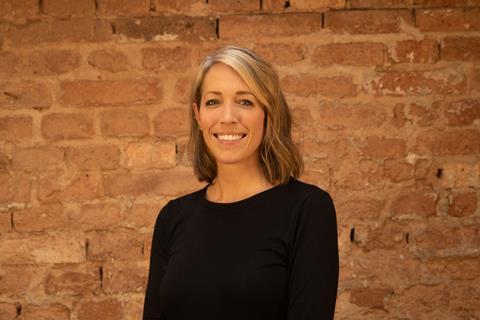
SGI Europe: You’ve been with the adidas Foundation for almost two years. Looking back, how would you describe the journey?
Melissa Kaar: It’s hard to believe I’m nearing the end of my second year as managing director. It has gone by so quickly, and I’m amazed at how far we’ve come. That first year was all about laying the groundwork. My focus was completing the legal setup of the foundation, establishing it as an independent partner of adidas AG, and preparing it to support grassroots organizations using sport to change lives. At the same time, I was overseeing the first projects and partners, building the team, and putting in place essentials – from bank accounts, which took far longer than expected, to employment contracts, policies, and services. It was a year of building, learning, and creating a strong foundation for everything since – and still to come.
What was something that turned out to be much harder than expected?
One surprise was discovering how many traditional, somewhat outdated processes are still in place. For example, we sometimes had to complete steps like signing and returning forms in ways we didn’t anticipate. I mean: When was the last time you sent a fax? And how do you actually do that? On another note, opening our bank account ended up taking four or five months - while we thought it would take five weeks. And without an account, there’s little you can do. It was a good lesson though: you can plan perfectly, but some things take longer than expected - and flexibility is key.
How the adidas Foundation built independence from adidas AG
Looking back at that first year, which milestones stand out most to you?
I’ll never forget July 1, 2024. That was the day we welcomed the first employees besides myself and moved into our own independent office in Nuremberg – becoming also locally separated from the adidas campus. Until then, adidas AG had generously supported us. But that day felt like we were carving out our own identity. Having our own team and space gave us the freedom to define ourselves. We were no longer just an extension of adidas, but an independent foundation with our own staff, locality and most importantly our own values and principles. That independence is essential for building trust with partners and communities, and for making the impact we want for years to come.
Can you briefly explain how the foundation is set up as an independent entity – where you work together with adidas and where you operate separately?
Adidas is our founder and primary funder, though we plan to diversify our funding sources. Even though we carry their name – which certainly opens doors but comes also with a big responsibility – their influence remains limited: they have two seats on our board, but the majority are independent experts, ensuring decision-making lies outside the company. Guardrails in our donation agreement also guarantee independence – particularly around projects, partners, and funding allocation. Adidas trusts us to make the right decisions, and it has been a fantastic partnership.
Beyond finances, what benefits does adidas bring in terms of experience and support?
Their expertise in sport – who engages, why, and what’s needed – is invaluable. They also bring a powerful platform. For us it’s fantastic, but for partners it can be a game-changer, helping them get on the radar of other funders. Instead of saying, “Stay away, we’ll do this ourselves,” we ask: how can we collaborate in ways that increase impact for everyone?
Carrying the adidas name is both an opportunity and a responsibility, isn’t it?
Yes. Responsibility is one of our core values. We feel a deep obligation to make the best use of the resources we’ve been given – resources some organizations never access. It’s not about making ourselves or adidas look good, but about giving back. That’s why we say, “We’re the adidas Foundation – we’re here to add.” We’re not here to step on the toes of others with more expertise. We’re here to strengthen, amplify, and use our platform to add something new and different – by bringing people together for collective action.
Using sport to fight discrimination and hate worldwide
If you had to describe the foundation in just a few sentences – its mission, vision, and values – how would you do that?
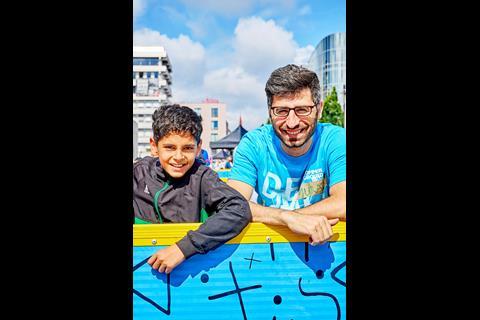
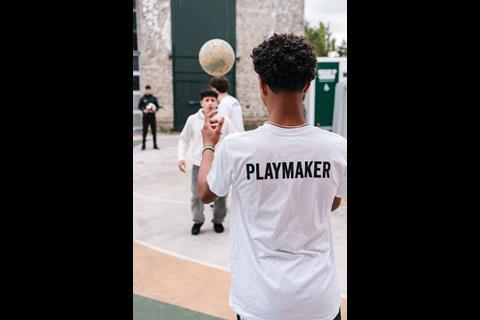
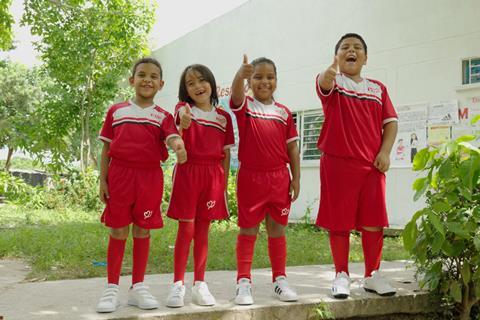
We are a global organization with a mission to unite communities through sport. We are more than a grant maker. We don’t simply distribute money and wait for reports – we build partnerships, engage communities, conduct research, and advocate for change. Our small team deeply engages with partners and sometimes directly with communities. We carry this out through three core programs: United by Sport, tackling hate and discrimination globally; Moving for Change, promoting sport for sustainable development and peace in Africa, Asia, and Latin America; and Playing for Purpose, increasing access to sport for underserved youth in North America and Europe.
Let’s talk numbers: What’s the scale of resources you’re working with, and how big is your team?
Our annual report shows that we have an agreement with adidas AG in which they commit to €205 million over our first 10 years. We hope to attract other funding partners who see the impact we create. Our team is just over 20 people. Compared to our expected annual spend and ambition to engage more directly in programs, that’s lean. We want to keep overheads low and maximize what goes to programs, while having enough staff and in-house expertise to truly live our strategy of being more than a grant maker – but not so many that we risk becoming a machine funding ourselves.
You already mentioned United by Sport, which is your largest program. What’s the strategy behind it, and what principles guide your approach to grantmaking?
Watching the news, the world often feels divided. When we launched United by Sport, we were convinced that sport can uniquely bridge divides and bring people together. In the first phase, right after our setup, we identified partners aligned with our goals and provided funding. But from the start, we intended more than a grant program. Now, we’ll be launching a community of practice so partners can exchange best practices, share tools and data, and receive training. Our principles are transparency and fairness, collaboration, and focusing on impact. Funding is important, but there’s more we can do to amplify it. I was nervous when we launched – I thought we’d get 200 applications. We ended up with 754! That showed how needed this program is. We used clear criteria, with internal and external evaluators assessing each application. Many more projects could have been supported, but as a small team, bringing on 34 partners while setting up the organization was already huge. We hope to work with more in the future. Our assessment looked at factors such as impact, governance, financial responsibility, safeguarding, and alignment of values – key for true partnership.
Why DEI matters
Given that equity, inclusion, and combating discrimination are at the heart of your work, how do turbulent times and setbacks for DEI affect you?
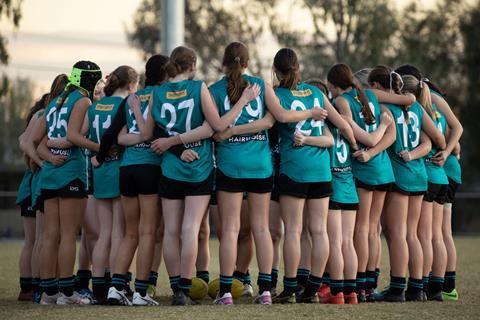
As an independent non-profit, we’re guided by values and principles – not politics. These are non-negotiable. Integrity came up again and again in team workshops, alongside a commitment to diversity. We apply this in hiring, partnerships, collaboration, and communication. Regardless of race, gender identity, sexual orientation, ability – there is a place for everyone in sport. Sport can be a unifier, and that’s our focus. Politics aside, we stay true to uniting communities through sport.
Looking at the future, what are you most excited about – and what challenges do you see ahead?
We’ve just completed our first strategic plan, and I’m excited to see it through. We’ve focused heavily on United by Sport, but now we’ll build up other important programs too, including cross-cutting areas like resilience to the climate crisis and psychosocial support for children affected by disaster or emergencies. Expanding the portfolio excites me, but it also highlights our biggest challenge. We have amazing resources, thanks to adidas’s generosity, but we can’t do everything everywhere. With the adidas name comes high profile and many requests. As a small team, we need to stay strategic, which means making hard choices. Needs are growing, so those choices will only get harder.