Sport, says Paul Schif, is one of the most underused levers a sporting goods company has – not as a marketing claim, but as part of its actual corporate purpose. As Managing Director of the Laureus Sport for Good Foundation Germany, Austria, he has spent twelve years watching what real commitment to sport-for-development can achieve – and watching most of the industry stop short of it.
In this interview with SGI Europe, Schif traces that conviction back to Laureus’s own origins, walks through what the foundation’s Impact Report reveals about sport’s power to change lives, and ends with a direct challenge to Sporting Goods brands: stop treating social purpose as a campaign, and start anchoring it where it belongs – in the company’s own objectives.
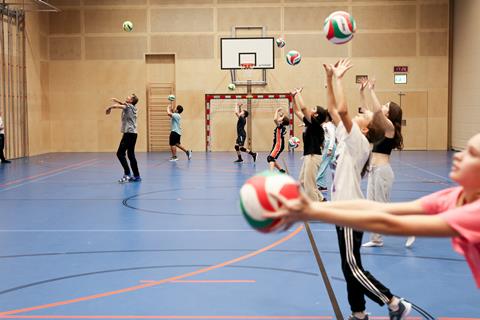
SGI Europe: Laureus is built on the idea that sport can change lives, and your work is aimed squarely at children and young people, particularly those from disadvantaged backgrounds. Why is that focus so central to what you do?
Paul Schif: The decision to focus on children and young people – and especially disadvantaged ones – really goes back to how Laureus came about in the first place. The Laureus Sport for Good Foundation wasn’t created directly to support disadvantaged young people. It grew out of a different initiative altogether – the idea of creating an “Oscars of sport,” the Laureus World Sports Awards. At the very first Laureus Awards in 1999, sporting legends from around the world came together, and Laureus managed to secure Nelson Mandela as the keynote speaker.
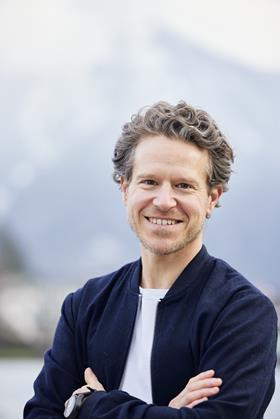
Given that this was the late 1990s – just years after he had left prison, become president, and seen the end of apartheid – it was an extraordinary moment. Mandela gave a deeply moving speech (watch it here). In it, he challenged the athletes and sponsors in the room to reflect on why they were even able to stand there, celebrating with a glass of champagne in Monte Carlo. Almost all of them came from very modest backgrounds, and they owed sport not just their financial success, but the development of their whole personality and everything they had become. That combination – their fame at the time and their genuine ability to effect change in society – is what led to the foundation being established. And if you want to change society, you have to start with the youngest, because it takes time, and because people are shaped early in life.
Let’s stay with that idea of impact for a moment. From the outside, people often assume there’s not so much that a foundation can really change on a structural level. Your Impact Report provides concrete numbers to support this. Can you tell us more?
Our Impact Report shows, above all, how much joy children get from sports programs, particularly ones that aren’t just about competition, although that has its place too. It’s about what they learn beyond the sport itself: getting to know themselves better, getting to know others better, and above all, developing skills such as self-efficacy. It’s not the easiest word to define, but once you internalise it, it becomes obvious: realising for yourself that you can actually make a difference. I think that’s enormously important for our society, and more important today than ever, because ultimately it’s also the foundation of democracy – the idea that everyone can move something. To me, that’s the single most important takeaway from our figures.
“Sport is a societal engine”
Have you thought about what the sporting goods industry should take away from this?
Absolutely, and yes, we’ve thought about this a great deal – working with companies is a core part of what we do. Ultimately, our programs and our non-profit work only happen because of our funders. I think you can start quite simply: the sporting goods industry lives off an active lifestyle. Its products only sell if people actually live an active life and do sports.
It’s important not to think too narrowly here, though: a lot of the industry still thinks mainly in terms of club and team sport, but the reality is far broader – just look at how people dress, move and live today. All of that should, in theory, be working in the industry’s favour. At the same time, it’s becoming harder and harder to stand out. New brands and trends keep emerging, but the industry would do well to understand that sport is a societal engine – and that it needs to use sport as a social lever much more actively and visibly, if it wants to remain genuinely relevant in the long run and have an honest justification for its role.
How, in your view, could it actually do that?
I obviously speak here for Laureus Sport for Good – globally, the largest foundation in this space. When you work with Laureus, it’s not about funding the Laureus team; it’s about giving young people access to sport beyond organised club structures. You can do that anywhere in the world, and by doing it you make a direct contribution to exactly what I just described: sport being supported by society more broadly. But you can also look at it much more directly in terms of your own company, because of the effect that sport-for-development – to use the technical term – has on the people who experience it. They become people who stand much closer to sport: potential employees who act authentically, know exactly why they do what they do, treat people the right way, and – above all – take real ownership, because they want to change something.
Sport-for-development as a “logical mechanism” for sporting goods companies
Interestingly, your founding partners are Mercedes-Benz and IWC Schaffhausen. Can you give us an overview of the involvement from sports brands?
Well, first of all, sporting goods brands are absolutely engaged in the Sport-for-Development sector. At Laureus, especially in the US, Nike is very strongly involved. There are plenty of other examples of very committed sporting goods companies, too. Adidas has its own foundation, which supports Sports for Development programs as well. On has its own initiative, strongly focused on running, which does a lot of work at a very basic level – with refugees, for instance, in many countries, really starting from the fundamentals. As a brand-facing organisation, we obviously can’t work with everyone in the same way – balancing the interests of the non-profit side, the athletes who volunteer their time, and the brands involved is a real challenge. If Nike is our partner, we still need to work out how to cooperate with other athletes who might have contracts with other sporting goods companies. It’s a fairly logical mechanism. That said, we’ve set some important markers over the years.
We now commit to most of our partners that we can actually allow healthy competition among them, because the cause we stand for, and the mission and vision we pursue, are bigger than what any single brand wants. There’s room for more than one. I always like telling this story: Mercedes-Benz is our founding partner, and I’ve always said that founders should see themselves as enablers, because they laid the foundation – and they should actually be proud when another manufacturer comes along and says, “I want to support this great initiative as well,” because ultimately it’s about changing our society.
I remember one moment when we received a larger donation – a donation, not sponsorship – from Audi. I took a screenshot and sent it to Ola Källenius [CEO of Mercedes-Benz Group]: “Look, we’re well on our way to making this work.” He was pleased and smiled, because that’s exactly the spirit. I think it always comes down to what role a company – and a brand – chooses to play in society.
We now have topics like longevity and the whole health-and-wellness movement being widely discussed, and yet 80 percent of children aren’t meeting recommended activity levels. Is there a growing understanding that social engagement matters for commercial success too – or does it all somehow contradict itself?
There are two factors at play. First, the industry is certainly trying – not with everything, but with quite a lot – to get more people active. But it does too little to get the youngest children access early: you carry sport with you for life if you start young, not if you’re forced into it. That is exactly what Laureus Sport for Good achieves, because we don’t tell children they always have to win. That competitive drive develops on its own over time, and healthy competition is good – but not for everyone, and not for every part of society. What matters more, from my point of view, is that the industry conveys real joy in sport and provides low-threshold access – it will only win the customers of tomorrow by reaching them early.
There’s another factor at play, too: the popular perception is that sport can be done without money, yet the industry itself often communicates that it can only really be done with money. If I buy the running shoe that’s supposedly the best, I need to dig deep into my pocket – and most people on this planet simply can’t. You can’t then expect everyone to take up motorsport or buy wearables – the system is more complex than that, and everyone knows it. Honestly, what I miss in the industry are real pioneers – companies that genuinely take the lead on social responsibility. I don’t really understand why, because there’s so much untapped potential here. Of course, it’s not as simple as running a campaign; it has to be made credible. But that’s exactly what organisations like Laureus Sport for Good exist for.
We marked our 25th anniversary internationally last year – a quarter century of proof of what this work achieves. The two big factors, as I said, are starting early and broadly with a low barrier to entry, while conveying real joy in sport – and staying accessible in the future. Decathlon is a good example of how, even with more affordable products, you can achieve an enormous amount at scale.
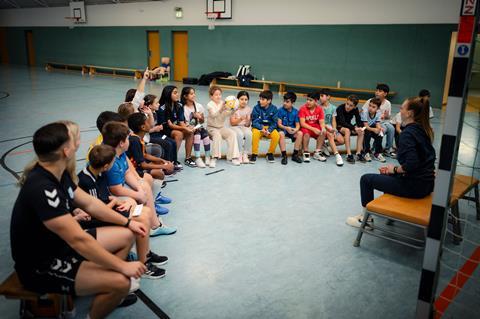
Impact of sport and its stories
That’s a really interesting point – that even with relatively modest means, a great deal can be achieved. Could you share a bit more on how you actually measure impact, and maybe some standout examples of what happens when companies get involved?
In terms of hard numbers, I always prefer to tell the stories – they’re simply more tangible. Some stories happen right on our doorstep here and others internationally. I’ve now been in this role for twelve years, and over that time, I’ve been able to follow participants from our programmes who are adults today. That’s an incredible privilege – I get to see the impact over a period far longer than any Impact Report can capture. I see children who are now young adults – children who, at eight or ten years old, seemingly had no prospects at all: broken homes, real psychological challenges – and who, through the programmes that Laureus Sport for Good funds, came to understand that nothing in life is predetermined. That they’re allowed to have dreams, that they should have dreams, and that they can achieve them if they really believe in themselves and work hard. That’s something that concerns our whole society.
To make it concrete: there was a child in extremely difficult circumstances – finishing school at all seemed unlikely, given everything happening around him – who dreamed of flying, of becoming a pilot. Now, becoming a pilot requires a great deal of psychological stability and a lot of education. He made it – moving from school to school, taking further training along the way, eventually into Lufthansa’s training programme. Nobody pulled strings for him. It was purely down to what sport, combined with social skills, made possible for him.
Internationally, I keep coming back to a programme in India that focuses on children with disabilities. In India, having a disability, much like being a girl or a woman in some contexts, is still often a barrier to accessing education. This becomes very tangible when it comes to school buses in rural areas: drivers have long routes and many villages to cover, and they don’t want to wait. Children who can’t run and jump to catch the bus in time simply get left behind, sitting at the bus stop, quite literally, while the bus drives off.
There’s a program called Magic Bus, which Laureus Sport for Good has supported for a long time and which has been on an incredible journey – the numbers have grown enormously; I believe it now reaches around 400,000 children every week. They got through to the bus drivers by getting them to play cricket together with the children – an inclusion programme where children with and without disabilities play side by side, everyone playing to their strengths. Cricket is the national sport, so it matters a great deal to the bus drivers, too. I remember meeting the founder of that program – there’s also a video of it, which I could try to find again – of a tournament they organise between the children and the bus drivers. The drivers go in confidently, assuming the children can’t possibly win. But there have been situations, captured on video, where the inclusive team of children with disabilities beat the bus drivers – and the drivers suddenly have to reckon with the fact that they’re not simply “better,” and that these children can achieve anything.
Sport-for-development is not yet anchored in corporate values
“Everyone wins” and “sport unites us” are your claims – what would you like to say to the sporting goods industry when it comes to a more purpose-driven approach? Patagonia has done this in the environmental space.
I am one hundred percent convinced that this would be a success if someone actually did it. I love Patagonia, and I love the Patagonia story. After all, it’s a hundred and fifty percent authentic, because it works, and because it matters enormously. I honestly can’t understand why nobody in the sporting goods industry has seized this opportunity yet. Because that’s really what it comes down to: you can set up a foundation as a sporting goods company, but if you mean it seriously, you anchor it in your corporate objectives.
In the sport-for-development space specifically, nobody is really doing it right – going beyond the claims and anchoring it in the actual purpose of the company. Anchoring it so deeply that all shareholders and stakeholders fully understand and stand behind the idea that this will ultimately drive success too. I genuinely mean that, and it’s obviously true, but nobody dares to do it. I’m ready to discuss this with anyone, at any time – the potential for success here is obvious. Of course, it’s always easier to look at things short-term, to focus on short-term KPIs and ask how this pays into them. But anyone only after a quick PR win shouldn’t bother reaching out – we’re a poor fit for that kind of conversation. We want to get to the root of things, and we want to see real, serious commitment. And here I have to say, hats off to our partners.
Take Mercedes-Benz, since we talked about them earlier – there is a clear commitment to Laureus Sport for Good, even now, when it’s harder than ever to simply survive in the automotive industry, because they’re aware of their responsibility. The same goes for Richemont with IWC Schaffhausen, and the same is true of newer partners like Generali here in Germany. They see sport as an essential foundation for our society – sport combined with the development of social skills in particular – and they want to embrace that responsibility. I’m not saying they couldn’t do even more – they could. But that’s exactly why I want to encourage anyone reading this who has the means within their own company to take this step: our door is open, and we can contribute a huge amount of knowledge. You don’t need to spend anywhere near what you’d pay a major strategy consultancy to create real, tangible value – for your own company and for society.
Impact approach as a chance for challenger brands
What do you think is really holding companies back, given that the logic seems so obvious?
I mean that completely seriously – it is exactly as I’ve described, but nobody dares to do it. The overall structure means it really has to come from the top – an owner has to want it. I think that’s partly why Patagonia can do this: even its CEO is still bound to deliver results, but if those results were to fail, they’d be pushed out before they ever bore fruit. Patagonia has the advantage of being a family-owned company. But I do see huge potential among fast-growing challenger brands with a very clear positioning, built partly around a strong ambassador. On is a good example: they’re growing incredibly fast, they have a very distinct identity, and they’re already running some genuinely strong sport-for-development initiatives, including product-related ones, because they want to anchor this in their range and in their business model. I’ve been in conversations with them, and I see real commitment there.
What worked against a fully consistent approach in some of these cases, I think, was going public – that immediately raises the question of how to maximise returns, which pulls in a different direction. That’s exactly where Patagonia sets itself apart. In the end, it comes down to a question every founder has to answer once they’ve achieved success: What do I actually want to use this for, and what do I want to achieve with it? Everyone has to decide that for themselves. But I’m convinced that if you take the long view and commit to it fully, it really does pay off – and I don’t think it will be very long.

Impact of Sports
Physical inactivity keeps rising, and with it the risk to this industry's future. Our Impact of Sports series follows the evidence, from global data to the brands and policymakers working to get more people moving.
>> Explore the series.