

The technologies are available, but the major breakthrough in textile recycling has yet to materialize. Where does the apparel industry stand, and what needs to happen for textile recycling to evolve from a pilot project into a scalable business model?
In recent years, the textile recycling industry has focused primarily on technological development. There are now many promising solutions: mechanical processes are well-established, chemical recycling technologies continue to advance, and more and more companies are working on recycled fibers. Nevertheless, the circular economy is still far from becoming the norm in the European textile industry. Too few pilot projects are making the leap to industrial implementation. The crucial question is therefore no longer whether textile recycling works in principle - but how it can be implemented economically on a large scale. Why is that?
Textile recycling is stuck in a chicken-and-egg dilemma
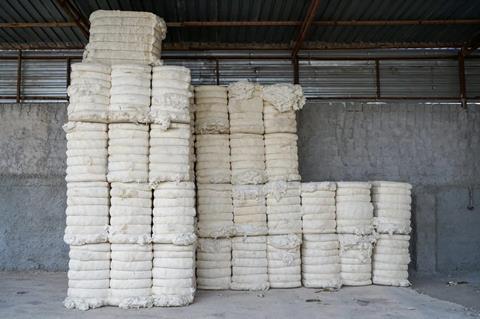
“Today, demand is the main obstacle, not the raw material,” says Pål Erik, founder and CGO of Norsk Tekstilgjenvinning (NTG). The Norwegian textile recycling company works with mono-materials and blended fabrics, collecting and sorting them before mechanically recovering fibers from them. These fibers are then processed into new textiles by spinning mills. NTG describes a problem that concerns many companies in the sector: The technology and some of the necessary capacity are in place. What’s missing is sufficiently strong, predictable demand for recycled textile fibers.
This creates a classic chicken-and-egg problem: “Companies are hesitant to invest in new recycling capacity as long as demand isn’t guaranteed. At the same time, brands are reluctant to commit to recycled materials as long as there is no reliable, scalable, and competitive supply. This standstill between supply and demand is the biggest challenge,” says Robert van de Kerkhof, Chairman of the European textile recycling alliance ReHubs and its former CEO.
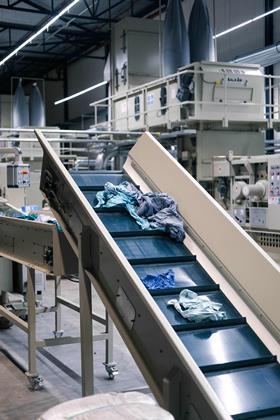
ReHubs is working to resolve precisely this bottleneck: The alliance brings together more than 30 stakeholders across the entire value chain—including recyclers, sorters, fiber and technology providers, brands, manufacturers, extended producer responsibility (EPR) organizations, and investors. The goal: to scale textile-to-textile recycling in Europe to an industrial level.
Billions in investments for industrial scale
There is no doubt that more recycling facilities are needed. However, financing them is capital-intensive. Even pilot plants require investments in the tens of millions, while large chemical recycling plants involve several hundred million euros. According to a recent analysis by the Boston Consulting Group and ReHubs, Europe could need between 8 and 11 billion euros in additional capital to scale up the European recycling infrastructure to a significant level by 2035. On top of that, there are annual operating costs of 5 to 6.5 billion euros.
Here, too, the “chicken-and-egg” dilemma described earlier is blocking further development: uncertainty leads to a lack of investment; a lack of investment prevents scaling; limited scaling keeps costs high - and high costs, in turn, curb demand.
Yet Europe already has considerable mechanical recycling capacity. However, it is highly fragmented. The regional dimension also plays a role. In some cases, chemical recycling plants can only be operated economically if they pool textiles from multiple countries. This requires supraregional coordination.
It’s not just about building recycling plants: All stakeholders must scale up
It’s not just recycling plants that are needed. Essential to the functioning of the circular economy is taking all stakeholders into account. Collection, sorting, automated sorting, pretreatment, logistics, recycling, and the demand for recycled fibers must all grow in tandem. Van de Kerkhof: “The entire system needs to develop together. The industry often focuses heavily on recycling innovation itself, but the bigger issue is overall system efficiency and scale.”
Therefore, investments must not focus exclusively on the most visible recycling technologies. If, for example, large-scale chemical recycling capacities are established but not enough suitable textiles can be collected, sorted, and prepared, the bottleneck simply shifts within the value chain and the facility will not be profitable. “This risk continues to be underestimated,” says Acerina Trejo Machin, Chief Technology Officer at Resortecs. Belgium-based Resortecs is focusing on “Design for Disassembly.” Using the heat-activated sewing thread “Smart Stitch,” seams can be selectively broken down at the end of a product’s useful life through an automated thermal process. The goal is to transform pretreatment from a labor-intensive manual process into an industrially scalable stage of the recycling chain. “Up to 80% of recyclable textiles fail as early as the pretreatment phase. The central challenge rarely lies in the fiber itself, but rather in the physical impossibility of efficiently separating pure fabrics from synthetic sewing threads, linings, and trims,” explains Trejo Machin. In her view, disassembly must be considered an integral part of the recycling infrastructure itself.
2.7 million metric tons as a potential tipping point
Textile-to-textile recycling remains marginal in Europe. Less than 1% of textile waste is currently recycled back into new textiles, while most textile recycling still results in lower-value applications such as insulation or cleaning cloths. ReHubs identifies a volume of approximately 2.7 million metric tons of recycled textile material per year as a potential tipping point for Europe. This corresponds to roughly 15 % of the available post-consumer textile waste in Europe.
If such a volume is achieved, technologies could move beyond the “first-of-a-kind” phase, facilities could operate at higher capacity, and the relationships between collection, sorting, recycling, fiber production, and textile manufacturing could stabilize.
The target is now set for 2035. ReHubs had previously aimed to reach a volume of 2.5 million tons by 2030 or 2032; given slower-than-expected development, the timeline has been adjusted.
Circularity starts with design

Furthermore, the success of textile recycling cannot depend solely on how precisely recycling processes are set up and scaled. Design must also adapt to the possibilities, as it determines how easily a garment can later be repaired, reused, reprocessed, disassembled, or recycled.
“We expect brands to move away from designing products solely for their initial phase of use and instead design products with their entire lifecycle in mind,” Trejo Machin continues.
This does not mean that every garment must be designed primarily for recycling. The first question should be: What is the most valuable next use for this product? Sometimes that’s repair, sometimes reuse, refurbishment, or the recovery of a valuable component. And finally, recycling.
Some major brands are already working with design guidelines that restrict certain material blends or take disassembly pathways into account. According to Van de Kerkhof, however, there is a significant gap between the pioneers and the rest of the industry.
Regulation as a form of de-risking
The picture is becoming clear. Many parts of the system need to move forward simultaneously for textile circularity to succeed. Regulation will be essential to making this happen. The Digital Product Passport could play a useful role if the information it contains actually helps determine the right next step for a product.
An even more important role is played by Extended Producer Responsibility (EPR). It can create an economic incentive for recycled materials by using fees for new and harder-to-recycle materials to narrow the price gap between virgin and recycled fibers.
However, there is a risk as EPR systems come into place across Europe, that different fee structures and national systems will make it more challenging, according to van de Kerkhof, to invest in recycling infrastructure that can be scaled across Europe.
ReHubs is therefore working with their member Refashion from France and the PRO Forum to achieve greater coordination. Refashion has many years of experience in France with EPR for clothing, home textiles, and shoes. Lucien Grandval, Director of Public Affairs at Refashion, says: “Harmonization is essential to reduce the administrative burden on brands and provide recycling companies with predictable framework conditions.”
Common definitions, reporting and traceability requirements, as well as standardized methods for measuring recycling rates and recycled materials, are “urgently needed.”
Revenues from EPR must be used throughout the entire chain - initially for collection and sorting, but increasingly also for pre-treatment and recycling capacity.
The “Valley of Death” before EPR funding
However, there is a timing issue here: there is a funding gap between today’s investment needs and the point at which EPR systems generate relevant revenues. Van de Kerkhof refers to it as the “pre-EPR valley of death.”
That is why additional risk-reduction tools are needed - such as guarantees, public funding, and private investment. The key term is de-risking. Banks do not want to rely solely on the assumption that a new technology will eventually succeed in the market. They need reliability and predictability, for example through firm offtake agreements.
Consequently, building a large-scale textile-to-textile recycling industry in Europe therefore requires more than simply adding recycling capacity. Collection, sorting, recycling, fiber production, and manufacturing need to be reconnected within a viable industrial ecosystem. “What we’re currently missing is a connected value chain with the right economic incentives for all stakeholders to participate,” sums up Nacho Bueno, Marketing Director at the Spanish textile recycling specialist Coleo. Coleo covers several stages of the textile value chain, from collection and sorting through recycling to the production of fibers, yarns, fabrics, and finished products, and is now also operating in France. Every stakeholder needs an economic reason to change their current behavior.