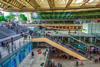
A temporary Australian Open retail space at Melbourne’s Fed Square signals Tennis Australia’s broader experiment with event-driven commerce, combining merchandise sales with cultural programming to extend the tournament’s commercial footprint beyond Melbourne Park’s boundaries.
Event-driven retail is getting a test run in Melbourne, where Tennis Australia has positioned a temporary Australian Open store at Fed Square to reach consumers beyond those attending matches at the tournament’s primary venue.
The pop-up, operating from Jan. 10 through Feb. 1, sits at a major pedestrian crossroads in central Melbourne and offers extended hours ranging from 9 am to as late as 10 pm. Merchandise purchases can be delivered directly to hotels or residences.
Blending commerce with cultural activation
The retail strategy extends beyond traditional tournament merchandising. Tennis Australia has integrated an art exhibition into the space, with curator Eddie Zammit assembling 15 works that correspond to the tournament’s 15-day schedule. The gallery component, titled Fifteen Love, explores Melbourne’s relationship with professional tennis through visual art, with limited-edition prints available for purchase.
Daily programming includes pickleball demonstrations and product giveaways designed to drive foot traffic and position the store as an activation space rather than purely transactional retail.
Visualizza questo post su Instagram
Strategic rationale for pre-tournament retail presence
The Fed Square location allows Tennis Australia to intercept consumers who won’t attend matches while establishing a downtown retail presence ahead of tournament gates opening. The model reflects broader shifts in event marketing, where organizers create satellite commercial touchpoints in high-traffic urban zones to maximize brand exposure and revenue capture.
Short-term retail tied to major sporting events increasingly emphasizes experiential elements over pure product sales, betting that engagement-focused programming can justify the costs of temporary leases and staffing in premium locations.
Whether this approach delivers measurable commercial returns beyond traditional venue-based retail remains an open question, but the structure provides a framework other event organizers may evaluate as they consider retail strategies beyond stadium and arena boundaries.
The Australian Open tournament runs Jan. 12–26 at Melbourne Park.