The EU’s sustainability agenda will continue to be at the heart of many companies in the sports and outdoor industry in the next year. As we move towards a more sustainable and competitive Europe, more and more companies in the apparel industry are grappling with the complex web of existing and future regulations. These issues will be at the forefront.

The new majority in the EU since the European elections of 2024 has raised expectations that certain regulations might not be introduced after all. So far, however, this does not seem to be the case. The Green Deal will continue, albeit with a sharper focus on competitiveness and simplification. And that’s a good thing. “Voluntary action has not achieved much in the past,” says Nicole Espey, CEO at GreenAixChange and former CEO of Bundesverband der Deutschen Sportartikelindustrie e.V. “It can only be done through legislation.” It is not yet clear exactly what regulations the EU will demand of the clothing industry, but the broad outlines are in place, and it makes sense to address them now.
Ecodesign for Sustainable Products Regulation (ESPR)
“We are keen to see the results of the preparatory work on ESPR for apparel, which will provide much-needed clarity on the rules brands and manufacturers must comply with in the coming years,” writes Pascale Moreau, founder of Brussels-based Ohana Public Affairs, in her outlook for 2025. Ohana is a public-affairs consultancy specializing in sustainability strategies for the EU. The Ecodesign for Sustainable Products Regulation (ESPR) came into force in July 2024, and the next step is to develop it in each sector. It aims to improve the energy and resource efficiency and recyclability of products. Specifically, it addresses:
- Durability, reusability and reparability of products
- Presence of substances of concern in products (which could limit their circularity)
- Energy and resource efficiency of products
- Proportion of recycled material in products
- Reprocessing and recycling of products
- Reduction of CO2 emissions and environmental pollution
- Amount of waste that products are expected to produce
In other words, companies will have to meet the performance and information requirements of the ESPR at the design stage and take into account material, energy and resource efficiency. While this will require significant change, companies expect to gain a competitive advantage in terms of both compliance and consumer appeal.
The EU Commission will be publishing a plan for the ESPR’s implementation in March/April 2025. The first product regulations are expected to come into force by the end of 2025. Member states’ sanctioning legislation should then ensure compliance with the ESPR.
Will Europe ban PFAS?
Among the many issues regulated by the ESPR is one that has been on the minds of the outdoor industry for many years: PFAS (per- and polyfluoroalkyl substances), or the presence of substances of concern in products. Several European countries have reevaluated the safety of PFAS, and a proposal has been made to amend the REACH regulation with a ban in the EU on the entire class of PFAS. This would also exclude future substances with these properties, to prevent circumvention of the ban.
The current proposal for a PFAS ban under REACH calls for restrictions to take effect in 2026. However, it is still unclear whether the ban will apply to the entire class of substances or exempt certain applications. As things stand, PFAS could be banned in footwear from October 2026 and in textiles a year later.
Antje von Dewitz, CEO of Vaude, says on LinkedIn: “What we need is clear legislation that encourages innovation and alternatives. As a company, we have demonstrated for over a decade that PFAS-free production is possible. It is time for policymakers to create the framework to accelerate the necessary change.”
EU Digital Product Passport: Digitalization of supply chain
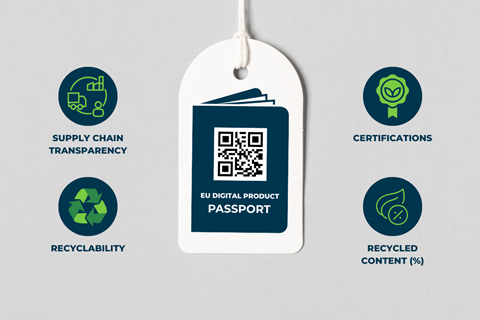
Another element of the ESPR is the Digital Product Passport (DPP). This tool is designed to provide information on environmental and sustainability effects at the product level. Here too the focus is on defining product-specific requirements. “There are different approaches,” explains Kutay Saritosun, Director of Brand Services and Partnerships at bluesign technologies AG. “At the moment, it looks like there will be a mandatory QR code on every garment. This indicates that it is the digital twin of that garment. This QR code will contain different layers of information – for example, the certifications of the garment; the recycled content, which will also be mandatory in the future; the recyclability. It will contain all the information about the supply chain to promote transparency for consumers and for the industry.”
The framework for the textile sub-sector will not be defined until July 2026 and will come into force a year later. It will therefore take about a year and a half before it is clear what product data needs to be communicated. “It is important that fashion companies start building the right infrastructure now so that they can efficiently collect, manage and ultimately communicate the relevant data when the time comes,” says Philipp Mayer, co-founder and chief product officer of Retraced. The company helps fashion and outdoor brands, like Vaude, digitize their supply chain.
Waste Framework Directive: New rules for fast fashion?
As of Jan. 1, 2025, all EU member states are required to separately collect textile waste. This is one of the key pillars of the Waste Framework Directive (WFD) on textile waste and circularity. This directive aims to promote a circular economy and reduce the environmental impact of waste. As the WFD also introduced the polluter pays principle and extended producer responsibility (EPR), companies in the textile sector are expected to contribute to the costs of waste disposal and recycling, presumably through local authorities. “Today, overproduction and throwing away may be cheaper than producing less,” says Espey. France already has such licensed waste streams, where companies pay a fee for all products. “Everyone who sells in France today, including via platforms, already has to deal with this today,” explains Espey.
It is still unclear to what extent fast-fashion suppliers should be made to contribute more to the costs of waste collection and treatment than other garment manufacturers. This is a question of so-called extrinsic durability and of whether the fast-fashion business model of overproduction and rapid collection changes encourages over-consumption and increases textile waste. If this concept of extrinsic durability is included in the legal text, it could have a significant impact on the fashion industry and the question of how much “fashion” collections can still afford.
EU Directive on Environmental Claims: More details expected
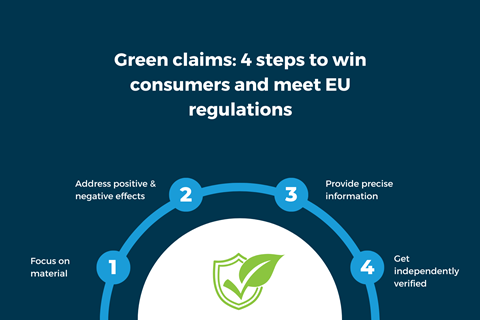
Greenwashing has become a serious problem in recent years. It misleads consumers and distorts competition. The Directive on Environmental Claims (GCD) is intended to further the EU’s efforts to combat greenwashing. Observers expect more to be published this year on how things will work in practice.
In 2025, we expect to have clearer and more enforceable standards for environmental claims, with additional details provided on acceptable verification methods and substantiation requirements,” says Pascale Moreau of Ohana Public Affairs. The Digital Product Passport will also play a role. “Anyone who wants to make an environmental claim about a garment needs to have that claim verified by a third party to prevent greenwashing,” says Kutay Saritosun of bluesign. It makes sense to review the wording of marketing and product claims and to take the opportunity to highlight real positive examples that can be backed up in detail. This helps to build consumer confidence.
EU Textile Labelling Regulation: Will it include non-textile apparel?
The EU Textile Labeling Regulation (TLR) is also due for revision in 2025. The aim is to harmonize labeling practices while promoting sustainability in the textile sector. Ohana Public Affairs expects the Commission to present new proposals in the second quarter of this year. The digital product label will also play a role, as studies have shown that around 50 percent of EU consumers cut out the standard polyester label because they find it annoying. A digital label, however and wherever it is ultimately applied, could remain in the textile throughout its lifecycle and would not contribute to environmental pollution, such as microplastics.
There is also discussion about whether this labeling requirement should be extended. So far, it is limited to textile clothing. It is therefore possible that the labeling requirement could apply also to non-textile clothing, such as shoes. The date of application is not yet known but is expected to fall between 2027 and 2028.
Stay tuned: transformation takes time
The sustainable development of the apparel industry requires its transformation. But while sustainability has boomed in recent years, interest in the topic now seems to be waning. “There is a sense of fatigue, a feeling of pushing the boulder up the hill over and over again,” says Adele Stufford, Executive Vice President of Growth at Worldly, describing the current situation in the CSR teams of many apparel companies. Worldly, a technology company, developed the data platform for the Higg Index, which measures the environmental impact of textile production in the global value chain. But there is no reason to slow down. Neither the legal situation nor the climate situation, which necessitated the transformation of the apparel industry in the first place, is easing.

Is your brand ready for the sustainable consumer?
Eco-conscious consumers are reshaping the sports and outdoor industry. Discover the latest trends and strategies to stay ahead in our special series.
>> Find out more