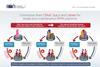
A recent European Court of Justice (ECJ) judgment of April 27, 2023, has opened the door for brand owners to proceed in jurisdictions of their choice against trademark infringers within the EU/EEA. Yet, as is unfortunately often the case, such a court ruling requires some “translation” into simpler terms so that its contents and importance for brand owners can be understood by those who are not legal professionals. Our legal expert, Dr. Jochen M. Schaefer, brings you the key points.
Context to the latest ECJ ruling on cross-border trademark infringements
First, some background to the case. Lännen, a Finnish company and part of the large LMCE Group, manufactures inter alia amphibious dredgers (large multipurpose machines used to clean waterways) under the brand Watermaster, which has enjoyed EU trademark protection as a union trademark since 2004.
In early 2020, the Finnish company started two litigation proceedings in the Finnish courts against two German competitors on the grounds of trademark infringement. The accused – Berky and Sewantec – were both members of the same holding company. Lännen argued that Sewantec, by using paid referencing in the Finnish version of the search engine, Google.fi, had violated Lännen’s trademark rights in Finland.
When Finnish internet users were searching for “Watermaster,” an advertisement popped up showing the products of Sewantec, which was separated from the other search results by a line and by also displaying the word “Ad.” Nothing in this ad referred to Finland nor indicated the geographic area where such products were marketed and sold. Instead, the ad was linked to Sewantec’s own website, where it was stated that its products were sold worldwide. It equally showed a world map, where the countries in which the German company’s products were marketed and sold were highlighted, and this did not include Finland.
In the case against Berky, Lännen complained that for nearly 15 years, Berkey had used the natural referencing of images, which are freely accessible on the photo-sharing website Flickr.com, of Berky machines by means of a meta tag that included the keyword “Watermaster.” As Berky claimed, their aim was to enable internet search engines to better identify those images. It then created a link to a webpage, which displayed Berky machines.
In the Finnish national court proceedings, it came as no surprise that the two German entities denied the jurisdiction of such a court by arguing that the respective trademark infringements were neither targeted at nor committed in Finland.

Do Finnish courts have jurisdiction in these scenarios? – How did the court rule?
Since EU-related legal aspects were involved, the Finnish court referred the matter to the ECJ, asking for a preliminary ruling as to whether it had jurisdiction over the case. In a highly complex and detailed technical legal assessment, the European judges came to the following conclusion:
“Article 125(5) of Regulation (EU) 2017/1001 of the European Parliament and of the Council of 14 June 2017 on the European Union trade mark, must be interpreted as meaning that the proprietor of an EU trade mark who considers that he or she has been prejudiced by the use, without his or her consent, by a third party, of a sign identical with that mark in online advertisements and offers for sale in respect of goods identical with, or similar to, those for which that mark is registered, may bring an infringement action against that third party before an EU trade mark court of the Member State in which consumers and traders targeted by those advertisements or offers for sale are located, notwithstanding the fact that the third party does not expressly and unambiguously list that Member State among the territories to which a supply of the goods in question might be made, if that third party has made use of that sign by means of paid referencing on a search engine website which uses a national top-level domain name of that Member State. By contrast, that is not the case simply because the third party concerned has used the natural referencing of images of its goods on an online photo-sharing service under a generic top-level domain, having recourse to meta tags using the trademark concerned as a keyword.”
What does the ECJ’s ruling on cross-border trademark infringements mean for brands?
What are the practical consequences for brand owners in the sporting goods sector if they intend to prosecute cross-border trademark infringements?
In the Sewantec case, the ECJ approved the Finnish court’s jurisdiction; while in the Berky lawsuit, the European judges considered that the underlying facts were not sufficient to come to the same conclusion.
But what’s really important is the question of Member State courts. This sentence is key: proprietors of EU trademarks “may bring an infringement action against that third party before an EU trademark court of the Member State in which consumers and traders targeted by those advertisements or offers for sale are located.”
Holders of trademarks in the sporting goods industry should now enjoy a much greater degree of flexibility in where to bring legal action against a third-party competitor on the grounds of EU trademark infringement.
And the choice of venue – where no contractual relationships exist between the parties concerned – is of high practical relevance.
Brand owners located in a certain member state may be reluctant to commence litigation proceedings before a court in the country where the adverse party has, for example, its seat of business. Then there are, of course, language issues and other factors, such as a well-functioning court system in certain EU member states, which might play a role in such a decision-making process.
Dr. Jochen M. Schaefer is a German practicing attorney based in the Munich area. For several years, he has been representing the World Federation of the Sporting Goods Industry (WFSGI) and the European Federation of the Sporting Goods Industry (FESI) as their legal counsel. He also chairs the WFSGI’s legal committee and is co-chair of the FESI’s digital working group. At the individual client level, he represents a significant number of well-known brands within and beyond the bicycle/sporting goods sector. He is a specialist in national and international distribution topics, intellectual property (IP) and risk management issues, and the drafting and negotiation of comprehensive contracts at the operational level; in particular in the area of European selective distribution schemes. In case of any questions about this article (or in general), he can be reached at sj@sjlegal.de and at +49 151 1640 7932.