Anime now ranks among the top three TV genres for viewers aged 3–18 across 21 countries. Sporting goods brands, from Under Armour to sports teams like the Boston Red Sox, are building campaigns around it – and market data suggests the bet is paying off.
Anime, no longer just entertainment but a full lifestyle of merchandise and brand deals, has seen its global fan base surge, prompting sports brands to seize on the trend. As a result, collaborations between the two worlds have become routine.
According to The Insights Family, anime ranks among the top three most watched TV and film genres for viewers ages 3 to 18 across 21 countries, a dominance that has driven clubs including the Boston Red Sox and LA Lakers to team up with One Piece in just a few years. Anime culture has pushed the sports world to become more creative than ever, with series from Captain Tsubasa to Jujutsu Kaisen sparking collaborations in volleyball, soccer, and beyond.
A survey from early 2020 revealed that 27% of American adults ages 18 to 29 held a favorable view of anime, with the average fan at just 24.4 years old. That demographic snapshot pointed directly to Gen Z as the genre’s core audience, indicating that the need to stay relevant with young consumers now stands as the single greatest force behind these collaborations.
This demographic appeal carries real commercial weight, with Grandview Research projecting the global anime market to grow 9.7% from 2021 to 2028 and the U.S. climbing even faster at 15.5%. With global anime merchandising set to reach $22.89 billion by 2033, it’s no surprise that brands are rushing to collaborate.
The picture in Europe is just as striking. The region’s anime market was valued at $4.32 billion in 2023 and is projected to expand at 11.1 percent annually through 2030, according to Grand View Research. Seven European countries rank among the top 10 markets worldwide for growth in anime viewership, per Ampere Analysis. France places third globally, with 29 percent of the country’s audiences watching anime. Finland recorded Europe’s sharpest increase in viewer interest, rising 9 percentage points between 2020 and 2024.
Helena Lang, a licensing and business development consultant, said that many brands chase short-term sales spikes, but the storytelling behind anime collaborations could win the market.
“Too many collaborations are still just logo-grabs, chasing a quick sales bump. Brands need to go deeper with their storytelling to show they actually understand their audience and truly value them. The lasting partnerships reveal whether a brand truly knows its fans, or whether the brand simply hires an outside agency to handle the creative work,” Lang shared.
“I’m biased, having grown up in the generation that saw what Slam Dunk did for basketball in Asia. But I do think that anime makes a difference. Sports anime lasts because of the emotional connection it creates. At the very least, anime might get kids to join a team before they figure out that not everyone can become the next Shohei Ohtani.”
Fans have voiced their excitement all over social media. One Facebook member even posted about his enthusiasm for the collaboration.
“I loved the One Piece collab with the Boston Red Sox last season. A huge crowd of fans turned out, and the whole thing was a blast. Hope this one brings the same fire,” he posted on social media.
“100% agreed. And these jerseys look badass. I need one,” another fan reacted to the One Piece and Red Sox collaboration by saying that while the anime built a fan base, it also built an entire community.
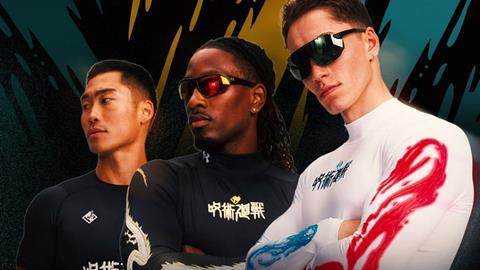
The collaborations extended beyond One Piece and the Red Sox. Hello Kitty has since announced a partnership with MLB, and Under Armour has also entered the anime space by teaming up with Jujutsu Kaisen to release a line of compression shirts.
In a press release, Tyler Rutstein, Under Armour’s Senior Vice President of Global Brand and Americas Marketing, said:
“This capsule draws inspiration from the anime community and the Toji trend on TikTok. We’re always looking for ways to connect with athletes and fans, so we use our iconic HeatGear compression shirts as a canvas to turn performance gear into a cultural statement.”
“Jujutsu Kaisen is built on the idea of ‘becoming the strongest,’ which fits perfectly with our mission to help athletes improve. This collaboration allows us to reach new audiences and build brand excitement where sports and fandom come together.”

Knowing your audience beats chasing the trend
Lang warned that while anime collaborations can boost sales, sports brands must focus on what consumers actually value – and above all, consumers care about shared values.
“Just because a sports brand partners with a popular anime IP, that doesn’t mean fans will automatically buy in. Sports apparel brands must prove they understand what their younger consumers want and who they aspire to become, if they want to earn [their] lasting loyalty,” she said.
As hype around sneakers and limited-edition releases faded, brands increasingly turned to the places and communities that mattered to younger audiences. Markus Winter, founder and co-CEO of Yuzu Kyodai, a consumer culture and strategy agency with offices in Tokyo, Shanghai, Singapore, and Seoul, agreed that anime was an obvious choice given its long history of merchandising and collaborations and its ability to deliver what every brand needed to give its customers – specifically storytelling and meaning.
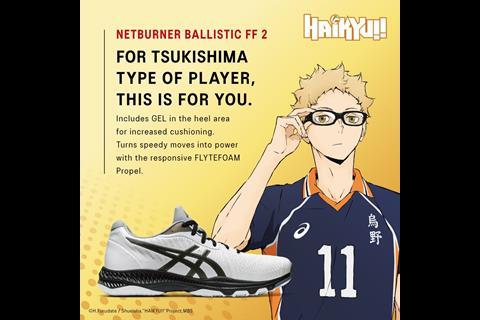
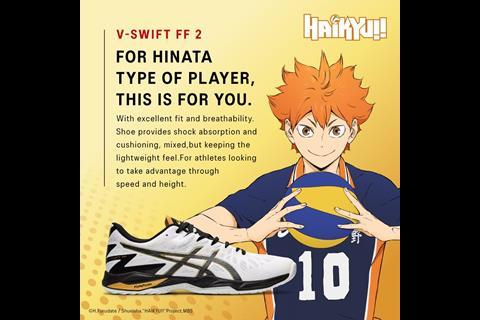
”Asics and Haikyu!, the highly successful volleyball anime and one of the best-selling manga series ever, went deep into the manga’s characters and linked each character to actual playing traits and distinct on-court strategies,” Winter said, explaining the success of the collaboration.
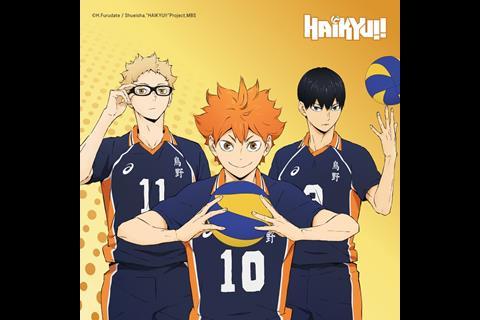
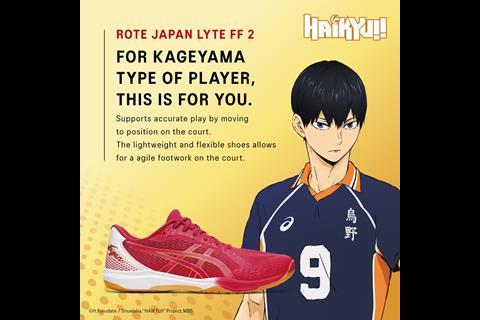
In recent years, several sports anime have attracted large global fan bases. Haikyu! became a giant in the anime scene and remains one of the most popular franchises, with over 70 million copies of the manga sold. According to CBR, Free! also gained traction and helped bring sports anime to North American audiences, while Blue Lock has since taken over, having been named the best-selling manga in 2023.
“I find these kinds of collaborations way more meaningful. They don’t just borrow the look, but they actually tap into the story of the manga. You can tell they truly understand the characters, whose stories and struggles millions of fans connect with, instead of just using them to get attention.”
Winter explained that sports anime doesn’t just call a sport cool – instead it teaches a moral framework where training matters, rivalry fuels growth, and accepting defeat is essential.
Shōnen anime naturally aligns with sports because both are built on the same core ideas. Even when a series isn’t technically about athletics, its narrative structure feels unmistakably athletic. A character starts from weakness, trains, forms a unit with others, faces stronger opponents, loses, improves, and returns transformed – all while inspiring fans to cheer for the underdog, a feeling that resonates with their own daily lives and fuels market demand for meaningful anime partnerships.
“Anime can really drive demand. Take Haikyu!, one of the biggest volleyball anime and manga series ever. It sparked real interest in volleyball and inspired fans to create their own branded content, like those Haikyu!-HOKA mockups,” Winter said, referring to the online hype around anime and sportswear brands.
For sports brands, their relevance in the market continues because the final whistle on their cultural impact never truly blew – it merely signals the start of a new season, and anime now calls the plays with renewed energy and direction.

Eastern views
Asia-Pacific insights for the sporting goods industry
Analysis, insights, and expert perspectives on the sporting goods industry across Asia-Pacific — covering market trends, manufacturing, retail, and brand strategy from China to Southeast Asia to Oceania. With Jakarta-based contributing editor Yohana Belinda.
Explore Eastern views →