
When sacred symbols land on athleisure and ancestral patterns go mass-market, the question isn’t whether brands are borrowing from local traditions – it’s where inspiration ends and appropriation begins.
“My culture isn’t a trend.”
Asian influencers on TikTok have made that clear. The rise of using local culture as a design shortcut in athleisure has long been a flashpoint – but let’s call it what it often is: a visual gimmick picked for shelf appeal, not cultural respect.
More and more, athleisure brands have been doubling down on localization to drive sales. Some argue it brings global attention to a culture, but from a design perspective it’s a double-edged sword.
Global brands are cashing in on local aesthetics
Markus Winter, co-CEO of APAC brand strategy agency Yuzu Kyodai, put it bluntly: more global brands are tapping into cultural aesthetics for design inspiration because local flavor gets them noticed by a bigger market. He’s not dismissing the approach, but his message is clear – brands need to do far more research before cashing in on someone else’s culture.
“Take Shanghai Tang. The brand has been around for decades but never really broke through. Then Adidas comes along with the same basic idea, and suddenly it’s a massive hit. Why? Right moment, right execution, and a mainstream-friendly take that landed just as the world got hungry for simple, easy-to-digest China-inspired style,” Winter said.
Once a trend lights up online, Gen Z takes notice because they live and breathe influencer culture. According to Vogue Business research, 51 percent of Gen Zers say social media influencers create new trends, underlining the continuing power of influencers over the consumer discovery journey.
Winter offered another angle. Western brands come off as fresher because the appeal is about newness, fusion and viewing local traditions from the outside. The real value of an outsider’s perspective lies in helping a culture rediscover what has been sitting right in front of it for too long.
“Sometimes outsiders see the value and uniqueness of things more clearly than the people who’ve lived with them for too long, who’ve let them become too normal, who’ve simply forgotten to appreciate what’s right in front of them,” he said.
Adidas revived its “In China, For China” playbook in 2023 to claw back market share. The brand designed, manufactured and marketed products specifically for Chinese consumers by embedding local culture and accelerating speed to market. By 2025, it had released a wave of Tang jacket designs that not only dominated the Greater China market but spread across the internet worldwide.
After a sharp sales decline in Greater China in 2022, Adidas posted consecutive years of revenue recovery through 2024 – a result the company has attributed in part to its localization strategy. Still, Winter cautioned, the approach demands far more research.
“Yes, they’re all walking a fine line between homage and theft.”
“Here’s the rule: respect the original culture, add a fresh spin, and don’t just strip it for a quick buck. Make sure it’s not just for international eyes. Locals have to feel like it’s a real contribution too. That’s how you avoid the backlash,” he said.
Reiting Lee, founder of The Oriental Hybrid, a boutique consultancy based in Taipei, took a harder line. When a massive brand adapts a culture for its own gain, that is capitalism at work – and too often the brand doesn’t do right by the culture it borrows from.
“Look, it’s both, but honestly, it’s usually more about cashing in than celebrating.”
“Real celebration means hiring local creatives and putting money into actual cultural research. Take the Tang jacket. Western brands love the aesthetic, but there’s no real storytelling or community engagement behind it. So foreign customers end up confused – they see something Asian, but they can’t tell if it’s Chinese or Japanese,” Lee said.
Understanding the community, especially Gen Z, remains the real differentiator. According to the same Vogue Business report, 54 percent of Gen Zers say their favorite brands are the ones that make them feel like they belong to a community.
Lee made another point. Locals once viewed traditional dress as too formal, too delicate or simply uncomfortable – and felt constrained by the fixed image of those garments, with no room for reinterpretation – until major athleisure brands stepped in. By selecting a few key elements and reimagining them using functional fabrics, performance-driven silhouettes and a minimalist approach, those brands gave consumers an everyday option that doesn’t feel “too much” outside of festive occasions.
When global brands get it wrong
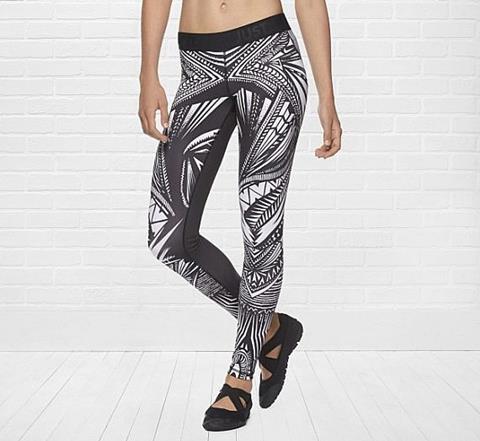
The risks of getting this wrong are tangible. In 2013, Nike released Pro Tattoo Tech Tights for women featuring sacred Samoan pe’a patterns – a male-only tattoo that carries deep cultural meaning as a mark of courage and lifelong commitment. After Polynesian communities condemned the design as a profound act of disrespect, the brand apologised and pulled the product.
Last year Adidas faced cultural appropriation accusations over the Chavarria Oaxaca Slip On, designed by Willy Chavarria, a shoe inspired by the huarache – a classic Mexican sandal that has spanned generations and become a cornerstone of Chicano street style.
In a statement to WWD, Mexican American designer Willy Chavarria said he always intended to honor Oaxaca’s cultural and artistic spirit, a place that inspired him through its beauty and resistance.
He explained that Oaxaca represents living culture, people, and history, not just a word, and expressed deep regret that the shoe was appropriated rather than developed in meaningful partnership with the Oaxacan community, falling short of the respect and collaboration that Oaxaca, the Zapotec community of Villa Hidalgo Yalalag, and its people truly deserve. He added that love is not simply given but earned through action.
Visualizza questo post su Instagram
Chavarria acknowledged that brands still need to do far more research to avoid preventable missteps. In 2021, Adidas had already faced significant backlash after claiming its wayang-inspired shoes drew from Malaysian culture, when wayang in fact originates from Indonesia.
Local brands can do more
With the benefit of cultural proximity, local brands are better placed to get the fusion right. Lalisa Manoban – known globally as Lisa of South Korean K-pop group BLACKPINK – has launched an athleisure line drawing on Muay Thai aesthetics, striking a balance between heritage reference and contemporary sportswear design.

Following Lisa’s lead, South Korean brand LEESLE fuses traditional hanbok aesthetics into modern activewear, while Bosideng consistently weaves Chinese cultural elements into its seasonal collections.

Lara Fawzy, founder of Dubai-based activewear label Lara Active, offered a sharp counterpoint. Smaller brands don’t need to borrow culture – they can build their own trends, grow real communities and actually listen to their customers.
“Big brands have the budgets to push trends and shape culture. But smaller players can build their own with quality and by solving real customer needs. It takes time, hard work, and total alignment of passion and purpose. Constant research, active listening and a close read on the local market and competitors are non-negotiable,” Fawzy said.
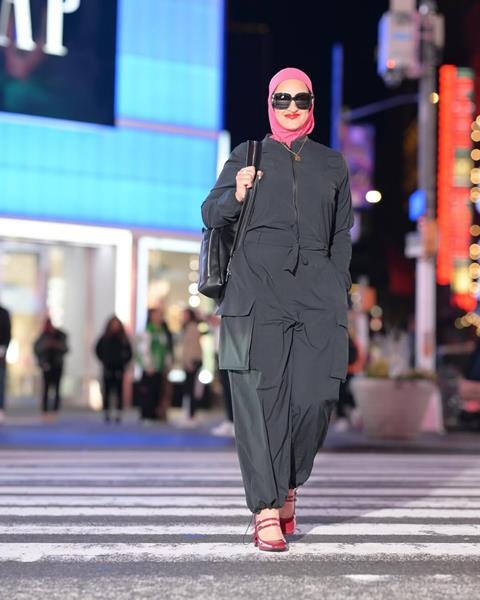
As a multicultural founder, Fawzy embraces fusion while staying true to her core values, particularly in modest wear. Her brand targets active Muslim women – a segment most global brands have consistently failed to understand or serve. She engages her community through micro-influencers and Muslim women active in sports and lifestyle, building proof that fashionable, functional and covered activewear is not only possible but commercially viable.
“Don’t compete, be different, and champion slow fashion with sustainable scaling as the real goal. We are not here to fill landfills or play copycat. I produce locally and ethically. The process takes longer, but it is more purposeful, far less wasteful and speaks directly to the conscious consumer,” she said.
Lee’s conclusion is direct: modernizing and collaborating are the keys to building lasting brand relevance.
“Lead the trend. Build the ecosystem with real partnerships – designers, media, retailers, investors – the way Korea does it. Local brands can hold onto cultural depth while still evolving, reinterpreting and going global. Modernize the dress code. Shoot in a place that actually means something. Collaborate across cultures and create something new,” Lee said.
“Local brands can modernize with technical fabrics and urban mobility for real function. Redefine the cultural look with sneakers or gender-fluid silhouettes. They have the edge, the authentic story and the chance to teach the world something deeper.”
Who we talked to
Markus Winter is co-CEO of Yuzu Kyodai , a cultural insights and semiotics agency with offices in Tokyo, Shanghai, Singapore and Berlin. Founded in 2013, the firm helps global brands turn cultural intelligence into commercial strategy, specializing in product innovation, brand positioning and consumer behavior across Asian markets.
Reiting Lee is the founder of The Oriental Hybrid, a boutique consultancy bridging Arabic-speaking markets and the Greater China region. Founded in October 2020, the firm advises brands on market entry, cultural strategy and marketing communications, with a focus on fashion, lifestyle and technology.
Lara Fawzy is the founder of Lara Active, a Dubai-based activewear label focused on modest sportswear for active Muslim women. The brand produces locally and ethically, with a community-first approach built around micro-influencers and Muslim athletes.

Eastern views
Asia-Pacific insights for the sporting goods industry
Analysis, insights, and expert perspectives on the sporting goods industry across Asia-Pacific — covering market trends, manufacturing, retail, and brand strategy from China to Southeast Asia to Oceania. With Jakarta-based contributing editor Yohana Belinda.
Explore Eastern views →