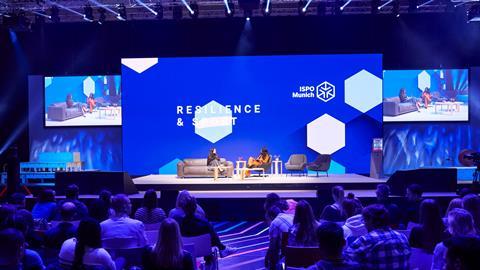
From Nov. 30 to Dec. 2, ISPO Munich returns for one last edition in its long-time home before the show moves to Amsterdam in 2026. This year’s program reflects that shift. The agenda feels more curated, more focused, less about big reveals, more about relevance. The spotlight falls on the future of retail, sustainability and how sports culture is evolving through brands, creators and communities.
Visitors from over 100 countries will gather to explore what’s next. It’s a fair, yes. But also a forum: a place where ideas meet execution, and where the future of the industry is up for discussion.
So what’s worth your time at ISPO 2025? A lot. But here are the threads tying it all together.
Retail under review
This year’s retail programming responds to pressure points that have been building for a while. Instead of offering abstract visions, it focuses on tangible paths forward. The theme “From Maze to Movement” positions ISPO as a structured experience and an event built to help retail professionals think through what comes next.
Sunday (Nov. 30) kicks off with the ISPO Retail Award nominee presentation, then moves into a two-hour strategy session with Intersport, Sport 2000 and Decathlon. Topics range from store-based experience design to the growing weight of sustainability metrics in B2B purchasing. The Retail Club Lounge (B1.404) becomes the go-to space for scheduled meetings and informal conversations, with support from ISPO’s matchmaking platform.
Sessions on Retail Best Cases – some curated by The LBMA – highlight tools and formats already in use, from adaptive store design to AI-assisted product curation. The Retail Deep Dive Conference on Tuesday (Dec. 2) expands the focus to international retail models, with case studies from China, France, Poland, Scandinavia and the Alpine region.
Away from the stages, curated areas like the Sustainability Hub, Padel and Pickleball Villages, Textrends and the ISPO Brandnew start-up zone offer first-hand insights into what’s being tested in the field.
New voices, shifting narratives: The Creator Summit
Parallel to the retail track, Sunday also marks the launch of the ISPO Creator Summit. Hosted in the new ”House of Content,” the program is tailored to media professionals, brand storytellers and community builders. It reflects a broader shift in the sports industry: visibility is no longer dictated by campaigns alone, but also by how consistently brands show up in the spaces where communities gather.
The summit features speakers such as Lina Magull, André Schürrle, Magdalena Kalus and Stella Greiner. Topics move between authenticity in creator culture and mental wellbeing in high-performance environments. One of the livelier moments: the Phygital Sports Influencer Battle, a fast-paced demo format that merges sport with digital influence.
The content doesn’t end at the stage. A creator sprint, livestreamed padel activations and hands-on tours underscore the Summit’s commitment to making content production more embedded.
Media, politics and Olympic momentum
Monday (Dec. 1) carries the theme “Media Monday & Sustainability,” with the morning anchored by a full run of executive-level panels. The WFSGI keynote sets the tone by examining barriers to sport participation. It’s followed by a future-facing discussion with executives from Oberalp, Merrell and the Hexagon Cup on relevance, access and long-term industry responsibility.
The Olympic agenda features prominently: there’s a dedicated transition panel between Paris 2024 and Milano Cortina 2026, plus a case study from Dynafit on how ski mountaineering is carving out space on the Olympic calendar. Messe München executives will also preview ISPO’s future in Amsterdam and share what changes lie ahead.
09:30 - 09:45 Warm Welcome & Intro
Katharina Kleinfeldt, Christoph Beaufils (Marketing Owner, ISPO)
09:45 - 10:00 WFSGI Keynote: Which global factors are currently limiting access to sports
Marc-Ivar Magnus (COO, WFSGI)
10:00 - 10:30 Executive Panel: The future of sport
Marc-Ivar Magnus (COO, WFSGI), Christoph Engl (CEO, Oberalp), Tim Selby (General Manager, Merrell) and Astrid Thams Labayen (Managing Director, Hexagon Cup)
10:30 - 11:00 Panel ‘Olympic Games: From Paris to Milano’
11:00 - 11:15 Dynafit: From the mountain to the Olympic stage: How ski mountaineering is making its way to the 2026 Olympics
Alexander Nehls (Int. Marketing Director, Dynafit), Lena Haushofer (Exhibition Director, ISPO)
11:15 - 11:25 ISPO 2025 Insights, facts and figures, and Q&A session
Lena Haushofer (Exhibition Director, ISPO)
11:25 - 11:35 ISPO 2026 Why ISPO is realigning itself
Stefan Rummel (CEO, Messe München GmbH)
11:35 - 11:45 ISPO 2026 and beyond: Outlook and Q&A session
Mike Seaman (Raccoon Media Group), Harald Kirchschlager (Messe München GmbH)
From 12.00 pm Get together
Sustainability and applied innovation
In the afternoon, attention shifts toward the practical. Guided tours through the Sustainability Hub and Retail Lab highlight current efforts in materials innovation and circular design. The Material Lab returns with a special focus on bacterial biomaterials.
Speakers like Leonhard Nima (Studio Nima) and Geraldine Wharry (Futurist) weigh in on how microbial processes could reshape everything from dyeing and water treatment to the very definition of performance materials.
Closing with applied formats and product trials
On Tuesday (Dec. 2), the program brings together applied retail insights, exploratory material topics and informal spaces for hands-on engagement. The Retail & Innovation Stage continues with international perspectives on emerging strategies. Later, a spotlight session revisits the role of biobased materials in sports performance and sourcing.
Meanwhile, the halls stay active. The Running Test Track, Pickleball Area and Padel Village are open for attendees who wish to experience products in action or just break away from the seated format.
The last word in Munich, and a look ahead
ISPO Munich 2025 is likely to be remembered less for product launches than for the questions it raises about the industry’s readiness for change. With retail consolidation, materials innovation and generational change high on the agenda, the event marks a point of transition – for ISPO as an institution and for the wider sector it represents.
Whether the move to Amsterdam in 2026 will support or challenge that direction remains to be seen. But for now, Munich is setting the stage for a final round of dialogue and a recalibration of priorities.
View the full ISPO Munich 2025 program
Explore all sessions, speakers and curated areas across three days of industry dialogue.