After four challenging years for retail, several analysts predict that the turnaround will come in 2025. Perhaps the US Christmas trade in 2024 indicated this. Online, consumer sales went like a train in the US at Christmas 2024, which meant a new sales record. That’s according to Adobe Analytics data* just released by Adobe.
Consumers reportedly spent $241.4 billion online from November 1 to December 31, 2024, an increase of 8.7 percent year-over-year (y/y) and setting a new record for e-commerce sales for the holiday selling period.
Adobe said its analysis provides “the most comprehensive view into U.S. e-commerce by analyzing commerce transactions online, covering over 1 trillion (consumer) visits to U.S. retail sites, 100 million SKUs and 18 product categories.”
Record Holiday Season Online Gets Mobile Boost
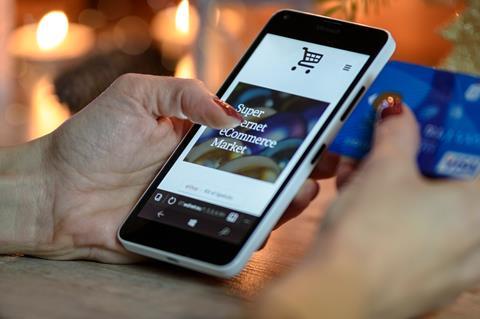
The report contains massive numbers. Adobe said consumers spent over $4 billion in a single day 15 times during the holiday selling period, up from 11 days in 2023. Mobile shopping hit a new milestone, with most online transactions, 54.5 percent, made on an iPhone this season, up from 51.1 percent in 2023. Mobile shopping was the highest on Christmas Day (December 25), driving 65 percent of online sales from 63 percent in 2023.
Sporting Goods notably grew in holiday online spending in 2024 when consumers spent $7.8 billion, up 7.4 percent y/y.
Of the $241.4 billion spent online in the 2024 holiday season, over one-half (54 percent) of consumer purchases were driven by three categories:
- Electronics, $55.3 billion, up 8.8 percent y/y,
- Apparel, $45.6 billion, up 9.9 percent y/y, and
- Furniture/Home goods, $29.2 billion, up 6.8 percent y/y.
Consumer Demand Driven by Competitive Prices
Adobe said steep discounts in the 2024 holiday season drew consumers who have become increasingly price-sensitive.
“Shoppers found great deals in electronics, where discounts peaked at 30.1 percent off list price vs. 31 percent in 2023, as well as toys at 28 percent vs. 28 percent, apparel at 23.2 percent vs. 24 percent, computers at 22.8 percent vs. 24 percent, and furniture/home goods at 19 percent vs. 21 percent,” the company said in its report summary.
Discounts also hit record highs for televisions at 24.2 percent vs. 23 percent, appliances at 19.2 percent vs. 18 percent and sporting goods at 19.5 percent vs. 18 percent.
For the 2024 holiday season, Adobe’s data showed that for every 1 percent decrease in price, consumer demand increased by 1.029 percent compared to the 2023 holiday season, driving an additional $2.25 billion in online spend – a figure factored into the overall $241.4 billion spent by consumers online – and shows the stronger consumer response to discounts.
“Strong discounts this season also drove consumers to purchase higher-ticket items in categories such as electronics, appliances and sporting goods – propelling e-commerce growth as a result,” Adobe wrote. “This season, the share-of-units-sold for the most expensive goods increased by 21 percent overall.”
Within categories, the figure was up 54 percent in sporting goods, up 48 percent in electronics, up 35 percent in appliances, up 32 percent in personal care products, and up 10 percent in apparel.
Generative AI Embraced as Shopping Assistant
Adobe noted that online traffic during the 2024 holiday selling period to retail sites from generative AI-powered chatbots (shoppers clicking on a link to a retail site) increased 1,300 percent compared to the 2023 holiday selling period.
Cyber Monday showed the biggest growth in chatbot usage, up 1,950 percent y/y. While the base of users remained modest, the uptick showed the value that chatbots play as shopping assistants to consumers, according to Adobe.
In an Adobe survey of 5,000 U.S. consumers, seven in 10 respondents who used generative AI for shopping believe it enhances the experience. Additionally, 20 percent of respondents turn to generative AI to find the best deals, followed by quickly finding specific items online (19 percent) and getting brand recommendations (15 percent).
“The 2024 holiday season showed that e-commerce is being reshaped by a consumer who now prefers to transact on smaller screens and lean on generative AI-powered services to shop more efficiently,” said Vivek Pandya, lead analyst, Adobe Digital Insights. “It presents opportunities for retailers to deliver new services and experiences that capture the attention of consumers, many of whom are now shopping online in different ways.”
Additional Adobe Analytics Insights
Top Sellers
Puffer/Fleece Jackets, Boots, Handbags/ Crossbody Bags and Socks were top sellers. Other popular items during the holiday 2024 shopping season included e-scooters/bikes.
Impact of Influencers
Across the major marketing channels, paid searches remained the top driver of retail sales this holiday season, with the share of revenue at 29.7 percent, up 1 percent y/y.
- In affiliates and partners, including social media influencers, revenue shares came in at 17.6 percent but grew substantially (up 6 percent y/y). This channel also outpaced retailer traffic from social media overall, with around 5 percent of revenue share, which rose 5.4 percent y/y.
- Influencers also converted consumers (those who made a purchasing decision after viewing an influencer’s online content) nine times more than social media overall. In Adobe’s survey, 37 percent of GenZ respondents purchased an item based on an influencer’s recommendation.
Curbside Pickup
For retailers that offered curbside pickup, the fulfillment method was used by consumers in 17.5 percent of online orders during the 2024 holiday season, down from 18.4 percent in 2023). While usage was down this holiday season, many consumers continued to find value in the service for speed and convenience. During the 2024 holiday shopping season, curbside pickup peaked on December 23, the day before Christmas Eve, driving 37.8 percent of online orders.
Cyber Week Recap
Adobe Analytics noted that record online spending this holiday season was bolstered by an intense Cyber Week (the five days from Thanksgiving to Cyber Monday), which netted online retailers $41.1 billion overall, up 8.2 percent y/y.
Cyber Monday remained this year’s holiday season’s biggest online shopping day, driving $13.3 billion in spending, up 7.3 percent y/y; however, Adobe Analytics reported that growth was said on Thanksgiving ($6.1 billion, up 8.8 percent y/y) and Black Friday ($10.8 billion, up 10.2 percent y/y), as consumers took advantage of earlier online deals.
Impact of Inflation
Strong online consumer spending continues to be driven by net new demand, not higher prices. Adobe’s Digital Price Index shows e-commerce prices have fallen consecutively for 27 months, down 2.6 percent y/y in November 2024. Adobe Analytics does not adjust figures for inflation, but if the company were to factor in online deflation, growth in consumer spending would be more significant.
*The analysis from Adobe is available here