

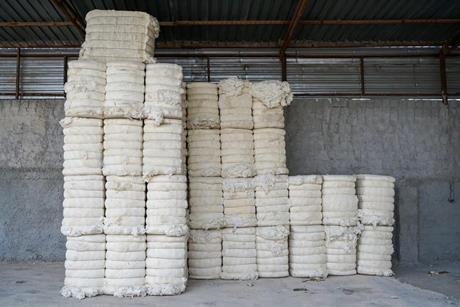
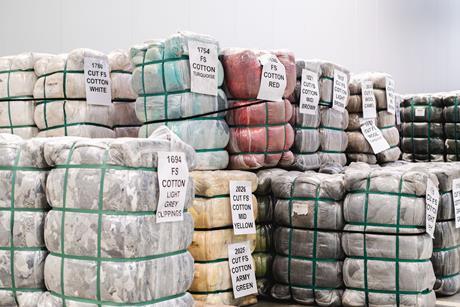
of global fibre production came from textile-to-textile recycling
Share of fibre production in 2025.
Keeping products in use and recovering their materials calls for changes across the business. Reporting and analysis on circular design, repair, resale, rental and the infrastructure needed to make textile recycling work at scale.
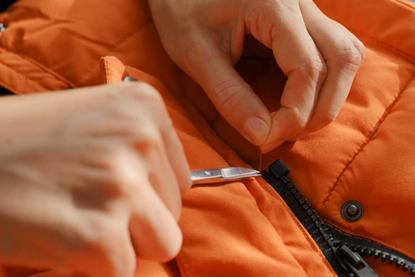
Designing sportswear for a circular economy includes deciding who prepares garments for recycling. LaMunt asks owners to remove zips and trims; Arc’teryx assigns disassembly to ReBIRD.

Leading footwear designers reveal the complex trade-offs between sustainability and performance in running shoes.

What can replace a business-centered design approach, with repairable products that last longer, are recyclable and still create value?
Industry benchmark · Circular Fashion Index 2026
Kearney's assessment of 241 brands across 21 countries includes sports and outdoor alongside other fashion categories.
The 2026 benchmark assesses circular practices across nine dimensions of the product life cycle.
Share of brands at this level across key dimensions, according to Kearney.
Share of brands reaching this level across core primary-market dimensions.
The percentage ranges vary by dimension; they are not parts of one total. These are assessments of brand practices, not shares of products recycled. The benchmark covers fashion categories and is not a sporting-goods-only survey.
Source: Kearney, Circular Fashion Index 2026 findings, published September 2026. Explore the report.
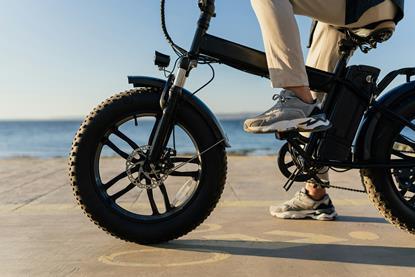
The EU Right to Repair Directive is now German law; refurbished marketplace Refurbed says spare-part pricing rules are still missing.
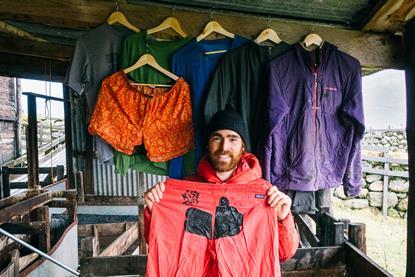
For a long time, product repair was not part of the service offering of many brands. But this has changed dramatically. It has also proven to be an excellent customer loyalty tool. Learn how different brand approaches lead to success.

On April 23, after about two years of negotiation, the EU adopted a directive establishing common rules for the right to repair. Member states must be compliant with the directive within 24 months of its entry into force.

Our listicle highlights the outdoor and sporting brands and retailers who are already helping consumers repair their own outdoor gear at home.

Our interview explores Gore’s commitment to extending product life, consumer education campaigns, and the newly launched GORE-TEX Gear Tour.

Consumers and legislation are demanding a right to repair, but it’s not so simple for brands. We look at how some are overcoming the challenges.
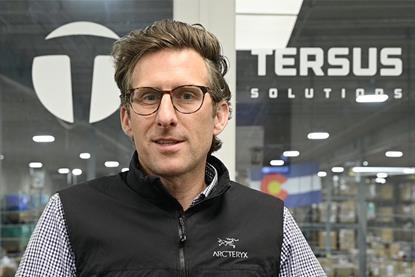
Peter Whitcomb on why brands now come to Tersus with their CFO, not their sustainability tea

Resale is moving from niche to growth engine. Fredrik Ekström explores how second-hand is becoming a business case.

Two different retailers share insights into how they approach the pricing of pre-loved items, with tips for any brand thinking of adopting resale.

The secondhand retailer must balance seller and buyer when it comes to pricing. Reverse.Supply CEO explains how they find the right price.

Pricing expert Robert Tinterov discusses the difficulties and opportunities of pricing goods for resale in the sports industry.

Seven ways brands can make kid’s clothes last longer (and utilize the growth potential and income streams of the circular economy too)
Company case study · Oberalp
Oberalp's reported programme volumes moved in different directions between 2024 and 2025.
+19% reported year-on-year change
−20% reported year-on-year change
Reported counts; both charts use a 0–4,000 scale. Percentage changes are rounded as reported by Oberalp. Second Life involves returning, refurbishing and reselling used Salewa products. These programme volumes do not establish revenue, profitability or an industry-wide trend.
Source: Oberalp, Contribute 2025, p. 98.

Is your business ready for rentals? We look at how to overcome common concerns and obstacles and access the potential $700 billion rental market

Good for the environment and the bottom line. Sounds good in theory, but what does this mean in practice? We explain the whys and hows

Decathlon UK launched its rental service with Rentle in the spring of ’23. We explore the benefits of partnering with a rental platform specialist.
Circularity in numbers 2025
Three figures from the global fibre market put the scale of the challenge into perspective.
Share of fibre production in 2025.
Plastic bottles dominated recycled polyester feedstock in 2025.
Up from 132 million tonnes in 2024.
Source: Textile Exchange, Materials Market Report 2026
Published 22 September 2026 · Global fibre market · Data year 2025
Scope: All textile end uses; broader than sporting goods. The percentages have different denominators. The 0.76% figure measures production, rather than the share of discarded garments recycled.
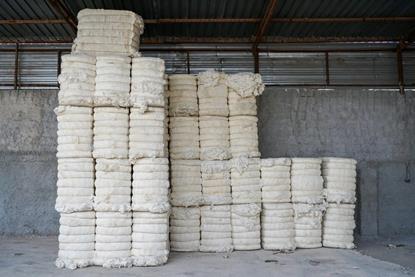
In recent years, the textile recycling industry has focused primarily on technological development.
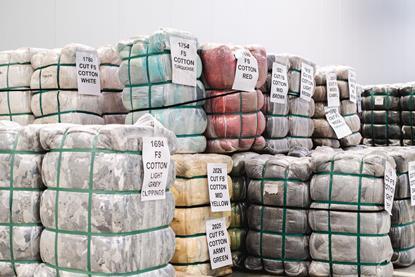
Evan Wiener, senior advisor at ReHubs, explains what brands can do to advance the circular economy beyond pilot projects.

It’s no secret that waste represents a huge problem in the apparel industry, but what if we think of this instead as an untapped resource?
WFSGI and FESI legal counsel Dr. Jochen M. Schaefer asks whether Brussels’ packaging overhaul helps or harms the industry.

Large brands are in scope now. Mid-sized brands have until July 2030. The prize is what they do with those four years.

Beat the circularity information overload and start your sustainable journey as a brand, supplier, manufacturer and retailer. We’ve collected the most useful links and resources.

Often held up as one of the best examples of sustainable business in the outdoor industry, we look at how Patagonia is incorporating circularity.

A membrane that is waterproof, windproof, breathable, PFAS-free, biodegradable and recyclable. The science is already here. Dimpora’s CEO explains.

Can a retailer play a role in the circular economy? Through customer dialog and guidance, Globetrotter aims to do just that.

Puma’s Anne-Laure Descours is honest and optimistic about what needs to change. Read her interview on circularity in the apparel business.

What would a truly circular world look like? GreenroomVoice explores how imagining such a world shows us the action needed to get there.

Over-consumption can’t go on, but does de-growth have to equal financial losses in the textile industry? Charles Ross explores alternatives.
See also:
How can the sporting goods industry help more people become active? Explore the evidence on participation and the industry's social and economic impact, alongside the organisations working to widen access to sport.
EXPLORE IMPACT OF SPORTSHow sporting goods companies respond to changing expectations around corporate responsibility. Explore reporting and interviews on sustainability, regulation, consumer trust and the industry's social impact.
EXPLORE THE CSR SPECIAL
Intelligence, analysis and advice for the global sporting goods industry.