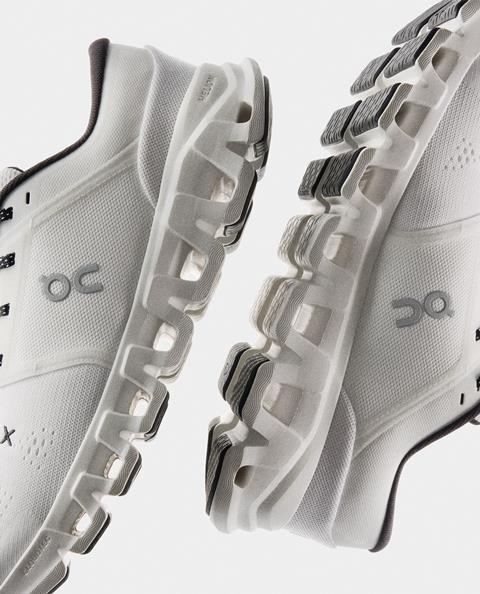
On is marketing the Cloud X 5’s CleanCloud midsole as a breakthrough that cuts carbon emissions by more than 80%, and the company says it has already scaled the technology to more than one million pairs, four years ahead of its original target.
The question is: what exactly sits behind that headline number?
The study used to support the claim, conducted by Carbon Minds and independently reviewed by TÜV Rheinland, arrives at very different results depending on how the carbon used in the process is counted and what assumptions are made about the electricity powering production.
Under one approach, the CleanCloud midsole has a carbon footprint of 0.4997 kg CO2-equivalent per kilogram of foam, compared with 3.12 kg for conventional fossil-based foam. That is the 84% reduction highlighted in On’s marketing materials. Under another approach, however, the same foam is calculated at 4.32 kg CO2-equivalent — around 38% higher than the conventional alternative.
The technology itself does not change between those scenarios. What changes is the way the emissions are accounted for.
Why the power source matters as much as the carbon source
The study also highlights another important factor: electricity.
CleanCloud replaces fossil feedstocks with a process that uses captured CO2, renewable hydrogen and synthetic feedstocks. According to the analysis, the carbon outcome depends heavily on the source of the electricity used to produce those inputs.
The headline result assumes the process is powered entirely by wind energy.
When the study models the same production chain using average Texas grid electricity, where the synthetic feedstock is produced, the calculated footprint rises sharply to 17.78 kg CO2-equivalent per kilogram of foam, substantially above the conventional fossil-based benchmark.
The report also identifies higher impacts in areas such as land use, water use and fossil-resource consumption. It attributes these increases largely to the energy and infrastructure required for hydrogen production and synthetic-fuel manufacturing.
None of this necessarily means the technology lacks value. Rather, it suggests that the climate outcome depends not only on the material itself but also on the conditions under which it is produced.
What the independent reviewer flagged
TÜV Rheinland’s review concludes that the study follows recognized international standards for life-cycle assessment and that the calculations are methodologically consistent. At the same time, the reviewer emphasizes the limits of what the study can demonstrate.
The assessment is based on modeling, secondary data and literature sources rather than measurements collected from an operating production system. The review also states that the work is “not intended to be used for comparative assertions with non-Client systems to be disclosed to the public.”
The reviewer further recommends that any public communication clearly explain which methodology is being applied when presenting results.
That distinction may become increasingly relevant as regulators scrutinize the environmental claims companies use in consumer marketing. Across Europe, policymakers have been pushing for clearer evidence and greater transparency around sustainability claims, particularly where outcomes can vary significantly depending on methodology.
Where CleanCloud fits into On’s wider sustainability story
The company’s 2025 Impact Progress Report, published in April, shows progress alongside ongoing challenges. Overall emissions increased as the business continued to expand its retail footprint, while emissions intensity per product improved. The company also delayed a living-wage target from 2025 to 2026 and transitioned away from its original Cyclon subscription model in favor of a broader resale, donation and recycling program.
At the same time, On exceeded its target for renewable and recycled content in midsoles ahead of schedule.
Viewed in that context, CleanCloud reflects a recurring theme in the company’s sustainability journey: ambitious innovation, measurable progress, and ongoing debate over how best to measure and communicate the results.
The key question raised by the CleanCloud study is therefore not whether the technology works. It is which assumptions should be used when assessing its environmental impact, and which of those assumptions consumers should see when a product is marketed as lower-carbon.