If you’ve used an alternative dispute resolution (ADR) in contract negotiations, which commits the parties to dispute settlement by arbitration, you may think you have secured a discreet, enforceable and final decision without the courts should disputes arise. However, a recent ruling in Germany may have changed that. What was once unchallengeable may now be open to review by the courts, especially where a market-dominant brand is concerned. Our legal expert, Dr. Jochen M. Schaefer, explains.
The benefits of alternative dispute resolution (ADR)
It happens quite frequently during contract negotiations (in the areas of e.g. distribution, purchase, or licensing agreements) that the future contract partners agree to insert an alternative dispute resolution (ADR) clause into an agreement; choosing a dispute settlement via mediation and/or arbitration proceedings, rather than seeking the assistance of ordinary courts. This occurs particularly during cross-border dealings.
ADRs are frequently described as affording more discreet proceedings, a much higher flexibility to achieve a reasonable commercial solution, a much higher degree of international enforceability compared to ordinary court verdicts, and – last but not least – in most cases, an arbitration award is final and can only be challenged under very exceptional circumstances. Yet this feature might not be viewed so positively by the losing party in an ADR, who is largely prevented from appealing an arbitration award.
German ruling opens up space to challenge arbitration awards
However, this aspect of arbitration awards may now be challenged under certain specific circumstances. The German Federal Court of Justice (BGH) held on September 27, 2022 (Docket No. KZB 75/21) that German arbitration awards are subject to unlimited control and review by ordinary German courts – covering the award’s factual and legal aspects – if a party qualifies as market dominating or is a strong market actor on the relevant market. Any misuse by a market-dominant or market-strong enterprise by exercising its rights granted by an arbitration judgment may lead to an annulment of the arbitration award, as was the case in the recent verdict.
“Market dominance” is assumed if a company has market shares within a certain product category, such as running shoes, exceeding 30 percent in a respective geographic territory, e.g. Germany or within the EU.
The reasoning behind the BGH’s decision was that any arbitration judgment can be annulled if it violates substantial elementary pillars of German law, the so-called ordre public principles. This is, per se, nothing new and constitutes, for instance, the prime reason why product liability verdicts of the U.S. courts – which include punitive damage compensation claims – cannot be enforced in Germany since such specific damage compensation is not approved by German law.
What is new, however, is the fact that the highest German court in civil matters, the German federal court, expressly confirmed that sections of German antitrust laws (namely §§ 19, 20 and 21 of the German Act against Restraints of Competition (GWB)) that deal with misuses of a market-dominant or market-strong position are also leading elementary principles of the German cartel law and consequently allow for a fully-fledged review of an arbitration award.

Understanding the German Federal Court of Justice ruling on ADRs
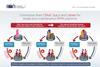
It is a complex but highly relevant verdict. Imagine: brand X – a German market dominant brand – has unlawfully terminated a distribution agreement (DA) with distributor Y. This termination is challenged by distributor Y. According to an ADR arbitration clause in the DA, all disputes shall be resolved (finally) using arbitration in Germany by applying German laws. The arbitration court holds that the termination was legally valid. Brand X has won the arbitration. However, the arbitration court did not consider specific aspects of German competition laws. Distributor Y could therefore seek to have this arbitration verdict lifted by addressing an ordinary German court. Even though the arbitration clause in the DA stipulates that the arbitration award is final, the ordinary court now has the full power to review the arbitration verdict and to decide that such termination was not valid on the grounds of German competition laws since brand X misused its dominant position.
In the opinion of the BGH judges, in the case of illegal practices of market-dominant or market strong companies, arbitration proceedings exclude any participation and monitoring of the respective dispute by the German Federal Cartel Office (the Bundeskartellamt), which routinely takes place at ordinary court proceedings level. Moreover, compared to ordinary court proceedings, arbitration proceedings are deficient in that they do not foresee addressing or clarifying certain EU-related questions with the European Court of Justice.
For these reasons, it was decided by the BGH that ordinary courts must have full authority to review German arbitration awards. And this is not limited to cases where a violation of applicable German antitrust provisions is obvious.
Implications of the latest arbitration awards ruling for brands
The ruling was not related to the sporting goods industry, but its principles and findings are definitely applicable to scenarios that may occur in this sector. It may also be of relevance for arbitration rulings of national or international sports federations governed by German laws. The BGH’s decision may also lead to similar rulings being introduced at the European competition-law level by, for instance, the European Court of Justice.
So, what does this mean for brands? German market-leading or market-strong companies in the sporting goods sector should now be aware that a favorable arbitration award may not be the end of a dispute; especially if the arbitration award is challenged by the losing party before ordinary courts on the grounds of applicable German competition law provisions.
An example of where this may play out is the most recent news that Adidas has initiated arbitration proceedings against Ye (formerly known as Kanye West) claiming damages, while the U.S. rapper, in turn, has filed counterclaims against the German sports brand. As to whether the broken and terminated contractual sponsorship and licensing relationship between the two actors is governed by German laws or not and whether the BGH judgment of September 2022 will have an impact on these proceedings remains to be seen if it is ever disclosed at all.
Dr. Jochen M. Schaefer is a German practicing attorney based in the Munich area. For several years, he has been representing the World Federation of the Sporting Goods Industry (WFSGI) and the European Federation of the Sporting Goods Industry (FESI) as their legal counsel. He also chairs the WFSGI’s legal committee and is co-chair of the FESI’s digital working group. At the individual client level, he represents a significant number of well-known brands within and beyond the bicycle/sporting goods sector. He is a specialist in national and international distribution topics, intellectual property (IP) and risk management issues, and the drafting and negotiation of comprehensive contracts at the operational level; in particular in the area of European selective distribution schemes. In case of any questions about this article (or in general), he can be reached at sj@sjlegal.de and at +49 151 1640 7932.