

Corporate
Governance and strategies
Corporate governance and competitive strategy—analyzing board dynamics, activist pressure, market positioning decisions, geographic expansion, entry and exit strategies, portfolio optimization, category shifts, organizational restructuring, and the strategic moves determining where and how sporting goods companies compete.
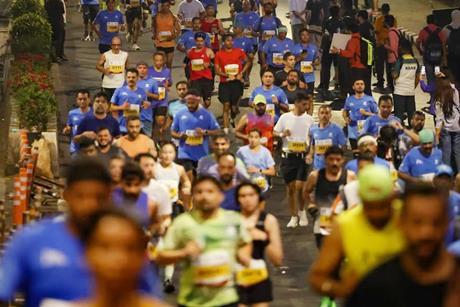
Asics and Decathlon expand running business in India
Decathlon wants to keep beginners as they upgrade; Asics sells expertise to committed runners

Dennis Tao elected Puma Supervisory Board Chairman
Anta’s Head of M&A and Capital Markets succeeds Héloïse Temple-Boyer, with former Anta brand executive Jeanne Huang also joining.

Macron pays 50% of 2025 EBITDA to 112 employees
The payout closes Macron’s third stock-option plan. The board has already approved a fourth, covering more than 120 people.

How far can Li-Ning’s sporting credibility stretch?
Gold Label, Li-Ning 1990 and Curry Brand test whether shared product strengths can support very different businesses.

How the brand that knew its customer best lost touch
Lululemon built the best sensing instrument in sportswear. Then it closed the studios to chase sales per square foot.

Misto Holdings after the FILA rename: case study
The rename signaled multi-brand ambitions. The business remains heavily dependent on a single profit engine.

Adidas CEO outlines China growth plan in Shanghai
In Bjørn Gulden’s account, Shanghai-led design and a locally chosen headquarters site help adidas keep pace in China.

Lululemon puts product and operations under new chiefs
Two newly created roles go to Nike and adidas veterans while searches for brand, communications and technology heads stay open

Li-Ning makes three moves in two weeks
Li-Ning’s global profile is rising, yet 1.2 percent of first-half revenue came from outside its home market. Where next?

Fanatics preparing a push for its gambling division
Fanatics CEO Michael Rubin has outlined an aggressive plan to nearly triple marketing expenditure for its gambling division to $1 billion by 2027, as the sports commerce giant seeks to close the gap on market leaders DraftKings and FanDuel.

Lululemon’s peace deal now has an undated board seat
The third director was due Oct. 1 and needs Wilson’s approval. Both sides agreed to the delay and gave no reason.
Collecting data and knowing are not the same thing
Sebastien Willefert’s three-part Playbook column on Nike, Lululemon and On Holding: more data than ever, less knowledge of their customers.

Newton Golf makes a move into minerals
Newton Golf has secured an exclusive option on a Nevada mining project covering the critical minerals beryllium and tungsten. The pivot appears to be without precedent in the sporting goods industry.

On’s plan is ordinary. Its execution must not be.
Revenue growth slowing to high-teens, wholesale expanding, football and golf as loudspeakers, no loyalty program. On’s easy years are over.

Investor day: On’s 2029 plan is more than football
Run, sneaker and apparel are set to supply most of On’s growth through 2029, alongside a new $1 billion buyback.

How Brooks entered football without entering the category
A running specialist is back in team sport. Not as a competitor, but as a brand partner.

Nike may be borrowing the LVMH playbook
Two infrastructure deals and an LVMH board appointment. Nike may be trading athlete endorsement for luxury brand restraint.

On enters football with Mbappé
On names Thierry Henry Director of Football and expands Sydney Schertenleib’s role as it enters team sports for the first time.

UTMB 2026: the access model and the backlash against it
Formula 1 sells the feeling of access. Paddock passes cost five figures. UTMB gives it free. In the street.

“Simplify to amplify”: Under Armour’s race to win runners
SGIE in conversation with UA on cutting the range and finding the runner.

Four days to kill a $20bn plan, and sap FIFA’s leader
A failed bid to sell equity in FIFA’s commercial rights has triggered a leadership crisis at the organization.
Foot Locker to open new kind of neighborhood store in LA
Foot Locker opens a community-oriented store in LA’s Crenshaw on Aug. 22, co-developed with Nike, Jordan Brand and Converse, highlighting shifts at both Nike and Foot Locker under Dick’s Sporting Goods.

Can Britain’s lifestyle darlings crack Europe?
Passenger, Finisterre and Bleubird are big at home. The continent never built a shelf for what they sell.

Prediction markets carve into the sports rights pie
Prediction markets are entering sports rights. Same package. New buyer.

adidas CEO apologizes for World Cup pink boot pileup
Bjorn Gulden calls the fluorescent pink boot takeover an accident nobody wanted.

MLB, NHL sign prediction market deals amid legal fight
Polymarket and Kalshi have signed deals with MLB, the NHL and other leagues, each voidable if courts rule the contracts illegal.

Fanatics brings some financial plumbing in house
Better known for jerseys and memorabilia, Fanatics is acquiring the exchange and clearinghouse behind its prediction markets.

Garmin CIRQA: The real story might be elsewhere
The same week it launched a subscription-free band, Garmin quietly bought its way into the subscription layer instead.

Macron: the brand that grew by saying ‘no’
Macron’s Chief Brand & Communications Officer Angelo Marino explains why 22 years of organic growth start with knowing when to refuse.

El Corte Inglés seeks to invest more
The Spanish department store group will ask its board in September to raise investment in AI, e-commerce and logistics.

EU destruction ban: five moves to make
Large brands are in scope now. Mid-sized brands have until July 2030. The prize is what they do with those four years.

Nike ACG is back again. Can it back up the hype?
A surfwear distribution agency, marketing hype and an open-hole shirt test whether ACG’s story and execution are aligned.

Case study: how Xtep turned Saucony into a profit engine
A $61 million China buyout turned a break-even brand into a fast-growing profit engine

Physical inactivity 2026: The cost of standing still
The WEF puts $169 billion of sporting goods revenue at risk from rising inactivity, and the WHO’s 2026 milestone will pass unmet. Our Impact of Sports Special gathers the new evidence and the people working on the problem, from Brussels to the brands.

Asics Ventures launches Kenzen startup pitch program
Asics Ventures formalizes seven years of pitch events into Kenzen, an annual program debuting in Ann Arbor in October 2026
SGIE Daily Digest
Stay informed. Stay ahead.
Every weekday in your inbox.
The news, analysis and competitive signals that matter, curated for industry professionals.
Sign up for free
Intelligence, analysis and advice for the global sporting goods industry.
TOPICS
Corporate and FinancialRetail and Supply
Marketing
Consumer
People and HR
Events and Trade Shows
Legal
CSR and Sustainability
Technology and AI
Asia-Pacific
Athlete economy
China and APAC
MARKET ANALYSIS
Analysis and dataIndustry Scorecards
Reports
Case Studies
SERIES and SPECIALS
FIFA World Cup 2026Winter Olympics 2026
Circular Economy
Impact of Sports
Redefining CSR 2025
SUBSCRIPTIONS
Membership plansFAQs
ASK SGIE AI
For premium subscribersABOUT US
About usNewsroom and Contacts
Media solutions
- COPYRIGHT © EDM PUBLICATIONS GMBH
- Contact Us
- FAQS
- Terms and Conditions
- Privacy & Cookies Policy
- Impressum
- Issues
- Topics A-Z