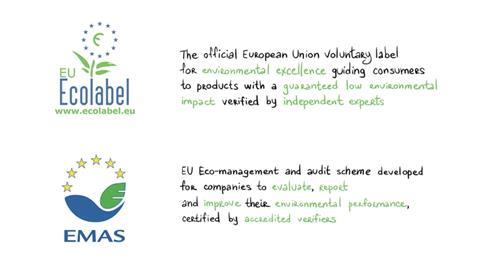
With its newly introduced proposal for a greenwashing legislation, the EU Commission aims to protect consumers from greenwashing. The new law aims to stem the tide of dubious eco-labels and reduce them to a few verified labels that are valid across borders, like the EU Ecolabel or the EU Eco-Management and audit scheme (EMAS).
Majority of green claims are unfounded or misleading
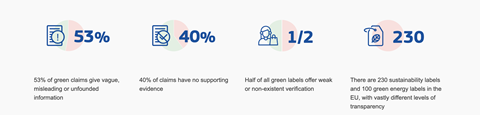
The current picture is alarming: According to a study conducted by the EU in 2020, 53 percent of green claims give vague, misleading of unfounded information. 40 percent of claims have no supporting evidence, and half of all 230 sustainability labels in the EU markets offer weak or non-existent verification.
The proposal targets explicit claims, such as “T-shirt made of recycled plastic bottles,” “CO2 compensated delivery,” and “Packaging made of 30 percent recycled plastic.” In the future, companies will need to independently verify and prove, with scientific evidence, all sustainability claims made to consumers.
How will the new EU proposals protect against greenwashing?
The EU proposal on green claims aims to protect consumers from greenwashing by:
- making green claims reliable, comparable and verifiable across the EU by defining clear criteria on corporate environmental claims and labels
- contributing to a circular and green EU economy by offering the transparency needed for informed purchasing decisions
- helping establish a level playing field when it comes to the environmental performance of products
Following the ordinary legislative procedure, the Green Claims Directive proposal will now be subject to the approval of the European Parliament and the council. As part of the European Green Deal, one of the actions of the circular economy action plan is a proposal for companies to substantiate their environmental claims using robust, science-based and verifiable methods.
EU building a framework for sustainable consumption of goods
The green claims proposal is closely linked to other EU policies like the regulation for eco-design and circular products. The different EU initiatives seek to establish a coherent policy framework to help the EU to make sustainable goods, services and business models the norm and to transform consumption patterns in a more sustainable direction.
Targeting climate neutrality by 2050, the legislative package aims to significantly reduce the environmental footprint of products consumed in the EU step by step over the next decades.
For more insights into the greenwashing discussion, see our sister publication The Outdoor Industry Compass and author Charles Ross’ opinion on sustainability reports.