Padel courts in Manhattan, luxury residences in Marbella, hotels in Buenos Aires. The 22-time Grand Slam champion is constructing a multi-sector commercial enterprise – with sport as the entry point and real estate as the endgame.
Four amateur padel events. Miami in March, Austin in April, back to Miami in May, New York City to close the year. When the Rafa Nadal Academy announced its first US circuit this spring, in partnership with court-booking platform Playtomic, the news looked like brand maintenance for a recently retired champion. It was not.
Playtomic raised €5.1 million ($5.5m) in a record sports app crowdfunding round in January 2026, with Rafael Nadal as a founding investor since 2024. The US circuit follows completed editions in Spain and Italy. Each event places paying recreational players on courts in premium urban markets and feeds them into a data and engagement infrastructure that Playtomic operates. Neither party writes a large check; both gain distribution. It’s a capital-light model, and it is the thread running through everything Nadal is building now.
From champion to platform
The Rafa Nadal Academy, founded in 2016 in Manacor, Mallorca, was never simply a training facility. It was the first institutional translation of the athlete-as-brand thesis: take the values most legible in a champion’s career – discipline, resilience, a distinctly Mediterranean identity – and convert them into a tuition-bearing product that affluent parents would pay a premium to access.
Eight international centers are now operational. A ninth, in Porto Belo, Brazil, was announced in November 2025: it will be the first in South America. Each replicates the Manacor model in a new geography: courts, junior and adult programming, a social calendar calibrated to generate brand impressions at the top of the recreational market. The circuit partnerships, of which Playtomic is the latest, extend the footprint without requiring equity investment in new facilities.
The commercial vehicle behind all of it is Palya Assets, the investment company Nadal runs with Spanish hotelier Abel Matutes Prats. The Academy generates tuition revenue and licensing income. Palya provides the capital structure. The circuit model adds a third stream: branded participation events that convert Nadal’s name recognition into recurring fee income at scale.
Real estate is where the money goes
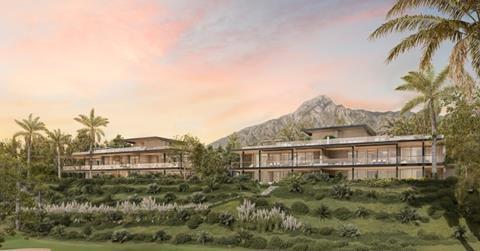
The Armani deal changes the register. Armani Residences Marbella, announced in May 2026, involves 33 ultra-luxury homes on a 33,000-square-meter plot along Marbella’s Golden Mile, the coastal strip where super-prime residential pricing has tracked Monaco and the French Riviera for the better part of a decade. The developer is Sierra Blanca Estates, a specialist in Andalusian super-prime development. Interiors are exclusively by Armani/Casa, marking the Italian group’s first residential project in Spain. Palya Invest, the same Nadal-Matutes vehicle, is co-investor.
No total transaction value has been confirmed. The financial return is not imminent – the project targets completion in 2028. This is Nadal’s second significant real estate commitment, and it is more connected to the Academy than it appears.
Sport is the top of the funnel: that’s the whole model.
The connecting logic across academies, amateur circuits, hotels and branded residences is not diversification for its own sake. It is, potentially, a consumer acquisition funnel. Sport generates awareness and emotional credibility among high-income participants. Hospitality and real estate convert that credibility into higher-ticket transactions.
Other athletes have approximated this, but few have replicated it. LeBron James built SpringHill as a media-first platform – deep on content, light on participatory sport. Cristiano Ronaldo’s Pestana CR7 hotel chain is hospitality-first, without the Academy’s ongoing participation engine that feeds the consumer journey from the top.
Nadal’s model keeps sport at the top of the funnel: it curates the retired champion’s image while earning revenue and recruiting consumers who may later be offered a hotel stay or, in Marbella, an apartment.
Eight academies across three continents each require facility investment, qualified staffing and sustained programming quality. They are not easy to scale. But once established, they also create an opportunity to develop residences nearby. Each new Academy geography becomes a new consumer acquisition market for the real estate and hospitality businesses downstream.