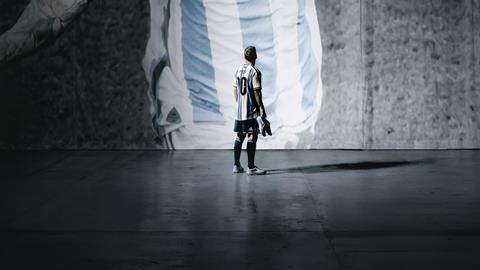
After helping Argentina reach another FIFA World Cup final, Lionel Messi’s latest performance has added a new chapter to one of sport’s most successful athlete-brand partnerships.
When the Argentine captain faces Spain in the 2026 final, Messi will do so wearing Adidas’ F50 El Último Tango, a boot that evokes both the start and the possible final act of a relationship that helped shape modern football marketing.
Argentina’s dramatic 2-1 semi-final victory over England once again showcased Messi’s enduring influence. Trailing with five minutes remaining, Argentina turned the match around through two moments of creation from its captain. Messi first set up Enzo Fernández for the equalizer before delivering the cross that Lautaro Martínez converted in stoppage time, sending the defending champions into another World Cup final.
The timing could hardly be more symbolic for both Leo and adidas.
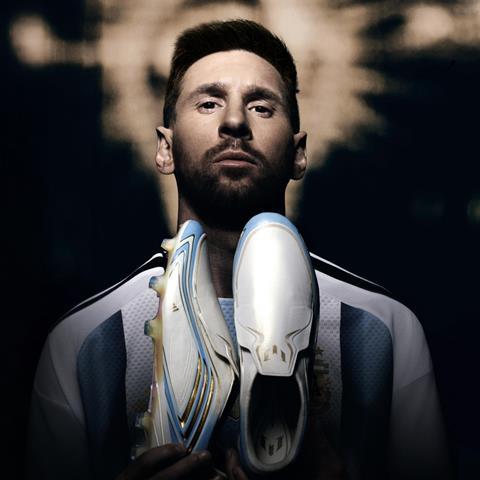
The company launched the F50 El Último Tango in June as a tribute to what is widely expected to be Messi’s final World Cup appearance. Inspired by the F50 boots he wore at Germany 2006, the design combines Argentina’s sky-blue and white colors with gold detailing, creating a visual link between the teenager who arrived at his first World Cup and the veteran pursuing one last title twenty years later.
The partnership, however, almost never happened.
Before becoming synonymous with adidas, Messi was a Nike athlete. The American sportswear company signed him during his teenage years at Barcelona’s La Masia academy, and he wore Nike boots during both his senior debut and his first goal for the Catalan club.
As Messi’s reputation grew, adidas moved aggressively to recruit him. A legal dispute followed, with Nike attempting to enforce what it believed was a valid extension agreement. A Spanish court ultimately ruled in Messi’s favor in early 2006, enabling him to sign with Adidas just months before the FIFA World Cup in Germany.
Visualizza questo post su Instagram
That decision would prove transformative for both parties.
As Messi evolved into the defining footballer of his generation, Adidas made him the face of the F50 franchise. The lightweight speed boot became inseparable from the Argentine’s rise. Between 2009 and 2012, when Messi won four consecutive Ballon d’Or awards, Adidas continuously built campaigns around his performances, helping turn the F50 into one of football’s most recognizable products.
Special editions followed to commemorate milestones, from record-breaking goal-scoring campaigns to individual awards. The relationship was becoming much more than a traditional sponsorship.
By the middle of the 2010s, Adidas had begun treating Messi not simply as an athlete but as a standalone brand.
The company introduced his personal “M” logo and expanded a dedicated range of apparel and footwear. In 2015, it took the unusual step of retiring the F50 name and creating the Adidas Messi 15, a signature silo carrying the player’s identity. Few footballers have ever received such treatment. Later, Adidas repositioned Messi as the face of the Nemeziz line, designed around agility and directional changes that mirrored his style of play.
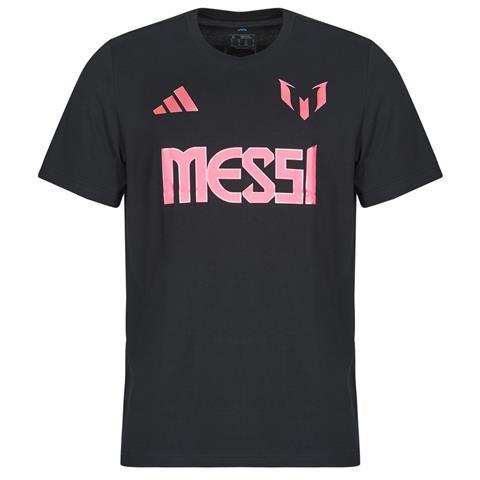
In 2017, adidas awarded Messi a lifetime contract. Financial details were never officially disclosed, but the agreement placed him among the most valuable athlete endorsers in world sport and guaranteed that the relationship would continue long after his playing career ends.
The years that followed only strengthened the commercial value of the alliance.
Messi’s Copa América triumph in 2021 and World Cup victory in Qatar in 2022 delivered some of the most powerful imagery in football history, all featuring Adidas products. When he moved to Inter Miami in 2023, the partnership gained another dimension. Adidas, which supplies kits for Major League Soccer, benefited directly from the unprecedented attention generated by Messi’s arrival in the United States.
Visualizza questo post su Instagram
The name El Último Tango, “The Last Dance”, was chosen to reflect the possibility that this will be Messi’s farewell on football’s biggest stage. The campaign revisits the athlete’s first World Cup in 2006 while celebrating everything that followed: eight Ballons d’Or awards, a World Cup title, multiple Copas América and a career that reshaped football’s commercial landscape.
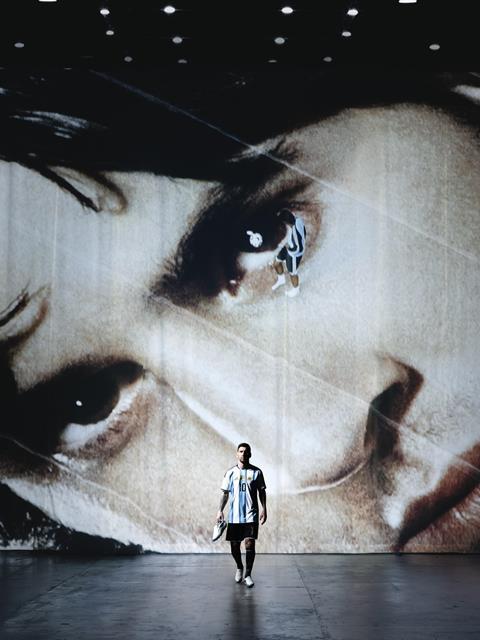
Few athlete-brand relationships have endured with such consistency or generated such cultural impact. What began as a contested sponsorship deal in 2006 has become a 20-year partnership that has accompanied every major chapter of Messi’s career.
Now, after inspiring Argentina’s win against England and standing one victory away from another world title, Messi heads to the World Cup final wearing Adidas boots once again.
The circle is complete.
And somewhere above, Diego Maradona, who broke English hearts with two unforgettable goals in Mexico exactly 40 years ago, is surely smiling.
FIFA World Cup 2026: The Business of the Beautiful Game
How brands, retailers, and the sports economy compete on football’s biggest stage
Explore Our Coverage →