The Enhanced Games’ NYSE listing at a $1.2 billion valuation crowns a business model with little to do with sport: athletes are clinical subjects whose performance data powers a consumer telehealth operation.
The Enhanced Games arose a few years ago as an ostensible challenge to such institutions as the Olympics and the World Anti-Doping Agency (WADA), permitting its athletes to venture into the unnatural and raising eyebrows thereby. More than a competition, though, the games function as a marketing funnel.
As Games co-founder and Executive Chairman Christian Angermayer has explained, sport generates performance data, data lend legitimacy to prescription protocols, and these protocols can be sold through a telehealth platform – here called Live Enhanced – to a consumer market that exists outside the purview of sport’s governing bodies. One model for this is Red Bull, which, Angermayer points out (Substack), “realized long ago that sports can be a profit center rather than a marketing expense.”
Since May 8 the Games can point to another sign of legitimacy: a listing (under ENHA) on the New York Stock Exchange. Enhanced Ltd. has delisted from the Nasdaq and undergone a business combination with A Paradise Acquisition Corp. (APAD, Hong Kong), a special-purpose acquisition company. The new, combined entity is Enhanced Group Inc.
Approved by shareholders on May 1 and announced last Nov. 26, the deal lends Enhanced an enterprise valuation of $1.2 billion – as determined, according to the company’s own proxy statement, through “negotiations among affiliated parties.” Proviso: as the Form S-4 submitted to the US Securities and Exchange Commission (SEC) reads, the $1.2 billion enterprise valuation “was not the result of a competitive or broadly marketed process involving unaffiliated third parties.” It was agreed to “between Apeiron and the Sponsor, with Enhanced controlled by Apeiron.”
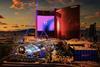
Also happening this month, on the 24th, is the Enhanced Games’ inaugural tournament. The site is a specially built, 2,500-seat complex at Resorts World Las Vegas, where there will be swimming, track and field, and weightlifting. The total purse is $7.5 million, each event carrying a $500,000 pot and $250,000 going to each winner. A broken world record in the 50m freestyle or the 100m sprint – pure expressions of human speed – will earn a bonus of $1 million.
This sums to less than the $25 million total the company is spending on athlete compensation, and there’s a reason. Enhanced’s compensation structure extends at least three layers past the prize money.
Athletes receive a monthly retainer or salary in the run-up to competition, receive an appearance fee on tournament day, and have their expenses covered at training camp – held over 12 weeks in Abu Dhabi. The camp includes accommodation, coaching, meals, medical supervision and drug protocols. Hard to resist when your sport lacks a big league and the spotlight wants to move to the next phenom.
Under the sports world’s present-day arrangements the best swimmers and sprinters earn most of their revenue through endorsements. In 2024 World Aquatics distributed $11.1 million to its aquatic athletes. Its 319 swimmers received $7.1 million. Gold medals earned $10,000 apiece at the 2024 short-course World Championships (Budapest), $20,000 apiece at the 2024 long-course World Championships (Doha).
Ben Proud, who won silver in the 50-meter freestyle at Paris 2024, had his revenue from Aquatics GB cut when he signed with Enhanced. As he’s put it, he’d have to win 13 years’ worth of World Championships – national-program funds, prize money and endorsements combined – to match Enhanced’s offer.
From the athlete’s perspective, then, Enhanced is less a rival circuit than an employer. And from the perspective of sport Enhanced is less entertainment (“sportsball,” as Americans say) than a proof of concept for something else.
The true product
Live Enhanced, the direct-to-consumer telehealth platform, went live on March 18 – ten weeks before the Games – with supplement blends, hormone-replacement therapy for men and women, longevity protocols and a first peptide, Sermorelin. Three others – Tesamorelin, Glutathione and Oxytocin – are in the pipeline, and the US Food and Drug Administration (FDA) might reclassify up to eight more.
In April 2026 – two weeks before the NYSE listing, five weeks before the Games – the FDA moved certain peptides from its Category 2 restricted list to Category 1, permitting licensed 503A compounding pharmacies to dispense them. Enhanced responded within days.
The company’s athletes compete under declared, medically supervised “enhancement protocols,” generating what it describes as the first large-scale structured dataset on “enhanced” human performance. As Angermayer puts it (Substack): “Athletes participating in the Enhanced Games will be permitted to use legal performance-enhancing substances, and rather than being tested for cheating, they will be tested for their health to determine whether they are safe to compete.”
The athletes are the subjects in an IRB (Institutional Review Board) clinical study that, as far as Angermayer and Enhanced know, is the “first large-scale, structured dataset on enhanced human performance in history,” whose dataset could yield:
- “optimized protocols for consumers based on elite athlete data”
- “marketing claims others cannot use”
- “clinical insights competitors cannot replicate”
The proof is in the pudding – that is, the bloodwork.
What if anything the athletes have signed over in their contracts is undisclosed, but reports, data and protocols derived from their biological samples probably devolve to the company, at least in the US.
Perhaps the federal statute most applicable to Enhanced’s business is the Defend Trade Secrets Act (18 U.S.C. § 1836, or DTSA), under which clinical-trial data that carries commercial value, is not publicly known and is subject to reasonable strictures of confidentiality qualify as a trade secret, with no registration required. The Bayh-Dole Act vests IP rights with the research institution for federally funded trials, but Enhanced’s trials are private. In its case IP ownership would likely be determined by contract. In this sense all of the training, accommodations and compensation for the athletes and all of the tournament hosting and prize purses amount to expenses toward lab reports – raw materials for the finished products: drug protocols.
Traditional sporting goods companies use the competitive feats of professional athletes to sell textiles, shoes and equipment, external stuff, to the public. Enhanced is using the feats of, for the most part, excommunicated professional athletes to sell internal stuff: drugs and supplements.
Means of the sale
The Enhanced Games will be streaming live on the company’s official YouTube channel, as the company’s chatbot tells us. Single worldwide broadcasts are rare in sports, but is Enhanced pioneering a new model or unable to sell territorial rights?
SportBusiness reported on Jan. 8 that Enhanced had hired Lionsgate, the Hollywood production and distribution company, to seek out broadcasters and produce a documentary in the style of Drive to Survive. Enhanced was asking for no rights fees. To date, as far as we ourselves can tell, no broadcast deals have been struck.
YouTube, even if it’s a fallback option, makes some sense for a company that seeks to generate revenue from supplements and protocols rather than broadcast rights. The public that Enhanced must reach consists of biohackers, who probably sit more often before a computer than before a TV.
Justin Kutcher, of Fox Sports, will be handling play-by-play, and Olympic gold medalist (Rio 2016) Sam Quek will be reporting from the field. With them, to analyze human enhancement, will be famous biohacker Bryan Johnson, subject of the Netflix documentary Don’t Die: The Man Who Wants to Live Forever.
The company, its investors
The idea for the games dates to late 2022 and came from Aron D’Souza, partner to PayPal founder Peter Thiel when Thiel was suing Gawker. Christian Angermayer joined as co-founder and investor. D’Souza served as President and public face from the company’s launch until late last year. He has been succeeded by another co-founder, Maximilian Martin, formerly of Northern Data Group, Bitfield (which he founded) and Morgan Stanley. The reasons for D’Souza’s departure are undisclosed.
Investors in the series seed round (Jan. 31, 2024) included Thiel, Christian Angermayer’s Apeiron Investment Group, and former Coinbase CTO and Andreessen Horowitz Partner Balaji Srinivasan.
The Series B round, in February 2025, involved unspecified multiple millions of dollars and such investors as 1789 Capital (Omeed Malik and Chris Buskirk, founders; Donald Trump Jr., partner), the hedge fund Karatage and Apeiron.
According to Arab News, Saudi Prince Khaled bin Alwaleed Al Saud too is among the investors.
The lawsuit
Enhanced filed an $800 million antitrust suit in August 2025 against World Aquatics, WADA and USA Swimming, alleging an illegal boycott. US District Judge Jesse Furman dismissed the case in November 2025, finding that Enhanced had failed to demonstrate World Aquatics’ monopoly, failed to provide evidence of an illegal group effort and failed to state a claim on any count. Enhanced had 30 days to amend its complaint but did not, and the dismissal became final.