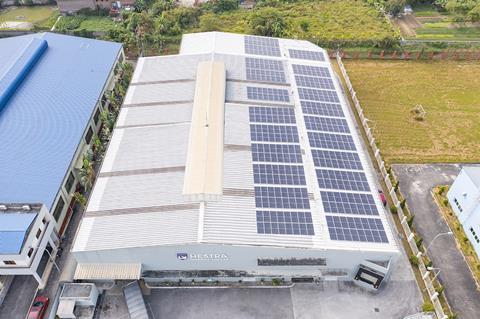
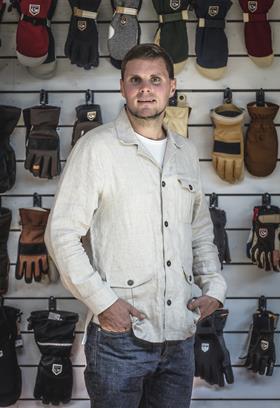
Swedish glove manufacturer Hestra has never done as well as now. Last year, strong exports in particular contributed to the company’s record turnover of SEK 802 million (€69.1m) with a profit of SEK 246 million (€21.2m). The profit is being used, among other things, to build a new factory in Vietnam, Hestra’s sixth. SGI Europe has met Anton Magnusson, a fourth-generation glovemaker and CEO of the family business Hestra, for an interview about the company’s plans.
SGI Europe: 2023 was a very tough year for many players in the sports industry, but not for you. You had a turnover of SEK 802 million and made a profit of SEK 246 million. How do you continue to succeed in a tough industry?
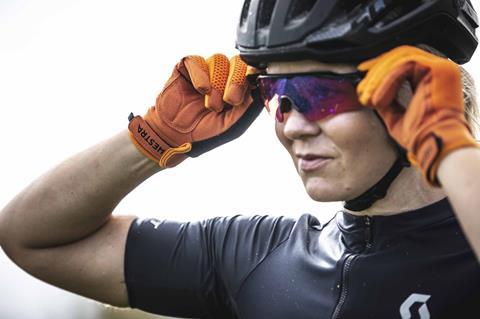
Anton Magnusson: We focus on what we are good at – developing, manufacturing and selling gloves – which I think the market appreciates. When times are tough, retailers focus on brands that deliver high-quality products and can deliver on time. I feel a great deal of confidence in this from our retailers. I think that has built our success. In addition, there has been a strong outdoor trend since the coronavirus, while our skiing products have sold well. We, as a brand, are very weather-dependent, and our products are used more during the winter. But now we see that gardening, work and cycling gloves are also selling more and more. And those categories are the ones we’re working hardest to get people to discover. We have gloves for more than snow sports.
In a recent interview, you said that in 2023/24 you are investing more than ever and investing SEK 140 million (€12.1m) to grow further. What are you spending this money on, more specifically?
We are investing around SEK 140 million (€12.1m) in new properties, including building a brand new factory in Vietnam. The factory will be completed in the latter part of this year, and we expect it to be in production in Q1 2025. This will bring our total number of factories to six: in China, Vietnam, Cambodia and Hungary. In addition, we are also investing here at home in Sweden in terms of warehousing and distribution in Hestra.
In another interview during the winter, you said that one of the biggest obstacles to continued growth for your company is to secure the supply of skills at home in Hestra.
Yes, skills supply is one of our most important issues. It’s difficult to get people with the right skills to want to move here and work. Among other things, we need to get better infrastructure to make it easier to commute to Hestra. We’re trying to work with other local entrepreneurs to pursue these issues at various levels via the Jönköping Chamber of Commerce, the Confederation of Swedish Enterprise and other forums so that politicians and decision-makers understand our needs.
You’ve been in the US for 20 years, and it’s now your largest market. What efforts are you making today to continue growing globally?
Basically, for us, it’s about building things up for the long term, as with our business in the US. Then it’s about making different arrangements depending on the market. Should we work with agents or with distributors? Right now, we want to grow more in Europe’s Alpine countries, focusing on Italy, Austria and Germany. We already have good, strong customers there in the alpine segment. But here we see that we can sell much more in the cycling and fashion glove segments. We have a subsidiary in Munich for Germany and Austria that’s driving the opening we’ve gained in the Alpine countries. For that market, we think it works perfectly.
What do you think about Asia? Many brands are working hard to reach a growing, affluent middle class.
We export to a few countries there: To Japan, Korea and Australia and we feel we don’t always need to jump into new markets. Throwing spaghetti on the wall doesn’t help, but we think it’s better to focus on what you have. Even though we’re big in the US, there’s much more to do there, and we’ve been in Sweden for 90 years. But there’s still a lot to do here, too.
There’s something unique that sets you apart from other brands and that can be a big advantage. You’re a family business, and you’re the fourth generation of Magnussons to lead the company. What are the major advantages of being a family business?
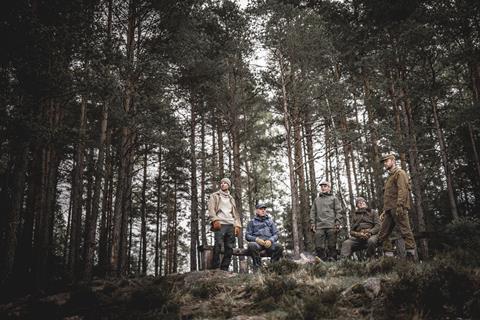
Firstly, there’s a lot of knowledge that is not lost. Especially when many family members are operational in different ways. All the time that we, my brothers, cousins, my father and my uncle put in together is incredibly important. It also gives us clarity about where we want to go. Everyone in the family has a lot of fun with the products, and we’re naturally interested in skiing, gardening and fashion. We like to use our own products, so we can easily focus on product development.
Your sustainability report for 2022/23 describes your environmental work. You’re continuing to invest in a wind farm in Sweden, and your factories are largely powered by electricity from solar panels. Among other things, the report states that 69 percent of the leather you use in your gloves comes from certified suppliers and that 91 percent of your workers work in BSCI-certified factories. What are your environmental and CSR efforts for the coming year?
We continue to strive for better figures in the areas you mention. That’s how we always work, to constantly improve. The basis of our sustainability work is, I think, that we make quality products with a longer lifespan. In addition, we always think about how we can work on less resource utilization in the world. One important product example is that we offer removable lining for many of our gloves. So, instead of buying a brand new pair of leather gloves, the customer can buy a new wool liner when its functionality has diminished. When it comes to BSCI, it’s very important to us that, whether we own the factories ourselves or buy from a subcontractor, everyone who works in these factories should have the same fair working conditions, which comply with the leather factory standards. Here, we’re working to get all our partners on board so that their operations can also be certified.
What does the rest of 2024 look like for Hestra?
We’ll continue on the same track we’re following today and not complicate things. We’ll remain a family-owned company that manufactures gloves and has its headquarters in Hestra. We’ll also invest more in exports, as I mentioned earlier, mainly in the US, but also to grow more in Europe and especially the Alpine region. The fact that we’re local but at the same time have a presence in many countries is what makes us quite unique.