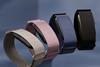
Garmin’s watches already display Moxy’s readings, so the purchase can be read two ways: as a route to hardware for a muscle-level feature, or as a patent defense against wearables rival Whoop.
Garmin watches have displayed data from Moxy’s muscle oxygen sensors since 2015, first through a Moxy-built app. The company confirmed the purchase of Moxy Monitor, a maker of near-infrared muscle oxygen sensors, in a statement reported Sept. 28, and added nothing else.
One sentence of disclosure, and no price
Garmin acknowledged the deal to DC Rainmaker and declined further comment. Garmin disclosed neither the price nor whether Moxy’s employees will transfer, and it described no plans for the product line. the5krunner reported the deal first, on Sept. 22, citing one unnamed source close to the deal.
Moxy’s founder and chief executive, Roger Schmitz, answered that outlet by referring questions to Garmin’s media team, neither confirming nor denying. One trade outlet reported that terms were disclosed, but Garmin’s one-sentence statement contains none and two other reports say no price was given.
The SEC rulebook explains only part of the silence
Garmin announced its July 22 purchase of TrainingPeaks and TrainHeroic with a news release, executive quotes and a headcount of 120, yet kept the price private. The difference this time is the announcement, not the secrecy about money.
Form 8-K Item 2.01 may explain the silence. It covers acquisitions above 10 percent of a buyer’s total assets, or of a business that is significant under separate Regulation S-X tests. On Garmin’s $11.4 billion in total assets at June 27, 10 percent is about $1.1 billion (SGIE calculation), and Garmin hasn’t said which tests applied.
Muscle Battery gives the deal a likely destination
On Feb. 19, Garmin applied to register the US trademark Muscle Battery (serial number 99661177, still pending). The application describes software that gathers muscle oxygen saturation readings and processes them, along with related athletic performance data, using proprietary algorithms. Garmin hasn’t linked the filing to the acquisition, but Wareable and the5krunner both read the two together.
The hardware question is the point. Moxy’s owner’s manual tells users to place the sensor on top of the muscle being studied, and Wareable says wrist-based readings of muscle oxygen are not accurate. Garmin’s own manuals describe its existing Body Battery score as built from data a watch already collects: heartbeat variability, stress, sleep and daily activity.
According to the5krunner, the acquisition would give Garmin sensor hardware, calibration data and published validation work that it lacked. Garmin hasn’t outlined a product roadmap.
Whoop has accumulated muscle oxygen patents
The defensive reading has a named rival: Whoop took assignment of muscle oxygen patents from Humon in 2020, according to patent assignment records, after Humon shut down most of its service that February. the5krunner reports that Whoop was also granted a patent on April 7 for a wearable with a pressure-sensing strap designed for muscle oxygen detection. The two companies already compete head to head: Garmin announced its subscription-free CIRQA Smart Band in July, which SGIE covered as a challenge to Whoop’s membership model.
Moxy and Garmin have worked together for over a decade
Moxy and Garmin have worked side by side for over a decade. Moxy announced early support for ANT+, the wireless sensor protocol, in January 2014, then took part in that September’s ANT+ Symposium, the event where Garmin revealed Connect IQ, its third-party app platform. By early 2015, Moxy’s app had reached Garmin watches through Connect IQ, which DC Rainmaker describes as the first of its kind.
Garmin’s Oct. 28 call is the next chance to ask about Moxy
Garmin reports third-quarter results and hosts its earnings call on Oct. 28. The bar is high: second-quarter revenue rose 11 percent to $2.02 billion (€1.78bn), fitness grew 25 percent to $756.8 million (€664.7m), and Garmin raised its full-year revenue guidance to about $8.05 billion (€7.07bn). Part of the margin gain came from roughly $21 million (€18m) in tariff refunds, so analysts may listen mainly for whether management places muscle oxygen inside the fitness segment’s plans.

FitnessBrands, technology and the new formats of sport
From training sportswear and wearables to connected home equipment and hybrid race formats,SGI Europecovers fitness through the lens of brands, retailers, and the product strategies that define the category.
Explore Fitness →